
Phonograph: mechanical recording and playback of sound
A mechanical system first commercialized in the late 19th century for recording and reproducing sound on cylinders and discs; later known as the gramophone or record player.
Overview
The phonograph is a mechanical device that captures and reproduces sound by etching a representation of vibrations onto a physical medium and retracing them. It became the primary way to distribute and hear recorded music from the early industrial era through much of the twentieth century, beginning in the 1870s and remaining commonplace into the 1980s.
Image gallery
10 Images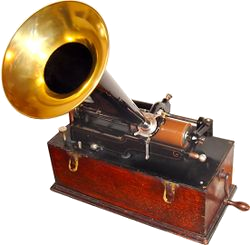



Design and main components
Basic phonograph construction uses a sound-capturing element, a means to record modulation, and a playback system. Typical parts include:
- Sound collector and diaphragm—a horn or funnel focuses vibrations to a thin diaphragm.
- Stylus (needle)—translates diaphragm motion into grooves or impressions on the recording medium.
- Recording medium—early machines used engraved cylinders, later replaced by flat discs.
- Drive mechanism—clockwork spring, electric motor or belt that moves the medium relative to the stylus.
History and evolution
The phonograph is most often associated with Thomas Edison, who produced a working prototype and public demonstrations. Inventive efforts by several engineers preceded and followed his work. Early commercial systems recorded on rotating cylinders; by the late 19th century competing formats and companies promoted flat discs. The word "gramophone" became a familiar trade name and then a generic term in some places—initially a trademark registered in 1887 and adopted in the UK as a common name around 1910. Over decades the appliance was also called a record player or turntable, labels that gained currency since the 1940s.
Uses, importance and legacy
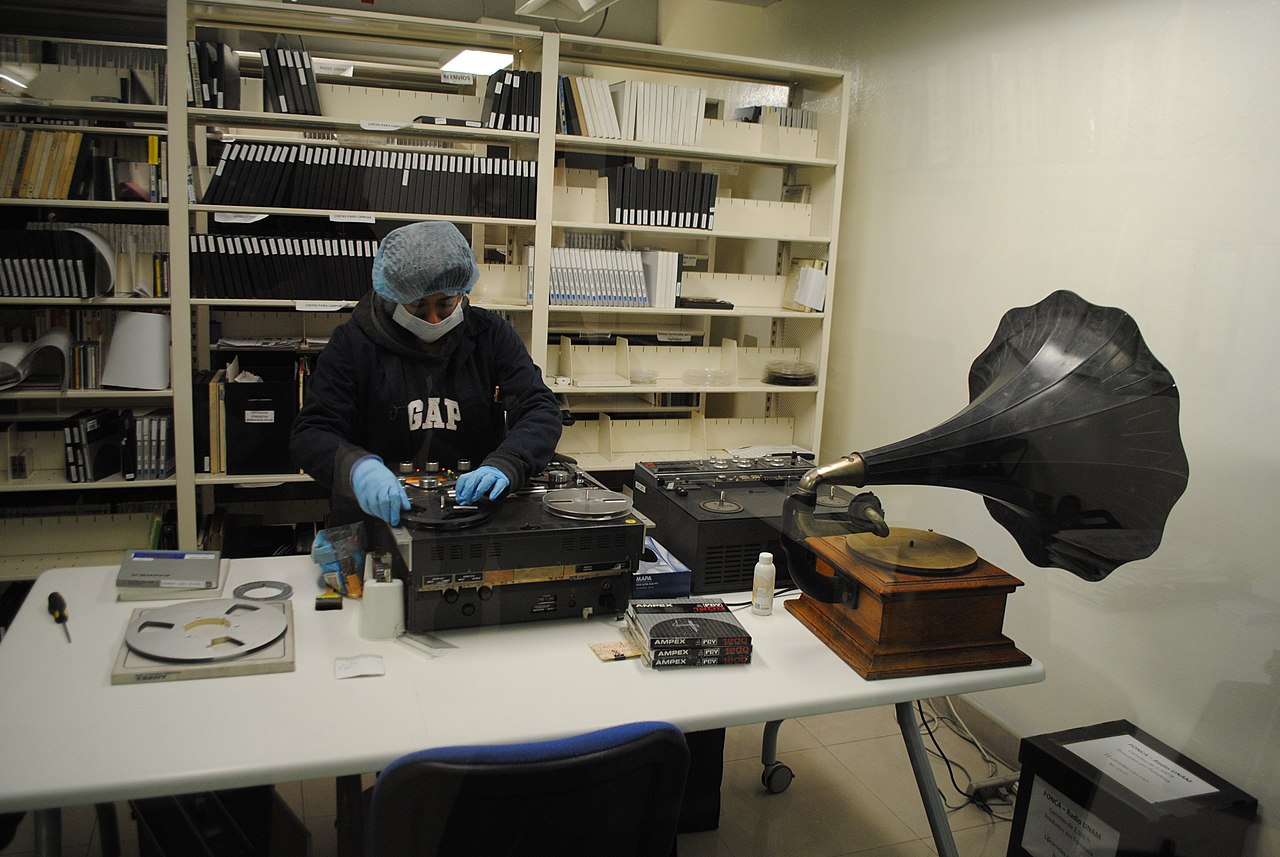
Beyond home entertainment, phonographs shaped music publishing, radio programming, and mass culture by enabling repeated, portable listening. They preserved spoken-word performances, speeches and field recordings that are now historical documents. Collectors and archivists continue to restore and transfer phonograph recordings for scholarship and enjoyment, while modern turntables keep analog playback alive.
Distinctions and notable facts
Key distinctions: early "phonograph" models usually meant cylinder machines, while "gramophone" and later "record player" referred to disc-based systems. Though largely superseded by magnetic and digital formats, the phonograph introduced principles — mechanical modulation, physical storage of sound, and standardization of playback speed and groove geometry — that influenced all subsequent audio technologies.
Related articles
Author
AlegsaOnline.com Phonograph: mechanical recording and playback of sound Leandro Alegsa
URL: https://en.alegsaonline.com/art/76561