
Pidgin (software) — a multi‑protocol instant messaging client
Pidgin is a free, cross‑platform instant messaging client that connects to many chat networks at once. It is extensible via plugins and is built on the libpurple library.
Pidgin is a desktop instant messaging client that lets a user sign into multiple chat services simultaneously from a single application. It runs on major desktop platforms and supports a broad set of protocols so contacts on different networks can be managed together. The project is distributed under the terms of the GNU General Public License and is available as free software.
Image gallery
3 Images

Design and key features
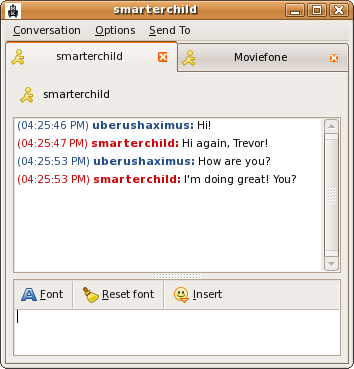
Pidgin is built around a core library called libpurple that implements protocol handling; the user interface and many optional capabilities are provided as separate modules and plugins. Typical features include contact lists with presence and status messages, one‑to‑one and group chat windows, file transfer, logging of conversations, custom emoticons, and support for buddy icons.
Extensibility is a major strength: users can add functionality through plugins for encryption (for example, OTR), message filtering, theming, and notifications. Pidgin also supports scripting and third‑party add‑ons that integrate with desktop environments and other applications.
Protocols and platform support
- Supports many protocols such as AIM, ICQ, XMPP (Jabber), MSN, Yahoo!, IRC and others, allowing accounts from different networks to be used together.
- Runs on several operating systems; it is commonly used on Linux, and there are builds for Windows and macOS.
History and development
The project began as a client called Gaim and later changed its name to Pidgin following trademark concerns. Over time it evolved from a simple multi‑network chat tool into a modular platform focused on compatibility and user customization. Development has been community driven, with contributions from volunteers and occasional third‑party maintainers.
Uses, importance and distinctions
Pidgin is useful for people who want to avoid running many separate chat programs and for environments that need a lightweight, scriptable client. Compared with single‑network clients, its distinguishing characteristics are broad protocol support, a plugin ecosystem, and cross‑platform availability. It has been used by individuals, organizations, and developers who need a flexible messaging front end or a testbed for protocol work.
For more information or to download the software, see the project official site. Community resources, documentation and related projects are widely available from developer and user pages linked through that portal.
Questions and answers
Q: What is Pidgin?
A: Pidgin is an instant messaging client that can work on Linux, Mac OS X and Windows.
Q: What other name is Pidgin known as?
A: Pidgin is also known as Gaim.
Q: What is the advantage of using Pidgin?
A: Pidgin can use most instant messaging protocols, allowing the user to log into different instant messaging services from one program.
Q: How many Pidgin users were there in 2007?
A: It is thought that there were more than 3 million Pidgin users in 2007.
Q: What license is Pidgin released under?
A: Pidgin is released under the terms of the GNU General Public License.
Q: Is Pidgin free software?
A: Yes, Pidgin is free software.
Q: What operating systems can Pidgin work on?
A: Pidgin can work on Linux, Mac OS X and Windows.
Related articles
Author
AlegsaOnline.com Pidgin (software) — a multi‑protocol instant messaging client Leandro Alegsa
URL: https://en.alegsaonline.com/art/76756
Sources
- pcworld.idg.com.au : Luke Schierer discusses Pidgin, Open source and life
- sourceforge.net : "SourceForge.net: gaim-i18n"
- pidgin.im : "News — Pidgin"
- pidgin.im : "Identity vs. Account Orientation"