
Philosophy of Religion: Questions, Methods, and Key Themes
The branch of philosophy that examines religious ideas, practices, arguments about God, the problem of evil, definitions of religion, and their social and intellectual roles.
The philosophy of religion is the branch of philosophy that reflects critically on religious belief and practice, their concepts, and their intellectual foundations. It treats religion as a subject for rational inquiry rather than for devotional affirmation or purely historical description. As a field it overlaps with theology, religious studies and ethics, but it retains a distinctive focus on argument, conceptual analysis and the criteria for rational belief; for a general orientation see branch of philosophy.
Image gallery
10 Images






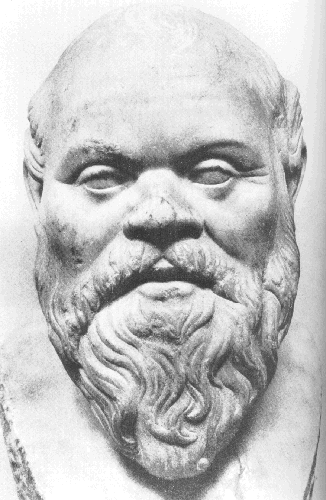
Scope and central questions
Philosophy of religion asks a set of interrelated questions: What do religious claims mean and what justifies them? Do the traditional arguments for God's existence succeed? How should we understand religious experience, revelation and sacred texts? What is the place of religion in moral and social life? The field engages with concrete religions while also developing abstract accounts that aim to apply across traditions. It draws on tools from metaphysics, epistemology and the philosophy of language, for instance the study of meaning and reference in religious discourse as in philosophy of language.
Conceptual approaches and definitions
Scholars have debated whether religion can be given a single defining essence or whether a useful account must be functional and comparative. Essentialist proposals identify common features such as belief in supernatural beings or ultimate realities, ritual practices, or reference to the sacred; one recurring formulation emphasizes relations to spiritual or superhuman beings. Critics argue such lists either exclude borderline cases or are too broad to be useful.
By contrast, the functional approach explains religion by the roles it performs in individuals and societies: providing existential meaning, social cohesion, moral frameworks, or psychological consolation. Thinkers associated with functional and sociological explanations include Karl Marx, Émile Durkheim, Bronisław Malinowski, and Talcott Parsons. Functional accounts illuminate why religion persists but can be criticized for reducing doctrinal content to social effects.
Methods and types of analysis
Philosophers of religion work in several modes. Some analyse religious experience and feeling, exploring the phenomenology of devotion and prayer; historically influential figures in this vein include Friedrich Schleiermacher and Ludwig Wittgenstein, who drew attention to the forms of life and language-games within which religious expressions make sense. Others seek to describe the essence of religion—what makes religion distinct from other cultural phenomena—a project associated with Rudolf Otto, Georg Wilhelm Friedrich Hegel and Martin Heidegger. Still others focus on religious language itself and on whether religious statements are cognitive, expressive, or performative.
Central philosophical problems
A core set of debates concerns the rational evaluation of religious claims. Classical arguments for the existence of God—ontological, cosmological and teleological—are examined for their logical strength and explanatory scope. Contemporary analytic philosophers continue to refine these arguments and responses to them. Closely related is the problem of evil, which questions how the existence of suffering and injustice can be reconciled with a deity described as omnipotent and benevolent; this issue is often discussed under the rubric of problem of evil and the defense or explanation known as theodicy, a term historically associated with Gottfried Wilhelm Leibniz.
Other topics include the attributes traditionally ascribed to God (omnipotence, omniscience, omnibenevolence), the nature of miracles, divine hiddenness, and the interaction between religious belief and scientific explanation. Some philosophers examine how religious epistemology differs from secular epistemology—whether faith constitutes a distinctive kind of warrant or whether religious belief can be justified by ordinary evidential standards.
Practical importance and examples
Philosophy of religion has practical consequences for ethics, politics and interfaith dialogue. By clarifying concepts and assessing arguments, it can inform public debates about religious freedom, secularism, and the role of religion in education. It also provides resources for believers seeking coherent defenses of faith and for critics who evaluate religion's social effects. The field commonly uses case studies drawn from particular traditions but aims to develop general principles applicable across contexts.
Notable figures and contemporary directions
The discipline has a long history: early and medieval figures such as Thomas Aquinas and Augustine gave systematic accounts linking theology and philosophy; in the modern and contemporary periods philosophers such as Alvin Plantinga have developed sophisticated defenses of religious belief within analytic epistemology. Other contributors range broadly in method and conviction. Some philosophers of religion are practicing believers who bring their traditions to bear on philosophical questions; others adopt non-religious or critical perspectives. Ongoing work explores religious pluralism, secularisation, cognitive science approaches to belief, and the ethics of interreligious encounter.
- Overview and aims — critical, analytical study of religion
- Methods — conceptual analysis, phenomenology, historical interpretation
- Key problems — arguments for God, theodicy, divine attributes, religion and science
- Applications — informs ethics, politics, and interfaith understanding
For introductions and further reading see general philosophy resources and specialized texts in the philosophy of religion, which treat the topics above in greater depth and with historical context. Readers may consult works that survey classical arguments, social theories of religion, and contemporary analytic debates to appreciate the field's range and continuing relevance.
Related articles
Author
AlegsaOnline.com Philosophy of Religion: Questions, Methods, and Key Themes Leandro Alegsa
URL: https://en.alegsaonline.com/art/76509