
Ludwig Wittgenstein: From Tractatus to Philosophical Investigations
Overview of Ludwig Wittgenstein's philosophical evolution from the Tractatus to Philosophical Investigations, contrasting his early formal theory of language with his later meaning-as-use and language-game approach.
Ludwig Josef Johann Wittgenstein (26 April 1889 – 29 April 1951) was an Austrian-born philosopher whose work shaped large areas of twentieth-century thought. Born into a prominent family in Vienna, Wittgenstein produced influential ideas on the nature of language, thought, and mathematical reasoning. He is widely considered one of the most important philosophers of the modern era.
Image gallery
10 Images


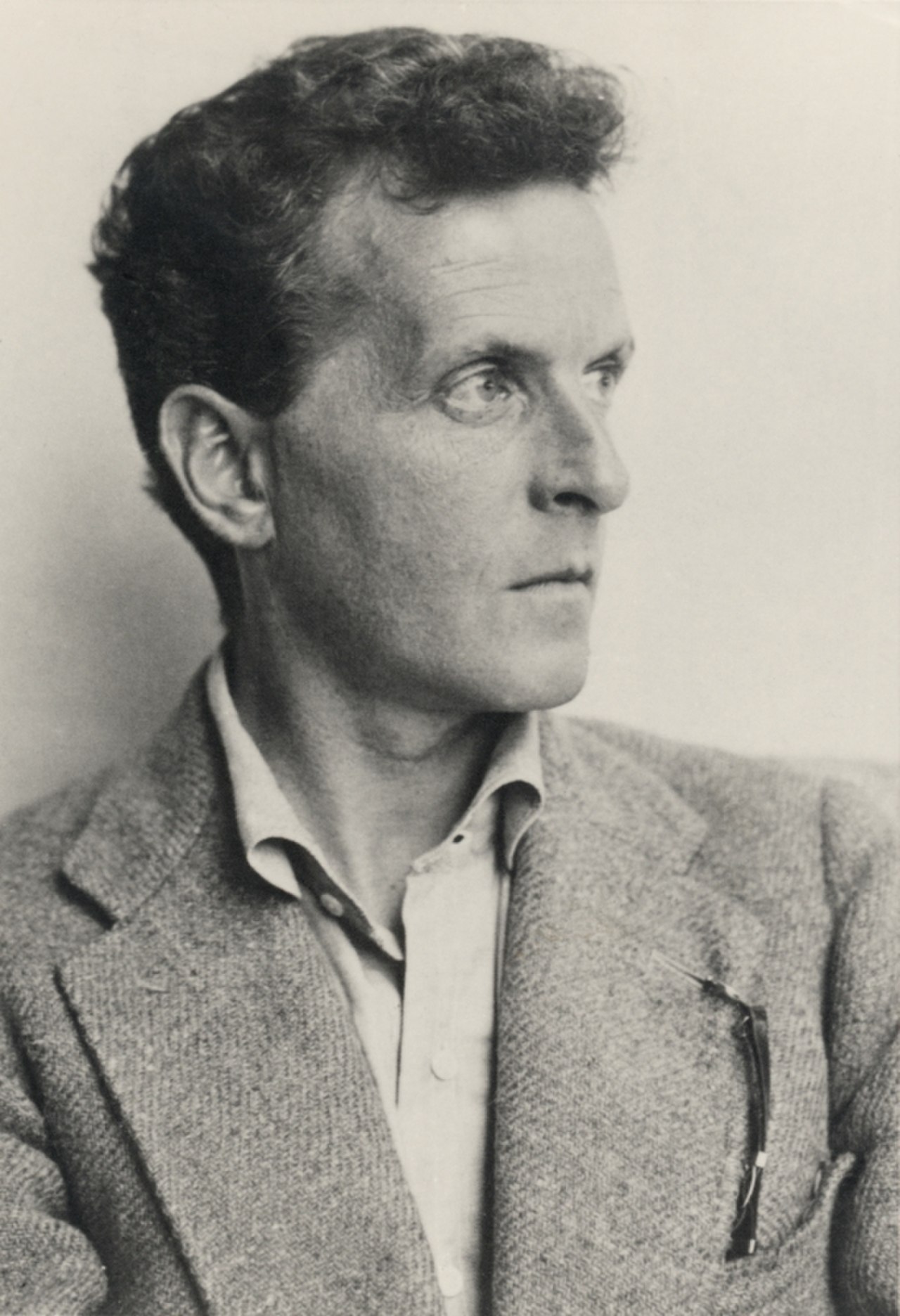


Major areas of work
- Logic
- Philosophy of mathematics
- Philosophy of mind
- Philosophy of language
Life and career
Wittgenstein was born in 1889 in Vienna. He initially trained in engineering and became interested in the foundations of mathematics and logic while working on problems in aeronautics and electrical engineering. He later studied at the University of Cambridge, where he engaged with leading thinkers of the time and developed close intellectual ties that shaped his early and later work. Over the course of his life he held a number of occupations outside academia, including teaching at elementary schools and working on various practical projects, before returning to research and teaching in philosophy.
Books and shifting views
During his lifetime he published one short but influential book, the Tractatus Logico-Philosophicus, which presents a concise account of how language and world might correspond. After his death in 1951 a much longer manuscript, Philosophical Investigations, was brought to press; it marks a significant departure from the ideas in the Tractatus and introduced new concepts such as meaning as use and the notion of language-games. Together these works define two broad phases of his philosophical development.
Philosophical contributions and influence
Wittgenstein’s early work offered an account of representation and the limits of language; his later writings emphasized ordinary language, the contexts in which words acquire sense, and the idea that philosophical problems often arise from misunderstandings of how language functions. His methods and conclusions have had lasting effects on analytic philosophy as a whole and continue to be central topics in discussions of meaning, rule-following, mental states, and the limits of formal analysis in philosophy.
Wittgenstein remained a distinctive and sometimes controversial figure within the broader movement of analytic philosophy, and scholars across several disciplines still study and debate his texts and their implications.
For readers wishing a concise characterization: the early Wittgenstein sought a formal picture of how language mirrors reality, while his later work rejected that framework in favor of attention to ordinary linguistic practice and the ways in which language acquires its roles in human life. His writings continue to shape contemporary debates in philosophy, linguistics, cognitive science, and related fields.
Austrian by birth, Wittgenstein spent much of his professional life at Cambridge and remains a central figure in twentieth-century philosophy.
Questions and answers
Q: Who was Ludwig Josef Johann Wittgenstein?
A: Ludwig Josef Johann Wittgenstein was an Austrian philosopher who worked mainly in the basics of logic, the philosophy of mathematics, the philosophy of mind, and the philosophy of language. He is regarded as one of the most important philosophers of the twentieth century.
Q: When did he die?
A: Wittgenstein died on April 29th, 1951 at the age of 62.
Q: What books did he publish before his death?
A: Before his death, Wittgenstein had only published one book - The Tractatus Logico-Philosophicus.
Q: What is The Tractatus Logico-Philosophicus about?
A: The Tractatus Logico-Philosophicus is a philosophical work that discusses logical atomism and how it relates to language and thought. It also examines ethical issues such as value and meaning in life.
Q: What other works are attributed to him after his death?
A: After his death, another book by Wittgenstein called Philosophical Investigations was published shortly afterwards. Both this work and The Tractatus Logico-Philosophicus are considered very important for analytic philosophy.
Related articles
Author
AlegsaOnline.com Ludwig Wittgenstein: From Tractatus to Philosophical Investigations Leandro Alegsa
URL: https://en.alegsaonline.com/art/125502