
Philosophy of Science: Questions, Methods, and Historical Development
The philosophy of science examines how scientific knowledge is produced, evaluated, and used. It addresses explanation, method, theory choice, realism, and the historical development of scientific practice.
The philosophy of science is the branch of philosophy that examines the foundations, methods, and implications of the sciences. It asks how scientific knowledge is generated, what distinguishes science from other ways of understanding the world, and what counts as a scientific explanation. Rather than performing experiments itself, this field reflects on the concepts, assumptions, and logical structure behind scientific activity.
Image gallery
10 Images
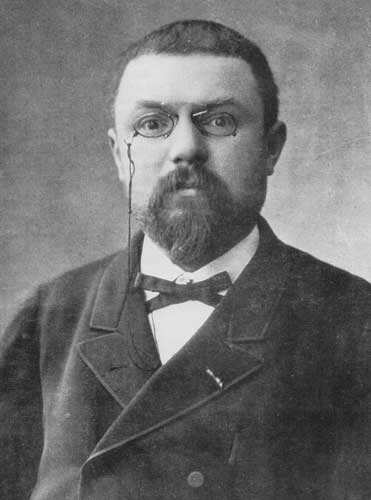





Key themes and questions
- Demarcation: What separates science from pseudoscience?
- Evidence and confirmation: How do observations support or undermine theories?
- Theory choice: On what grounds do scientists accept one theory over another?
- Explanation and causation: What makes a scientific explanation satisfactory?
- Realism vs. instrumentalism: Do scientific theories describe reality or merely predict observations?
Philosophers of science analyze the logical and conceptual relationships among hypotheses, models, data, and laws. They study formal tools such as probability and statistics for assessing evidence, and consider how idealizations, approximations, and models contribute to understanding. Issues of reduction (how higher-level explanations relate to lower-level ones) and emergence also arise when multiple scientific levels interact.
Historical development
The discipline grew from questions raised by early modern science and was shaped in the 20th century by movements such as logical positivism, which emphasized verification, and Karl Popper’s falsificationism, which proposed refutability as a mark of science. Later work by Thomas Kuhn introduced notions of scientific revolutions and paradigms, showing how social and historical factors influence theory change. Contemporary philosophy of science integrates analytic tools with historical and sociological studies of scientific practice.
Applications of the field include clarifying scientific methodology in education, informing public policy where scientific claims matter, and guiding ethical reflection on technologies. Philosophical analysis also helps in interpreting scientific uncertainty, designing experiments, and understanding the role of values in research priorities.
Notable debates continue over realism, the role of models, the limits of reductionism, and how best to account for complex, open systems. The philosophy of science remains a bridge between abstract inquiry and concrete scientific work, illuminating both the strengths and the limits of scientific knowledge.
Questions and answers
Q: What is the philosophy of science?
A: The philosophy of science is a branch of philosophy that studies the sciences and explores how knowledge is constructed by scientists, as well as what sets science apart from other activities.
Q: What is the focus of philosophers studying science?
A: Philosophers who study science focus on how knowledge is built up by scientists, and what distinguishes science from other activities.
Q: What has modern science achieved?
A: Modern science has advanced knowledge in various areas.
Q: What questions must be addressed in order to understand how modern science has advanced knowledge?
A: To comprehend how modern science has advanced knowledge, a set of questions must be tackled.
Q: What is the philosophy of science concerned with?
A: The philosophy of science is concerned with studying the sciences, how knowledge is built up by scientists, and what sets science apart from other activities.
Q: How does the philosophy of science relate to scientific advancement?
A: The philosophy of science is linked to scientific advancement because it examines how knowledge is generated and how science distinguishes itself from other activities, which may aid in understanding how science contributes to knowledge advancement.
Q: What does studying science entail for philosophers of science?
A: For philosophers of science, studying science entails investigating how scientists generate knowledge and what makes the process of generating scientific knowledge unique.
Related articles
Author
AlegsaOnline.com Philosophy of Science: Questions, Methods, and Historical Development Leandro Alegsa
URL: https://en.alegsaonline.com/art/76510
Sources
- plato.stanford.edu : "Karl Popper"
- plato.stanford.edu : "Vienna Circle"
- books.google.com : The logic of scientific discovery