
Thomas Aquinas: Life, Thought and Enduring Influence
Medieval Italian Dominican theologian and philosopher. Overview of Aquinas’s life, education, major works (Summa Theologica), Five Ways, natural law, method, and his influence on theology, philosophy and Catholic teaching.
Thomas Aquinas (c.1225–7 March 1274) was a medieval Italian Dominican friar and Catholic priest who became one of the most important figures in Western theology and philosophy. Born into a noble family in the Kingdom of Italy, he entered the Dominican Order despite family opposition and went on to combine a careful philosophical method with Christian doctrine. He is venerated as a saint and stands among the principal Catholic Doctors of the Church.
Image gallery
10 Images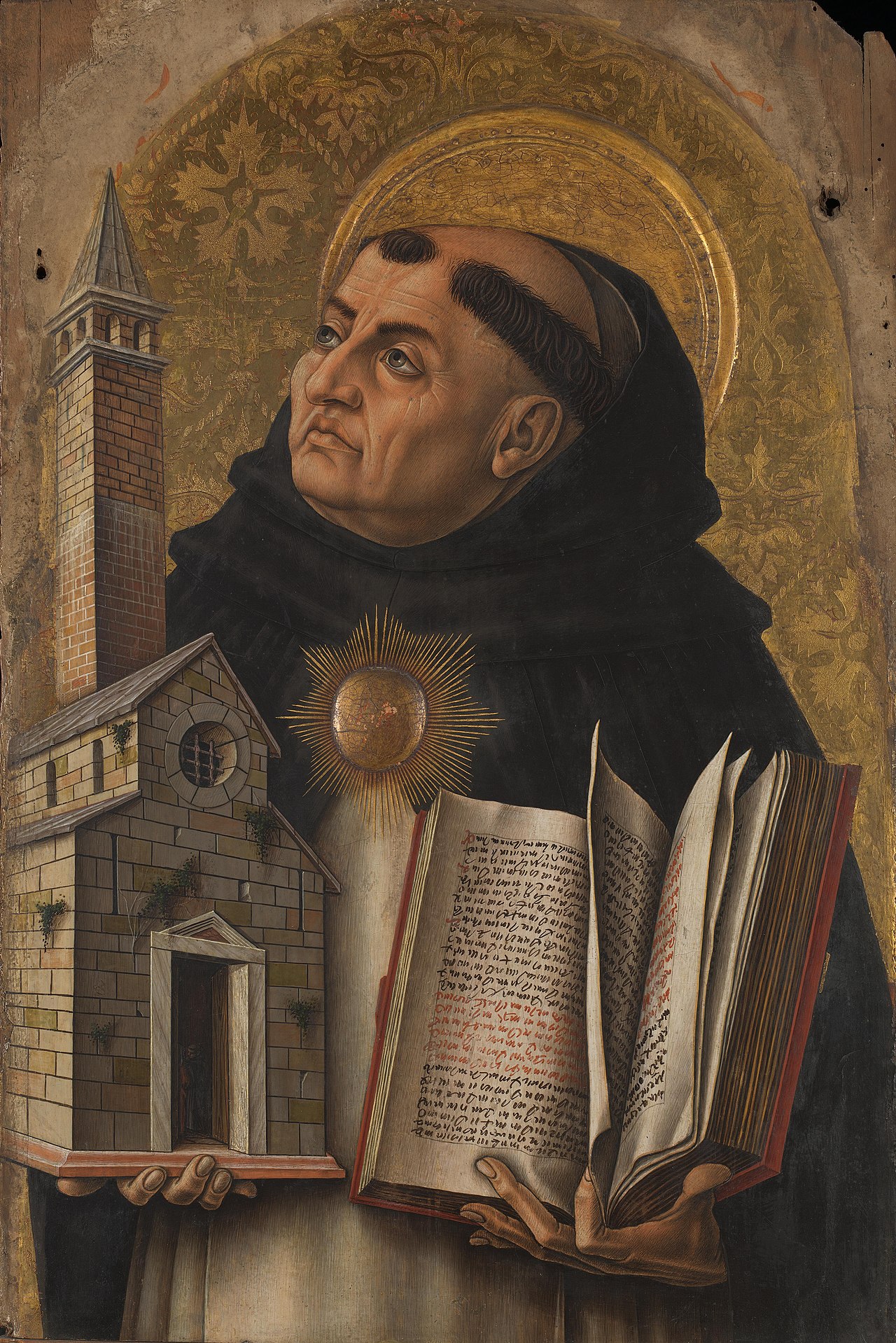



Early life and education
Thomas was raised in a noble household and received initial schooling at the Benedictine monastery of Monte Cassino. He later studied at the University of Naples, where he pursued liberal arts and began formal study of philosophy and theology. By temperament he was reserved—later anecdotes gave him the nickname “the dumb ox”—but teachers recognized his intellectual gifts. He chose the life of a friar in the Dominican Order and continued advanced study under masters such as Albert the Great, who introduced him to the writings of Aristotle and to methods of systematic inquiry.
Method and major works
Aquinas employed a scholastic method that sought precise definition, careful distinctions and reasoned argumentation to illumine questions of faith. His largest and best known work is the Summa Theologica, a systematic presentation intended for students that treats God, creation, morality and the sacraments. He also wrote the Summa Contra Gentiles, numerous disputed questions and commentaries on Scripture and on classical philosophers, notably Aristotle. His commentaries shaped the revival of Aristotelian thought in the Latin West and established a synthesis often called Thomism.
Philosophy and theology
In metaphysics Aquinas developed an account of being that distinguishes act and potency and integrates form and matter. He offered several classical arguments for God’s existence—commonly summarized by later interpreters as five ways—which include what is often called a cosmological argument and arguments from motion, causation, contingency, gradation and finality; these arguments aim to show that the existence of a transcendent cause or first principle is intelligible to human reason (cosmological argument). Aquinas also provided a rich doctrine of God’s attributes, of creation, and of the relation between faith and reason.
Ethics, natural law and practical thought
Aquinas articulated an ethical theory rooted in human nature and reason. He argued that creatures act according to natural inclinations and that human flourishing requires the cultivation of virtues. His account of law distinguishes eternal law (a divine order), natural law (principles accessible to human reason), and human law (positive regulations). This approach to natural law influenced later moral philosophy and Catholic social teaching. He treated moral theology in relation to pastoral concerns and to the formation of conscience for those preparing for roles such as the priesthood.
Historical role and legacy
Working within the scholastic tradition, Aquinas helped reconcile Christian doctrine with the recovery of Aristotle’s philosophy in medieval Europe and provided a comprehensive intellectual framework that persisted in universities, church faculties and legal thought. His works have been central to theology, philosophy of religion, metaphysics, ethics and jurisprudence. Over centuries his influence was renewed in movements of Neo-Thomism and in Catholic education; many seminaries, colleges and universities draw on Thomistic methods when teaching philosophy and theology. He also wrote on liturgical practice and ecclesiastical ordering, engaging topics connected with liturgy and canon law.
Veneration and remembrance
Thomas was canonized as a saint and has been long honored in the Catholic tradition. His intellectual legacy is preserved in standard editions of his works, in commentaries and in many institutions that bear his name. He remains a central reference for students and scholars interested in scholastic method, in the relation of faith and reason, and in classical formulations of natural law and moral theology.
Further reading and resources
- Primary works: Summa Theologica, Summa Contra Gentiles, commentaries and disputed questions.
- Philosophical themes: overviews of his metaphysics and the cosmological argument and relational accounts of being.
- Theological formation: studies on his pastoral and doctrinal writings useful for priestly education and seminary curricula.
- Contextual studies: the role of the Dominican Order, Benedictine formation (Benedictine) and the medieval university.
- Modern influence: introductions to philosophy, theology and treatments of natural law and ethical theory.
This article offers a concise overview of broadly accepted features of Thomas Aquinas’s life and thought. For detailed research consult critical editions of his writings, peer-reviewed scholarship and institutional resources associated with traditions and colleges that preserve his intellectual legacy. Suggested entry points include standard collections of his works and reliable introductions to Thomistic philosophy and medieval scholasticism.
Questions and answers
Q: Who was St. Thomas Aquinas?
A: St. Thomas Aquinas was a Catholic Dominican priest from Italy, and is a Catholic saint and philosopher.
Q: Where was he born?
A: He was born in Roccasecca, as the son of Count Andulf of Aquino and Countess Theodora of Teano.
Q: What did his family expect him to become?
A: His parents expected him to follow in his uncle’s footsteps and become a Benedictine abbot.
Q: What nickname did he receive at university?
A: At the University of Naples, he got the nickname "dumb ox" for his slow demeanor, though he was an intelligent and talented student.
Q: What is his most famous book?
A: His most famous book is Summa Theologica.
A::What are some schools named after him? Q::Some schools named after him include the Pontifical and Royal University of Santo Tomas in Manila, Philippines.
Q: What is Aquinas known for regarding natural law?
A: Aquinas is also known for his work with natural law. He took an optimistic view of human nature, believing that it is human nature to do good and not evil
Related articles
Author
AlegsaOnline.com Thomas Aquinas: Life, Thought and Enduring Influence Leandro Alegsa
URL: https://en.alegsaonline.com/art/99479
Sources
- ust.edu.ph : "History - University of Santo Tomas"