
Pet door (cat flap or doggie door)
A small hinged or electronic panel installed in doors, walls, or windows to let companion animals enter and exit independently; types range from simple flaps to programmable microchip-activated units.
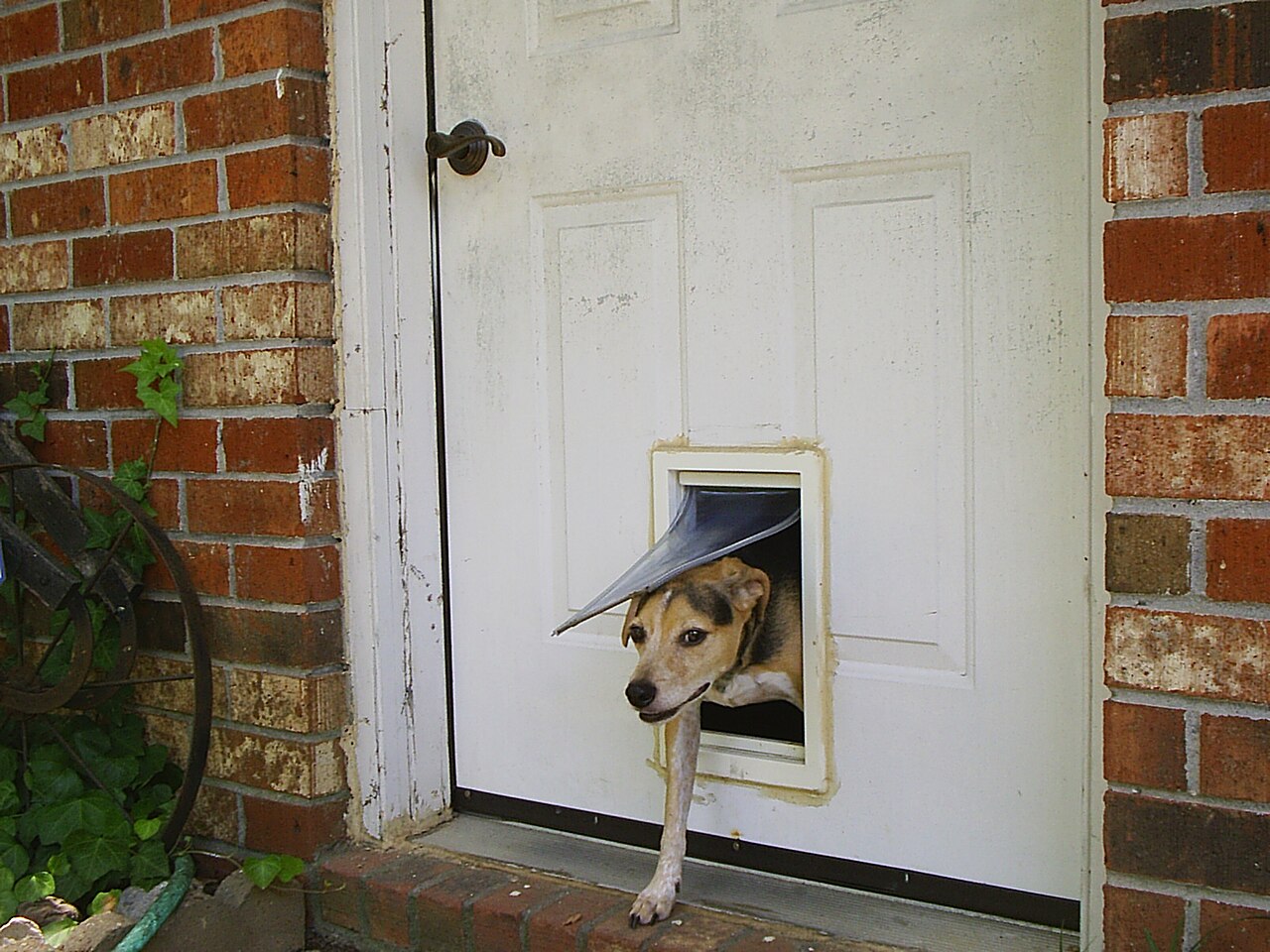
A pet door is a small opening fitted into a household door, wall, or window that allows animals to pass between indoor and outdoor spaces without human assistance. In the United Kingdom the device is commonly called a cat flap. Pet doors serve a variety of species, most often cats and small dogs, but they are also used for other animals such as miniature pigs and some house-trained small pets. The general concept is a movable panel that the animal pushes or triggers to open.
Image gallery
5 Images


Design and common components
Basic pet doors consist of a frame and a flexible flap mounted on hinges or strips. Many traditional models have a top hinge and no mechanical latch so the animal simply pushes through; for a discussion of latchless designs see latch types. Alternatives include rigid doors with spring closures, sliding panels, or multi-layer insulated flaps to improve weather resistance. Typical installation locations are interior or exterior doors, window-mounted inserts for sash or sliding units, and purpose-built wall tunnels that connect indoor and outdoor cavities. Some designs are sized and shaped specifically for particular pets or breeds.
Modern features and variations
Advances in materials and electronics have produced several distinct types of pet doors. Mechanical varieties offer simple, low-cost access and sometimes one-way operation to permit exit but prevent re-entry. Lockable flaps add manual security. Electronic models use wearable tags, magnetic collars, or pet microchips to unlock the flap only for identified animals, reducing unwanted wildlife or neighborhood animals from entering. Thermal insulation, soundproofing, and weather seals are common enhancements for energy efficiency and draft control.
History and notable origins
The idea of making a dedicated opening for animals has long practical roots, and an oft-repeated anecdote credits Isaac Newton with creating an early example by cutting a hole in a study door to let his cat enter while he worked. While that story illustrates the concept's antiquity, pet doors have evolved independently in many cultures and their modern commercial development dates to the 19th and 20th centuries as mass-produced components and plastics became available.
Uses, benefits and concerns
Pet doors give animals more freedom and reduce the need for owners to constantly open doors for coming and going. They are particularly popular for free-roaming cats and house-trained dogs, and are used in rural and suburban homes as well as some urban settings. Benefits include improved animal welfare through increased exercise and reduced indoor soiling. Concerns include potential for theft or entry by other animals, thermal loss, and safety where outdoor hazards exist; electronic selective-access models mitigate some risks.
Choosing and installing a pet door
- Match the door size and strength to the animal's weight and mobility.
- Decide on a mechanical versus electronic locking method based on security needs.
- Consider installation location: exterior doors, windows, or through a wall.
- Account for insulation, weatherproofing, and local building or landlord restrictions.
When selected and installed with attention to animal size, household layout, and local conditions, a pet door can be a practical, humane convenience. For product options and guides see resources linked here: term guide, pet types, door installs, window inserts, wall tunnels, latch info, cat considerations, dog considerations, other species.
Related articles
Author
AlegsaOnline.com Pet door (cat flap or doggie door) Leandro Alegsa
URL: https://en.alegsaonline.com/art/76035