
Pentagon: five-sided polygon — geometry, forms, and uses
Concise overview of pentagons: definition, regular pentagon properties (angles, diagonals, golden ratio), classifications (convex, concave, star), occurrences in nature, chemistry and architecture, and basic constructions.
A pentagon is a polygon with five edges and five vertices lying in a plane. As a basic two-dimensional figure it may be simple (non‑self‑intersecting) or self‑intersecting, convex or concave. In formal terms a pentagon is described by an ordered sequence of five points connected by straight segments; the segments form five sides and meet at five interior angles. For a general introduction see a standard polygon reference and for planar context see material on the plane.
Image gallery
10 Images


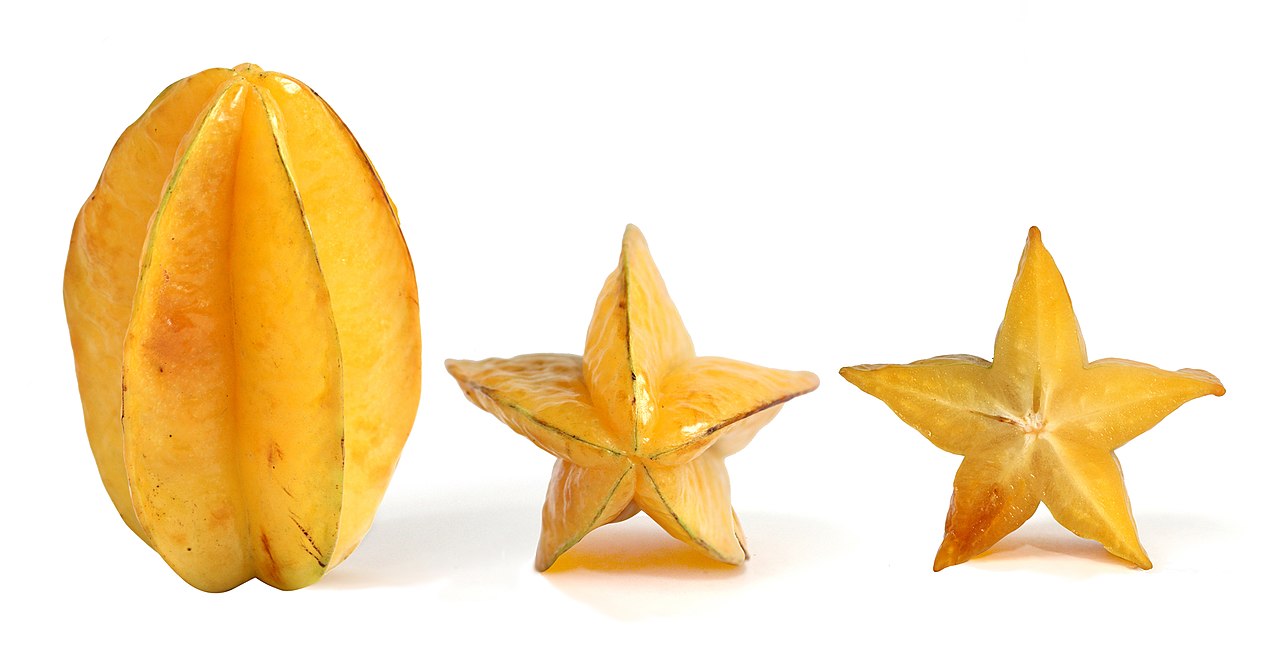


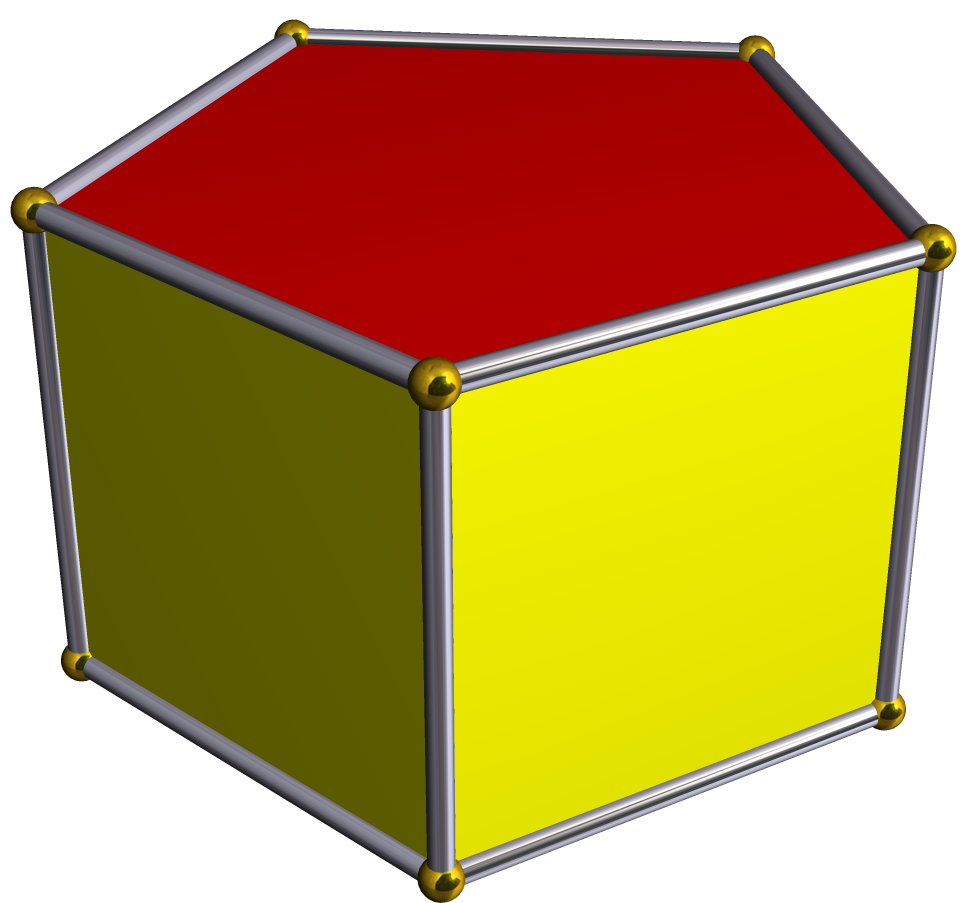
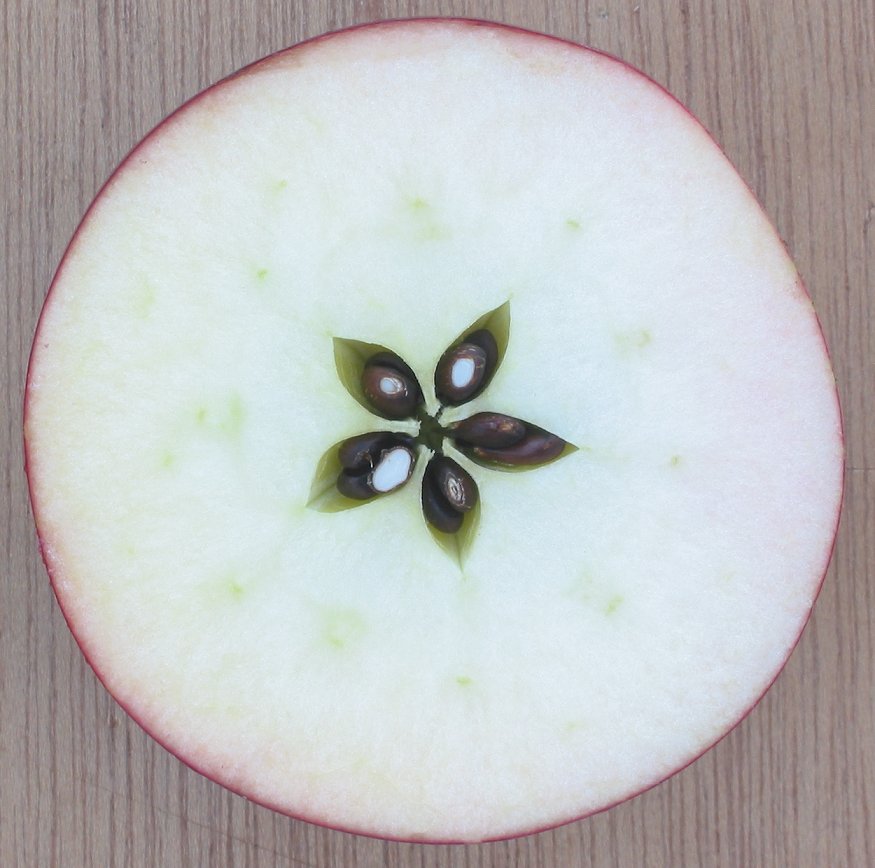
Classification and simple properties
Pentagons are commonly classified by shape and symmetry. A convex pentagon has all interior angles less than 180° and contains all its diagonals. A concave pentagon has one interior angle greater than 180° and a vertex that points inward. A regular pentagon is both equilateral (equal sides) and equiangular (equal interior angles). Self‑intersecting pentagons include the familiar five‑pointed star, the pentagram, which is often drawn as a continuous five‑pointed figure.
The regular pentagon
In a regular pentagon all five interior angles measure 108°. The sum of interior angles for any pentagon equals 540° (calculated as (5−2)·180°). The regular pentagon has rotational symmetry of order five and reflectional symmetries: the full dihedral symmetry group D5. Important metric relationships arise from its diagonals: the ratio of a diagonal to a side equals the golden ratio φ (approximately 1.618). Diagonals intersect to form a smaller pentagon and a central pentagram, producing repeated proportions related to φ. For visual and symbolic discussion see material on the pentagram and sources that treat proportions and symbolic use.
Formulas and construction
The area of a regular pentagon with side length a can be expressed in closed form; one convenient form uses trigonometry or radicals derived from the pentagon's symmetry. The regular pentagon is constructible with straightedge and compass, which historically made it a standard example in classical construction problems. Practical compass‑and‑straightedge methods and step‑by‑step instructions are given in elementary geometry texts and online tutorials for constructing a regular pentagon and for drawing the pentagram within it.
Pentagons in nature and science
Fivefold patterns appear frequently in biology and chemistry. In botany, some fruits and cross‑sections show pentagonal outlines — for example certain pods and the cross section of Okra seed pods — and five‑petaled arrangements are common among many flowering plants, including species in the genus Ipomoea. In organic chemistry, five‑membered rings such as cyclopentane and furan are widespread examples of cyclic five‑atom systems; these are often discussed under topics like chemistry and cyclic compounds. Natural examples and biological patterns are surveyed in botanical and morphological literature; see general resources on natural patterns for broader context.
Architectural, military and cultural examples
Pentagonal plans and pentagonal motifs have been used for architectural, defensive and symbolic reasons. Historic star forts and citadels sometimes adopt pentangular bastions for improved field of fire; the restored Dutch fort town of Bourtange is a cited example. Renaissance and later buildings employ pentagonal layouts for aesthetic effect: the Villa Farnese is a notable five‑sided palace plan, and other castles and churches use pentagonal modules. The castle of Nowy Wiśnicz and various European citadels illustrate how pentagonal geometry influenced defensive design. For symbolic and civic architecture, the modern building commonly referred to as the Pentagon adopts a five‑sided footprint for organisational and symbolic reasons.
Combinatorial, tiling and applied contexts
Pentagons show up in geometric tiling problems, combinatorial enumeration of polygonal forms and in applied design where five‑fold arrangements are useful. Convex pentagons that tile the plane have been studied extensively; only certain classes of convex pentagons can tile without gaps or overlaps. In materials science and molecular design, five‑membered rings influence physical and chemical properties. In graphic design and heraldry the pentagon and pentagram are used for their recognisable symmetry and historic associations.
Further reading and practical notes
- Definitions and basic theorems: introductory geometry texts and online summaries on polygons and planar geometry.
- Construction and compass methods: step‑by‑step guides and classroom resources on regular pentagon construction and the pentagram.
- Natural examples and botanical descriptions: surveys of plant morphology and specific entries on fruits and flowering patterns.
- Chemistry context: overviews of five‑membered rings in organic chemistry and heterocycles.
- Architectural studies: monographs and case studies referencing Bourtange, Villa Farnese and other pentagonal plans.
Readers seeking diagrams, construction steps or proofs may consult elementary geometry references or curated educational websites that provide figures and interactive constructions. For symbolic, historical and cultural treatments of the pentagram and fivefold motifs, consult histories of art and symbolism that discuss use of the pentagon and pentagram across traditions and periods. For additional formal material on cyclic five‑membered systems in chemistry, review standard organic chemistry texts and articles on five‑atom rings.
Angles and metric relations in pentagons connect elementary geometry to algebraic constructions and number theory through the appearance of the golden ratio; these relations make the pentagon a recurring object of study in both pure and applied contexts.
Related articles
Author
AlegsaOnline.com Pentagon: five-sided polygon — geometry, forms, and uses Leandro Alegsa
URL: https://en.alegsaonline.com/art/75629