
Passifloraceae — the passionflower family
Passifloraceae is a tropical family of flowering plants including passionflowers and passionfruits. Members are vines, shrubs, trees and lianas, valued ornamentally, ecologically and for edible fruit.
Overview
Passifloraceae is a family of flowering plants best known for the passionflowers and passionfruits. It comprises roughly 500–550 species arranged in about 15–20 genera, with the genus Passiflora the largest and most familiar. Members range from woody trees and shrubs to herbaceous climbers and lianas. For general taxonomic summaries and species lists see external resources.
Image gallery
1 Image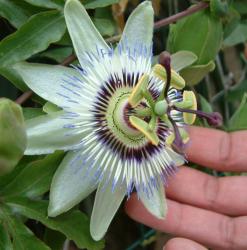
Key characteristics
- Growth form: many are climbing vines with tendrils, but the family also includes shrubs and trees; some genera have succulent or caudiciform stems (tree and shrub forms).
- Leaves and tendrils: leaves are usually alternate and simple; in many climbers the tendrils are modified petiole structures that aid attachment.
- Flowers: typically showy and complex, often with a layered corona of filaments surrounding reproductive organs; this complexity makes them popular in horticulture.
- Fruit: frequently a berry or capsule; several species produce edible, commercially grown fruits.
Distribution and history
Passifloraceae are primarily tropical and subtropical, with most diversity in the Americas but with representatives in Africa, Asia and Australasia. The exotic appearance of many species attracted early European attention; the common name "passionflower" was applied in the 16th–17th centuries for symbolic reasons. For regional treatments and historical accounts consult botanical references such as specialist floras.
Uses, ecology and cultivation
Several species are grown for fruit (e.g., passionfruit, Passiflora edulis) or as ornamentals for their striking flowers. Many passionflowers serve as host plants for butterfly larvae and other insects, making them important in ecological gardens. Some species are used in traditional medicines and aromatics, though uses vary by region. Horticultural guides and cultivation notes are available via practical plant databases.
Notable distinctions
Passifloraceae are set apart by their distinctive floral structure and frequently elaborate corona, which differ from related families in flower architecture and pollination biology. Taxonomic treatments have varied over time; modern molecular studies have clarified relationships within the family and its placement among related angiosperm groups.
Related articles
Author
AlegsaOnline.com Passifloraceae — the passionflower family Leandro Alegsa
URL: https://en.alegsaonline.com/art/74939