
Parmesan cheese (Parmigiano-Reggiano)
Dense, aged Italian hard cheese with a granular texture and savory umami flavor. True Parmigiano-Reggiano is protected by designation and produced only in specific provinces of Italy.
Overview
Parmesan commonly describes a very hard, long-aged Italian cheese celebrated for its savory, nutty and umami-rich taste. The authentic product is Parmigiano-Reggiano, produced under strict rules in a limited area of Italy. In many markets the word "Parmesan" is used generically for similar grana-style cheeses; these alternatives can differ in milk handling, aging and final flavor. The category is often described as an extra-hard cheese owing to its low moisture and firm, crumbly body.
Image gallery
10 Images





History and cultural role
Parmigiano-Reggiano has roots in medieval northern Italy and evolved in rural dairying communities where conservation of milk as a long-lived cheese was important. Over centuries the cheese became associated with regional culinary identity and traditional recipes. Today it remains a symbol of Italian gastronomy and is widely used both within Italy and internationally as a finishing ingredient that adds depth and savory complexity.
Production and region
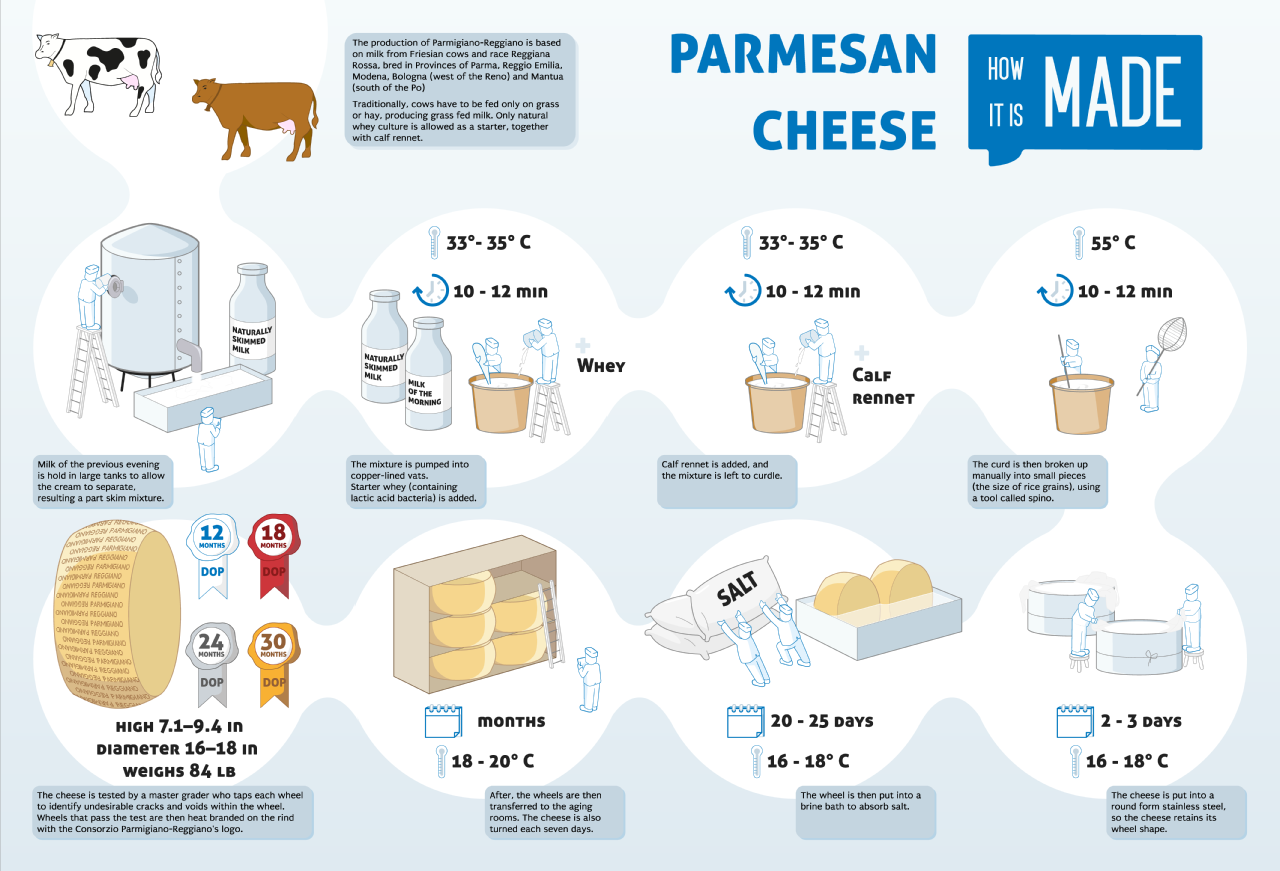
Authentic Parmigiano-Reggiano is made from cow's milk collected from farms within a defined production zone. The officially recognized provinces include Parma, Reggio Emilia, Modena, and parts of Mantua and Bologna. Milk is typically skimmed naturally, warmed, and mixed with rennet to form curds. Cheesemakers cut and cook the curd, transfer it into moulds to form large wheels, then salt the wheels by brining before moving them to aging cellars. The process emphasizes local milk sourcing, traditional techniques and careful hygiene to achieve consistent quality.
Milk, feed and seasonal effects
The character of the cheese reflects the herd management, pasture and feed regimes of the producing area. Seasonal variations in milk composition can produce subtle shifts in aroma and texture between batches. Producers manage these variables through established practices that are part of the product specification and quality controls.
Aging and maturation
Aging is a defining feature of Parmesan. Wheels mature in controlled environments for months to years; maturation encourages protein breakdown and the formation of small, crunchy crystals that contribute to the characteristic granular texture. Standard commercial labels often show the age or quality tier; aging influences aroma, salt perception and the intensity of umami flavor. Typical ages for widely sold Parmigiano-Reggiano range from about one year to several years for extra-mature examples.
Characteristics
- Texture: very firm, crumbly and granular; older wheels develop calcium lactate or tyrosine crystals that feel crunchy.
- Flavor: concentrated and savory with nutty, fruity and brothy notes, plus a pronounced umami and saline finish.
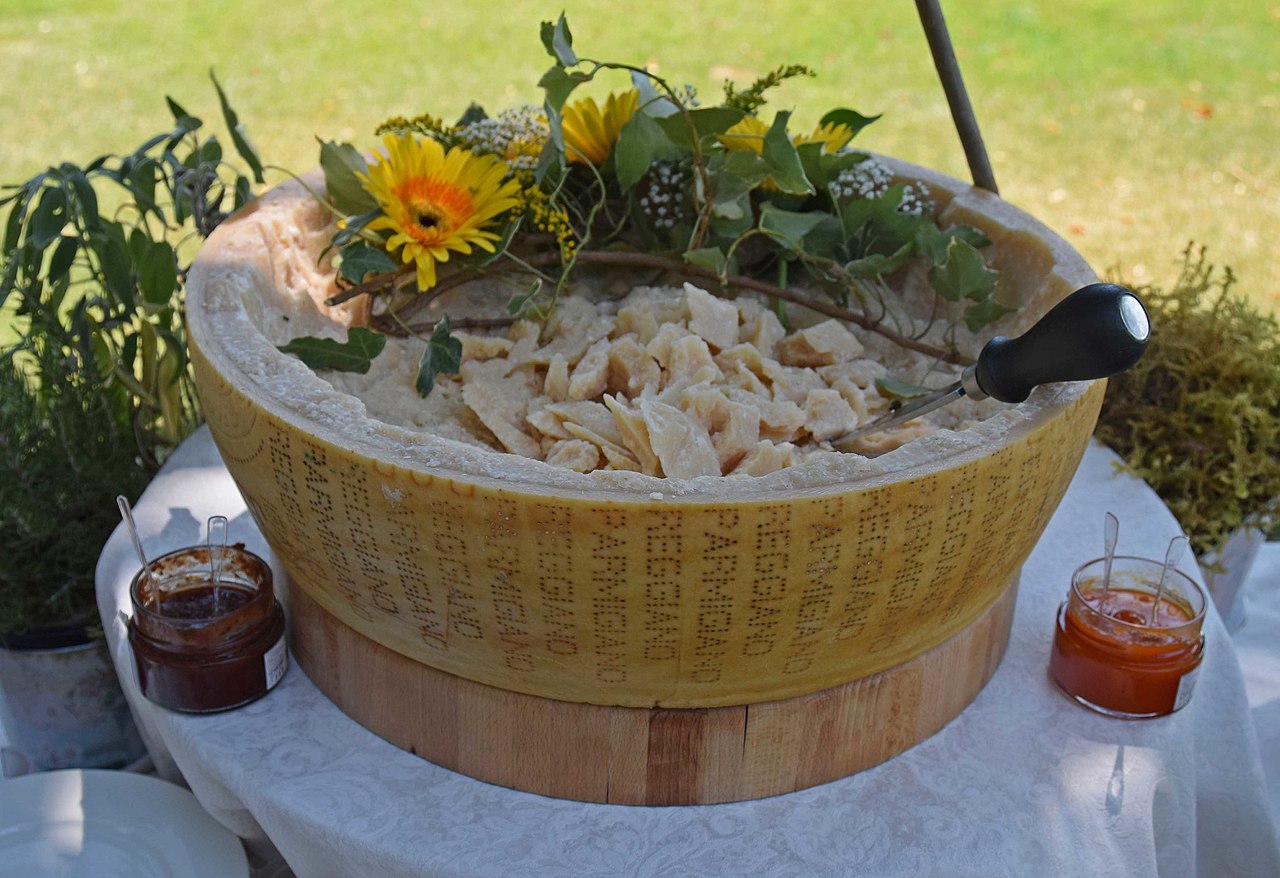
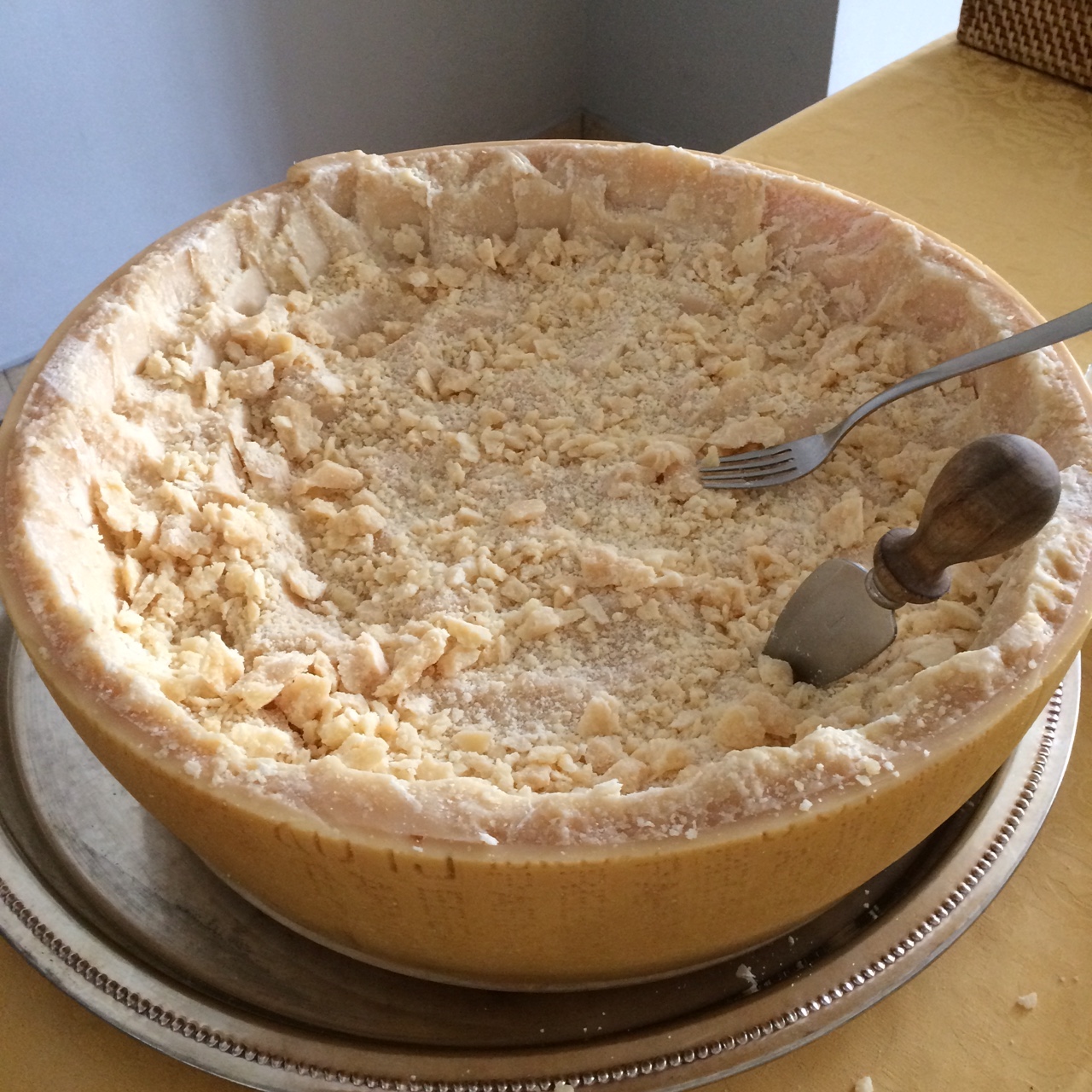
- Appearance: pale to deep straw color; sold grated, in shards or as chunks with a natural rind.
- Classification: belongs to the grana family of long-aged, extra-hard cheeses.
Uses and culinary role
Parmesan is a versatile culinary tool. It is commonly grated over pasta dishes such as spaghetti, stirred into risotto, folded into soups and sauces to add body and savory depth, or served in shards with fruit and wine. The rind is often saved to flavor stocks and legumes during cooking. Because of its concentrated flavor, small amounts lift many recipes; it is also used to finish salads and roasted vegetables or to enrich compound sauces.
Pairing and tasting
When tasting, note the balance between crystalline texture, savory intensity and aromatic notes. Parmigiano-Reggiano pairs well with full-bodied wines, aged vinegars, and fruit-forward accompaniments. In cooking it is often preferred to other cheeses because it can provide a lasting savory backbone without melting into a single, greasy layer.
Buying, storage and alternatives
For authentic Parmigiano-Reggiano look for clear labeling and, in many markets, the stamped rind or certification marks. Store cheese wrapped to limit drying and keep it cool; refrigeration is typical for opened pieces. Keep a piece of rind for flavoring stocks. When true Parmigiano-Reggiano is unavailable or too costly, other grana-style cheeses and aged alternatives can substitute in recipes, but taste and legal status may differ—check product origin and production notes when provenance matters. Many culinary guides list suitable substitutes and usage tips for home cooks and professional kitchens (pasta and culinary).
Legal protection and naming
Parmigiano-Reggiano benefits from a protected designation of origin; the system (shown as DOP in Italy) sets rules on production methods, allowed territory and labeling. The designation is enforced in many jurisdictions and aims to preserve traditional practice and prevent misleading use of the name. For details on the specification and certification see the official designation references (designation). Within Europe the protected name is enforced; in other regions the term "Parmesan" may be used more broadly for similar cheeses produced outside the designated area.
Nutrition, rind uses and sustainability
As a concentrated dairy product, Parmesan is high in protein and minerals and has a relatively low moisture content. The natural rind is often used to impart savory flavor to soups and stews and contributes to minimizing waste when saved for culinary use. Sustainable sourcing and careful herd management are increasingly important to consumers and producers concerned with animal welfare and environmental impact.
Notable facts
- Parmigiano-Reggiano follows long-standing regional traditions and a protected specification that links product to place.
- Its granular texture and crystalline inclusions are a hallmark of extended aging and protein breakdown.
- Outside protected markets many cheeses are labeled "Parmesan"; these may differ significantly from the Italian original in production and flavor.
For authoritative and detailed information consult official producer consortia, designation documentation and regional food authorities; these sources provide technical specifications, historical background and guidance on authentic labeling (official designation). Regional cultural resources for areas such as Parma and Modena also offer historical context and culinary references.
Related articles
Author
AlegsaOnline.com Parmesan cheese (Parmigiano-Reggiano) Leandro Alegsa
URL: https://en.alegsaonline.com/art/74779
Sources
- ec.europa.eu : Case C-132/05 Commission v Germany
- forbes.com : "Most Parmesan Cheeses in America Are Fake, Here's Why"
- books.google.com : Handbook of cheese in health: Production, nutrition and medical sciences
- doi.org : 10.3920/978-90-8686-766-0
- books.google.com : Wisconsin Cheese: A Cookbook and Guide to the Cheeses of Wisconsin – Martin Hintz, Pam Percy – Google Books
- usatoday30.usatoday.com : "What's in a name?"