
Parmigiana: layered Italian casserole of fried slices, tomato and cheese
Parmigiana is a Southern Italian baked dish of layered fried slices (traditionally eggplant), tomato sauce and cheese. It has many regional and international variants including meat-based cutlets.
Overview
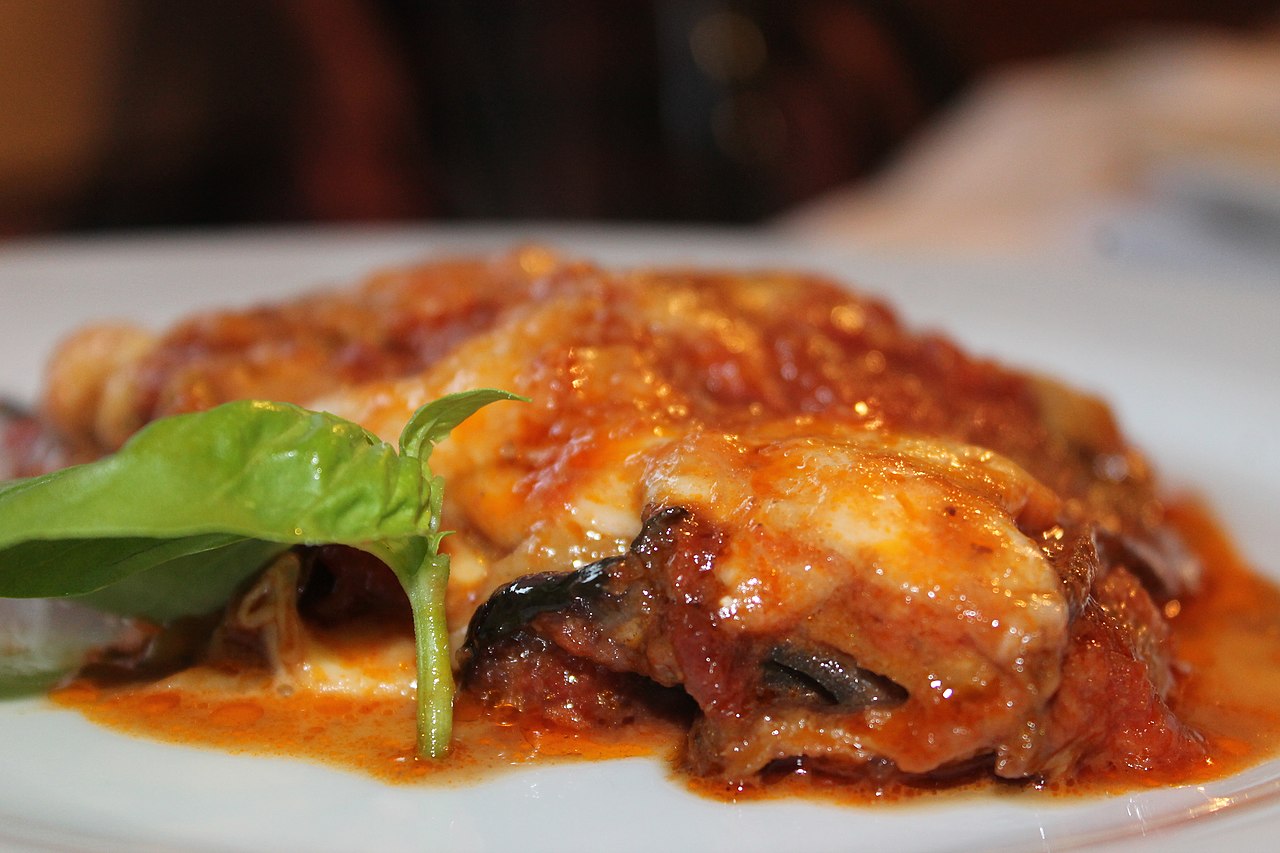
Parmigiana (also called parmigiana di melanzane or eggplant parmigiana) is a class of Italian baked dishes built from stacked or layered slices, a tomato-based sauce and melting cheese. The most familiar form uses eggplant as the primary layer, but the technique has been adapted to other main ingredients. The dish is typically assembled in a shallow casserole and finished in the oven until the sauce bubbles and the cheese is browned.
Image gallery
4 Images


Ingredients and preparation
Traditional components include sliced eggplant, cooked tomato sauce, and grated or sliced cheese such as Parmesan or mozzarella. Eggplant slices are commonly pan-fried or shallow-fried in olive oil before layering, although grilling, roasting, or air-frying are used in lower-fat versions. Layers of vegetable or meat, sauce and cheese alternate, then the whole assembly is baked to meld flavors and develop a golden top. For more on regional ingredient choices see cheese and sauce variations and for common finishing methods see baking techniques.
History and origin
The dish is associated with Southern Italy, where ingredients like eggplant, tomatoes and hard sheep or cow cheeses were widely available. Multiple towns and regions claim related recipes, and exact origins are debated among food historians. The earliest and most archetypal version uses eggplant as the layered vegetable; over time cooks expanded the approach to include other proteins and vegetables. For background on geographic claims and traditional forms consult sources about Southern Italian cuisine.
Variations and examples
- Eggplant parmigiana (classic Italian): layers of fried eggplant, tomato and cheese.
- Veal parmigiana: breaded veal cutlets topped with sauce and cheese, popular in immigrant communities and restaurants; see veal variations.
- Chicken parmigiana: breaded chicken cutlets baked with tomato and cheese, widely served in the United States, Britain and Australia; see chicken variants.
These variants illustrate how the parmigiana technique—breading or preparing a primary element, topping with sauce and cheese, then baking—travels across cuisines.
Serving, significance and distinctions
Parmigiana is served as a main course, often accompanied by pasta, salad or bread. The eggplant version is naturally vegetarian; meat-based versions are common in restaurants outside Italy. Important distinctions include the difference between parmigiana and simple cutlets (which may be fried and served without tomato or cheese), and the frequent confusion between the name of the dish and Parmigiano-Reggiano cheese. Modern adaptations address dietary needs with gluten-free breading or reduced-oil cooking methods.
Questions and answers
Q: What is Parmigiana?
A: Parmigiana is a dish that originated from Southern Italy. It is made with a shallow-fried sliced filling, topped with tomato sauce and cheese, and baked.
Q: What is the earliest version of parmigiana?
A: The earliest version of parmigiana is the eggplant parmigiana.
Q: Are there other variations of parmigiana aside from the eggplant version?
A: Yes, other variations of parmigiana are made with breaded meat cutlets, such as veal and chicken parmigiana.
Q: Where are the other kinds of parmigiana commonly popular?
A: The other kinds of parmigiana, such as veal and chicken parmigiana, are popular in other countries, usually in areas with a lot of Italian immigrants.
Q: What is the cooking process of parmigiana?
A: Parmigiana is made by shallow-frying sliced filling, topping it with tomato sauce and cheese, and then baking it.
Q: What is the main ingredient of parmigiana?
A: The main ingredient of parmigiana varies depending on the variation being made, but it can be eggplant, veal, or chicken.
Q: Is parmigiana a healthy dish?
A: Parmigiana is a delicious dish, but it is not necessarily the healthiest option. It is often fried, contains cheese and tomato sauce, and may even have breadcrumbs.
Related articles
Author
AlegsaOnline.com Parmigiana: layered Italian casserole of fried slices, tomato and cheese Leandro Alegsa
URL: https://en.alegsaonline.com/art/74780
Sources
- italianfood.about.com : italianfood.about.com