
Appellation d'origine contrôlée (AOC)
French certification that ties certain agricultural products to a defined geographic area and traditional production methods, best known for wines and cheeses such as Champagne and Roquefort.
Appellation d'origine contrôlée (AOC) is a French regulatory term used to certify that a food or agricultural product originates from a specific geographical area and is made according to established local practices. The label guarantees a link between the product’s qualities and its place of origin by defining both the physical territory and the traditional methods required for production. The phrase itself is often introduced in English-language explanations as the French term for a controlled place-based designation.
Image gallery
4 Images

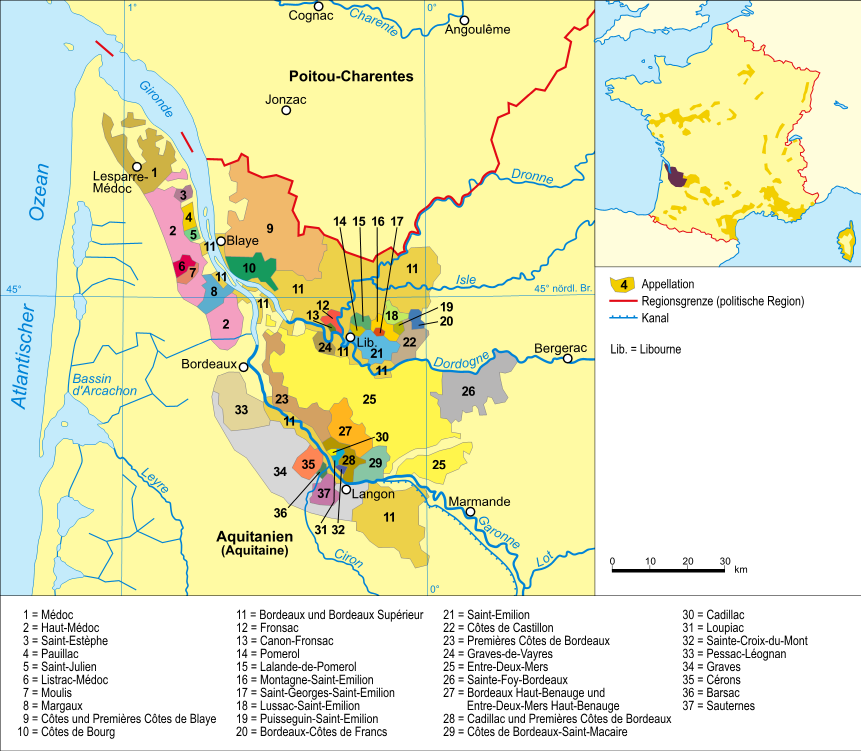

Core characteristics
An AOC designation typically specifies a strict set of rules. These can include the delimitation of the exact geographic area where raw materials may be sourced, permitted varieties or breeds, permitted agricultural and processing methods, and sometimes minimum maturation or aging times. The aim is to protect local know-how and to ensure consistent quality and authenticity. For example, the name Champagne is reserved for sparkling wines produced under specific methods and only within the defined Champagne region of France; one traditional requirement is that certain Champagne wines be fermented in the bottle during their production.
Historical development
The modern AOC system in France was formalized in the early 20th century in response to fraud, imitation and the desire to protect rural producers. The state created a national supervisory body, the Institut national des appellations d'origine et de la qualité (INAO), in 1935 to administer and enforce appellations. Although the AOC framework is often associated with wine, the practice of protecting names goes back further; regulatory definitions for cheeses such as Roquefort were recorded centuries earlier, reflecting long-standing local reputations.
Common products and examples
- Wines and spirits — many French wine regions use AOC status to designate origin and production standards.
- Cheeses — several traditional cheeses have been protected under AOC rules to preserve recipes and production zones.
- Other agricultural products — butter, honey, meats and regional preserves can also receive appellations when they meet defined criteria.
Legal and economic role
AOC labels serve both consumer and producer interests. For consumers they signal traceability and a guarantee of origin and method; for producers they act as intellectual-property-like protection that can add market value and prevent misuse of a place name. The AOC system also influenced broader European schemes such as Protected Designation of Origin (PDO), which operate at the EU level to protect geographically named foods beyond France.
Notable distinctions and challenges
While AOC focuses on strict geographic and procedural definitions, related labels may emphasize wider or different criteria (for example, regional indications with less restrictive rules). Debates continue over how to balance protection of tradition with innovation, how to adapt standards under climate change, and how to resolve international disputes where a geographic name has become generic in other countries. Nevertheless, AOC remains a key model for linking food identity to place and cultural heritage.
Related articles
Author
AlegsaOnline.com Appellation d'origine contrôlée (AOC) Leandro Alegsa
URL: https://en.alegsaonline.com/art/4960