
Ottoman Turkish (Lisân-ı Osmânî): language of Ottoman administration and literature
Ottoman Turkish was the formal Turkish of the Ottoman state (13th–early 20th c.), written in a Perso‑Arabic script and heavily influenced by Arabic and Persian in vocabulary and literary style.
Overview
Ottoman Turkish, known historically as Lisân-ı Osmânî, was the principal written and formal register of Turkish used in the Ottoman Empire from the medieval period until the early 20th century. It served as the language of government, chancery, historiography, judicial records and much of high literature. Ottoman Turkish developed from Turkic roots and absorbed extensive lexical and stylistic influence from neighboring literary traditions.
Image gallery
4 Images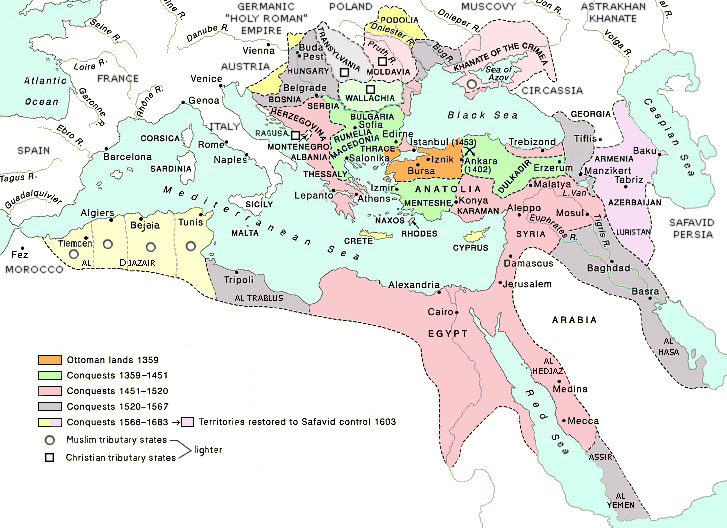


Characteristics
The best-known distinguishing features of Ottoman Turkish are its use of a Perso‑Arabic writing system, its large number of borrowings from Arabic and Persian, and the presence of multiple stylistic registers. Its grammar remained essentially Turkic, but formal texts often employed a high proportion of loan vocabulary, especially in domains such as religion, administration, law, literature and science.
Script and orthography
Ottoman texts were written with a Perso‑Arabic orthography adapted for Turkish phonology; sources commonly refer to the Arabic script or the Perso‑Arabic orthography used for writing. Because that script represented consonants adequately but under‑represented certain Turkish vowels, reading and learning the written standard could be difficult for learners and for speakers of regional vernaculars.
Vocabulary and loanwords
The lexicon of Ottoman Turkish included a significant number of Arabic and Persian loanwords; estimates of the exact proportion vary by genre, period and register. Literary and administrative texts tend to show the highest concentration of non‑Turkic vocabulary, while everyday and folk writings preserve more native Turkic vocabulary. Scholars treat statistics about loanword shares cautiously, noting that the balance shifts with context and time and that native Turkish elements remained central to the language's grammar and idiom.
History and development
From its early development in the 13th–15th centuries the language evolved as the Ottoman polity expanded and absorbed diverse peoples and institutions. The classical era of divan poetry and high prose (roughly 16th–17th centuries) showed deep Persian poetic models and Arabic technical terms. In the 19th century, reforms in administration and education brought increased interest in language policy and access. After World War I, the foundation of the Republic of Turkey and the language reforms of the 1920s—most notably the replacement of the Perso‑Arabic script with a Latin alphabet—led to the decline of Ottoman Turkish as the state standard and its replacement by Modern Turkish.
Registers, literature and preservation
Ottoman Turkish functioned alongside spoken Turkish varieties in a long‑standing diglossic situation: a formal written register and everyday vernaculars that could differ substantially. Major surviving genres include imperial decrees, court chronicles, legal and religious works, correspondence, and a rich corpus of poetry that blends Turkic forms with Persian imagery. Today these documents are studied by historians, philologists and literary scholars and are accessible through archives and critical editions.
Legacy and study
The 1928 alphabet reform and subsequent vocabulary modernization reshaped Turkish, but Ottoman texts remain essential for the study of Ottoman administration, culture and literature. Students and researchers rely on palaeography manuals, bilingual dictionaries, and annotated editions; a number of introductory resources treat the language's Turkic base and its major influences on separate lines. For background on origins and context see materials on Turkic origins, the Ottoman state, and the traditions of Arabic and Persian literary and administrative language. Technical studies of the writing system appear under treatments of the Arabic script and the Perso‑Arabic writing system, while discussions of vocabulary proportions refer to various loanword estimates.
Distinctions and notable points
- Diglossia: Written Ottoman differed from many spoken Turkish dialects, producing distinct registers for formal and colloquial use.
- Orthographic issues: The Perso‑Arabic script posed challenges for representing Turkish vowels, affecting literacy and orthographic reform debates.
- Literary synthesis: Ottoman literary culture combined Turkic poetic forms with Persian models and Arabic learning.
- Research tools: Archives, dictionaries and palaeographic guides are central to reading and interpreting Ottoman documents.
Related articles
Author
AlegsaOnline.com Ottoman Turkish (Lisân-ı Osmânî): language of Ottoman administration and literature Leandro Alegsa
URL: https://en.alegsaonline.com/art/73563
Sources
- countrystudies.us : "Turkey - Language Reform: From Ottoman To Turkish" · web.archive.org
- books.google.com : Persian Historiography and Geography: Bertold Spuler on Major Works Produced in Iran, the Caucasus, Central Asia, India, and Early Ottoman Turkey
- books.google.com : books.google.com/books?id=OWQOAQAAMAAJ