
Vocabulary (language): definition, types, development and study
An overview of vocabulary: definitions, receptive vs productive categories, size estimates, development across the lifespan, change and word formation, measurement methods, and educational implications.
Overview
Vocabulary refers to the set of words known or used by an individual, a social group, a profession, or an entire language. It can mean an itemized word list, the stock of lexical items a child learns as they grow, or the corpus of words available for communication in a language. Vocabulary is central to comprehension and expression: the words we know determine what we can understand when listening or reading and what we can convey when speaking or writing.
Image gallery
1 Image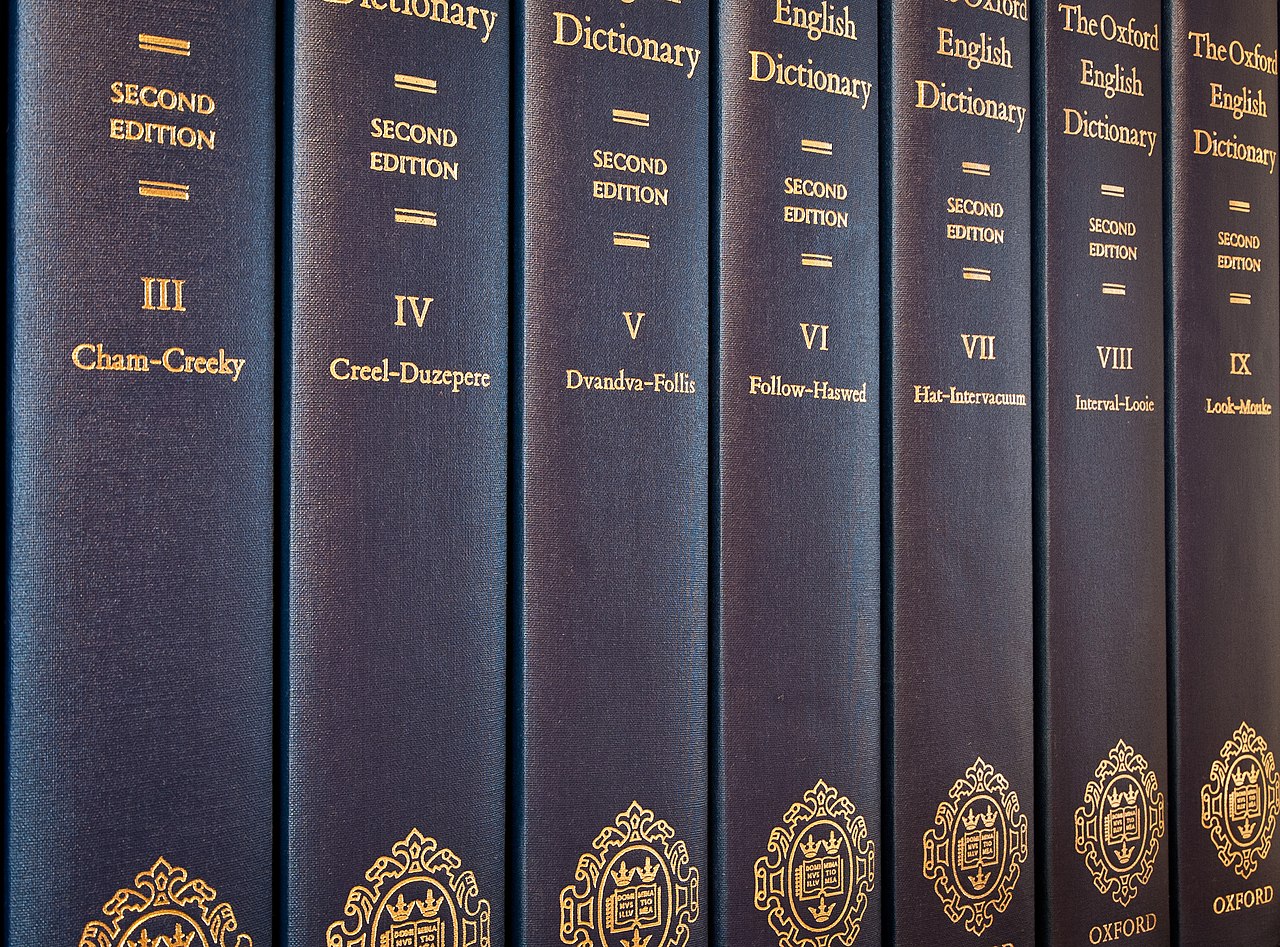
Types and distinctions
Researchers and educators distinguish several overlapping kinds of vocabulary:
- Receptive (passive) vocabulary: words a person can recognize and understand in listening and reading.
- Productive (active) vocabulary: words a person can use correctly in speech or writing.
- Specialized vocabularies: technical or domain-specific sets used in medicine, law, technology and the arts.
- Frequency-based distinctions: high-frequency everyday words versus low-frequency, rare, or academic words.
Often receptive vocabulary is larger than productive vocabulary: many people recognize words they seldom or never use themselves.
Size and common estimates
Estimating vocabulary size is imprecise because it depends on how a "word" is counted (lemmas, word forms, senses) and on the methods used. Common classroom and popular estimates suggest that young children know a few thousand words by early childhood (for example, a typical five-year-old may know on the order of several thousand words), while many adults know tens of thousands. Some adults who have had extensive formal education may recognize around 20,000 or more headwords in ordinary contexts, though a formal count depends on definitions and testing. Dictionaries vary: one large dictionary entry set might include roughly half a million entries when variant forms and senses are counted, and combined lexical resources imply that a language such as English contains many hundreds of thousands of words.
Development across the lifespan
Vocabulary grows rapidly in early childhood through interaction with caregivers and exposure to speech and books. Schooling and reading widen receptive vocabularies, introducing low-frequency and academic words. In adulthood the rate of acquisition typically slows but continues: professional life, hobbies, and reading habits shape the vocabulary a person uses. Differences in education and experience explain variation; for example, some adults who complete higher education report larger vocabularies compared with peers with less formal schooling.
Word formation and lexical change
Languages continually change. New words arise by derivation, compounding, borrowing, shortening, and semantic shift. Technological innovation produces new terminology: computing and internet concepts have supplied verbs and nouns that become ordinary (computer-related vocabulary being a recent example). Cultural movements and subcultures spread expressions and slang into wider use; some terms originating in areas such as hip hop or youth culture have later become mainstream. Existing words also broaden, narrow, or shift meaning over time.
Measurement and research methods
Researchers measure vocabulary with receptive recognition tests, productive elicitation tasks, corpus counts, and dictionary-based estimates. Corpora (large, annotated collections of text and speech) reveal frequency patterns and collocations; lexicographers use corpus evidence to update dictionaries. Psycholinguists study how words are stored and retrieved, how frequency and familiarity affect processing, and how children acquire word meanings. For practical lists, educators often use graded word lists and frequency lists, while researchers consult corpora and lexical databases for systematic study.
Educational and applied considerations
Vocabulary knowledge strongly correlates with reading comprehension and academic success. Instruction includes explicit teaching of high-value words, teaching word parts and morphology, and encouraging wide reading to promote incidental learning. Teaching strategies emphasize context, multiple exposures, and active use to move words from receptive knowledge to productive use.
Lexicography and resources
Dictionaries and lexical databases document words, senses, usage notes, and historical development. No single dictionary records every word in a language; different resources overlap and complement one another. For introductions, one can consult general-purpose dictionaries and curated language resources, while specialized compendia and corpora support advanced research.
Related topics include the mental lexicon, morphology, lexicography, second-language acquisition, and frequency effects in language processing. Practical starting points for learners and teachers are graded word lists, frequency lists, and corpus-informed materials (word lists and lexical databases offer accessible entry points).
Questions and answers
Q: What is a vocabulary?
A: A vocabulary is a list of words that a person knows and uses.
Q: How many words does a five-year-old typically know?
A: A five-year-old typically knows about 4,000 to 5,000 words.
Q: How many words may an adult who has gone to college know?
A: An adult who has gone to college may know 20,000 words.
Q: Is a hearing and reading vocabulary bigger than a speaking and writing vocabulary?
A: Yes, a hearing and reading vocabulary are bigger than a speaking and writing vocabulary because people understand some words that they do not use.
Q: How many words are in the English language?
A: There are about 750,000 words in English, but this number may be more since the number of words in a language is always changing.
Q: What are some examples of new words that have been added to the English language?
A: Examples of new words added to the English language include "download" and "bling."
Q: Do the most used words tend to be short words?
A: Yes, the most used words tend to be short words, and the 50 most common words in English have fewer than seven letters. Half of these words have fewer than four letters.
Author
AlegsaOnline.com Vocabulary (language): definition, types, development and study Leandro Alegsa
URL: https://en.alegsaonline.com/art/105764
Sources
- fltr.ucl.ac.be : fltr.ucl.ac.be
- applij.oxfordjournals.org : applij.oxfordjournals.org/content/24/4/425.full.pdf html