
Pahlavi dynasty
The last Iranian royal house (1925–1979), founded by Reza Shah Pahlavi; notable for centralizing the state, rapid modernization, secular reforms, close Western ties, and its fall in the 1979 Revolution.
The Pahlavi dynasty (Persian: سلسله پهلوی) was the final ruling royal house of Iran, governing from 1925 until the Iranian Revolution of 1979. Founded by Reza Shah, an army officer who rose to national power in the chaotic years after World War I, the dynasty took its name from the Middle Persian (Pahlavi) language as part of a program to emphasize Iran's pre‑Islamic cultural heritage and to promote a modern, centralized nation‑state.
Image gallery
10 Images


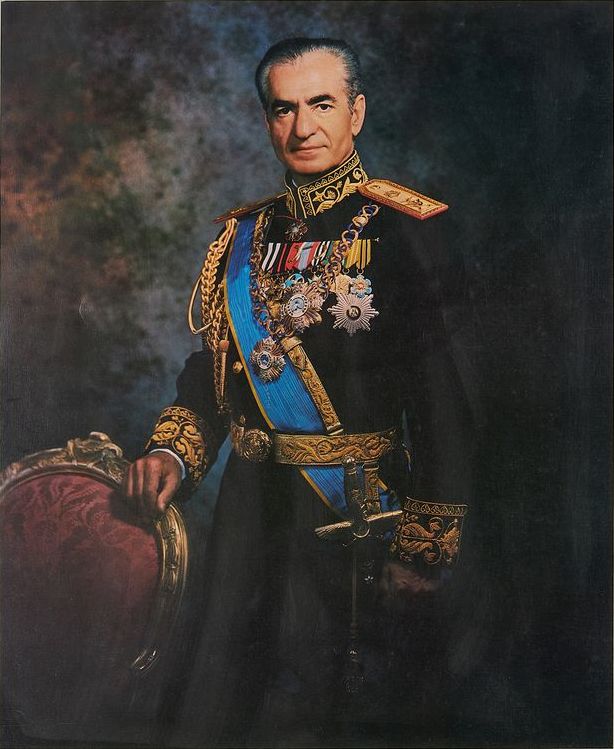


Origins and rulers
Reza Shah consolidated authority after a period of political fragmentation and was formally proclaimed monarch in 1925. He pursued state building through reforms in the military, public administration, education, and transport, including major infrastructure projects that aimed to bind the country together. In 1941, amid the Allied invasion of Iran during World War II and pressure from the United Kingdom and the Soviet Union, Reza Shah abdicated in favour of his son, Mohammad Reza Pahlavi.
Policies, modernization and social change
Both Pahlavi rulers emphasized modernization, secularization and centralization. Policies included expansion of secular schooling, legal and administrative reforms, promotion of industry and transport, and efforts to reduce the autonomous power of tribal and local elites. Reforms affecting dress, education and public life sought to accelerate cultural change, often provoking resistance among traditional and religious communities.
Under Mohammad Reza Pahlavi the state pursued ambitious economic and social programs that reshaped Iranian society. The 1960s White Revolution introduced land reform, literacy and public health initiatives, enfranchised women in certain areas of public life, and promoted state‑led industrialization. These measures contributed to economic growth and the expansion of a modern urban middle class but also produced dislocations, inequality and political tensions.
During the 1951–1953 oil nationalization crisis, the democratically elected prime minister Mohammad Mosaddegh moved to nationalize the Anglo‑Iranian Oil Company, precipitating a confrontation with Britain and the United States that culminated in Mosaddegh's removal and the Shah's strengthened authority. The period that followed saw the growth of an extensive security apparatus, with severe restrictions on political dissent.
Foreign relations under the Pahlavis were marked by close alignment with Western powers, particularly the United States, and by Iran's strategic role in Cold War regional politics and global oil markets. The dynasty's foreign policy and domestic security measures were often the subject of domestic controversy and international criticism.
End of rule and legacy
By the late 1970s mounting political repression, rapid social change, economic discontent and an empowered religious opposition combined in mass protests that forced the Shah into exile in 1979 and brought about the abolition of the monarchy. The Pahlavi era left a contested legacy: proponents point to industrialization, expanded education, public health improvements and modern infrastructure; critics emphasize authoritarianism, human rights abuses and uneven development. The dynasty's fall was a watershed in Iranian history and continues to shape debates about governance, modernization and national identity.
- Founded by Reza Shah in 1925; rule ended with the 1979 Islamic Revolution.
- Name references the Middle Persian (Pahlavi) language and pre‑Islamic Iranian heritage.
- Major programs included state modernization, the White Revolution and expanded women's rights.
- Marked by rapid economic change, strong ties to the West, and domestic political repression.
Related articles
Author
AlegsaOnline.com Pahlavi dynasty Leandro Alegsa
URL: https://en.alegsaonline.com/art/74010