
Augustin-Louis Cauchy (1789–1857): rigorous founder of modern analysis
French mathematician and physicist who established rigorous foundations for analysis and complex function theory and contributed to elasticity and mathematical physics.
Overview
Augustin-Louis Cauchy (21 August 1789 – 23 May 1857) was a French mathematician and mathematician often described also as a physicist because of his work on continuum mechanics. Trained at the École Polytechnique and the École des Ponts, Cauchy helped transform calculus and complex function theory by insisting on rigorous definitions and careful proofs.
Image gallery
6 Images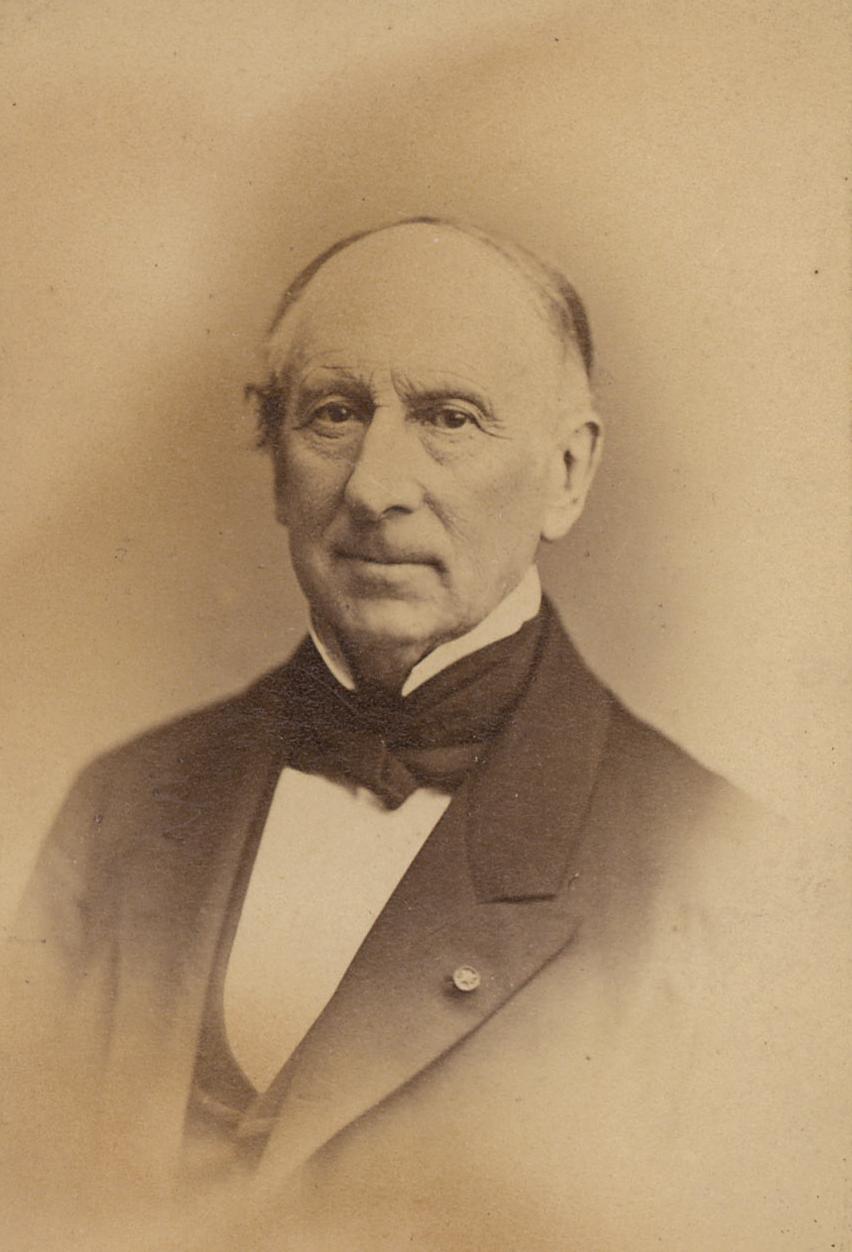



Major contributions
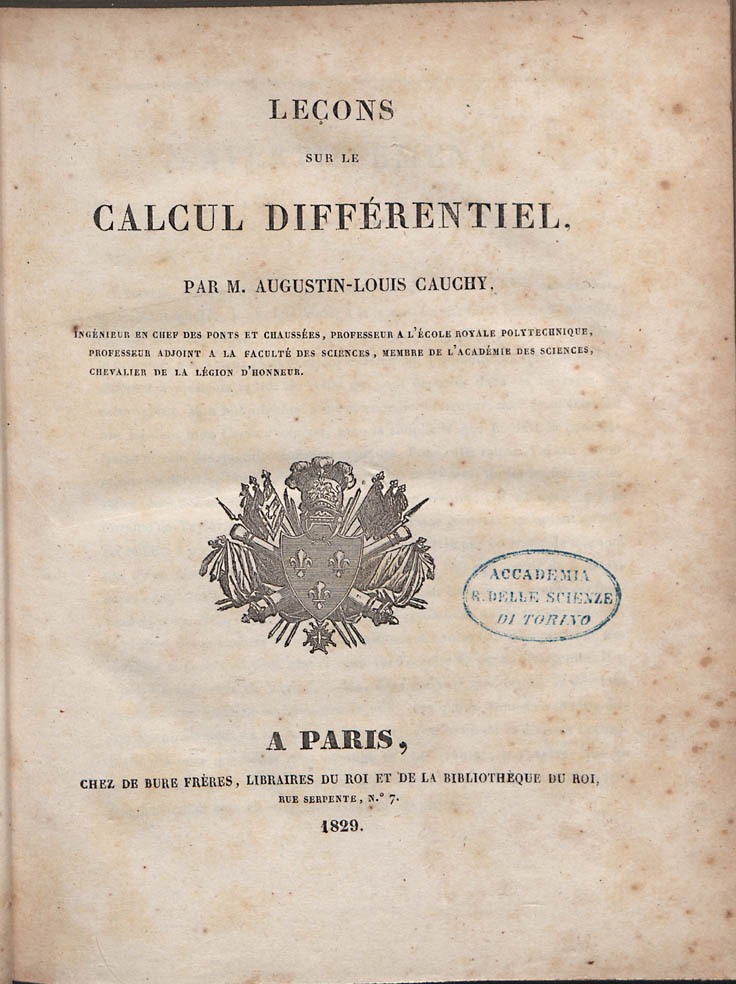
Cauchy was a central figure in developing what is now called mathematical analysis and in founding formal complex analysis. He introduced fundamental concepts — including the idea of a Cauchy sequence as a criterion for convergence — and clarified the role of limits and continuity in calculus. In complex analysis he proved what became known as the Cauchy integral theorem and the Cauchy integral formula, key tools for evaluating integrals of complex functions.
In mathematical physics and applied mathematics his work influenced the mathematical description of material behavior. He contributed to the theory of stress and strain and to problems in mathematical physics, notably in elasticity, where his formulations remain part of the foundations of continuum mechanics.
Approach and historical context
Cauchy's career coincided with a period when mathematicians moved from computational rules toward rigorous foundations. He was critical of earlier, often informal, methods employed by authors such as Euler and Lagrange. In particular he highlighted failures that can occur when properties valid for finite expressions are extended without caution to infinite series. His insistence on precise hypotheses shaped the modern notion of a proof in analysis.
Concepts and theorems associated with Cauchy
- Cauchy sequence — a sequence whose terms become arbitrarily close to each other.
- Cauchy integral theorem and Cauchy integral formula — cornerstones of complex analysis.
- Cauchy–Riemann equations — conditions for complex differentiability.
- Cauchy stress tensor — a basic object in continuum mechanics and elasticity.
- Cauchy inequalities and various estimates used across analysis.
Legacy and influence
Many results, definitions and techniques in modern mathematics bear Cauchy's name; numerous theorems and objects are eponymously linked to him, reflecting the breadth of his impact (see examples). His work paved the way for later formalizations of topology, metric spaces and functional analysis. Today his emphasis on definitions and rigor is standard in mathematical training and practice.
For further reading about his life, proofs and specific theorems one may consult historical surveys and modern expositions of analysis and mechanics (biographical sources, analysis texts, mathematical physics histories). Cauchy's career illustrates how careful logical structure can turn a collection of computational rules into a coherent theoretical discipline (scholarly overview, introductions to complex analysis, elasticity studies, series and convergence discussions).
Although his personality and some of his views were controversial in his own time, the mathematical standards he championed remain fundamental to how analysis is taught and practiced worldwide.
Related articles
Author
AlegsaOnline.com Augustin-Louis Cauchy (1789–1857): rigorous founder of modern analysis Leandro Alegsa
URL: https://en.alegsaonline.com/art/7341
Sources
- encyclopedia.com : "Cauchy, Augustin-Louis"
- wikidata.org : wikidata.org/wiki/Q8814
- authority.bibsys.no : 90155584
- catalogo.bne.es : XX1219704
- catalogue.bnf.fr : cb11895590x
- data.bnf.fr : (data)
- cantic.bnc.cat : a10062907
- ci.nii.ac.jp : DA0069921X
- d-nb.info : 118519735
- isni.org : 0000 0001 1029 3909
- id.loc.gov : n80160269
- culture.gouv.fr : LH/451/10
- genealogy.math.ndsu.nodak.edu : 55177
- id.ndl.go.jp : 00435541
- aleph.nkp.cz : mzk2002148072