
Olia Chain (The Olias) — mountain range in southwest Northern Territory
A concise overview of the Olia Chain: location, landscape, geology, cultural significance, notable peaks and access in the remote southwest of Australia’s Northern Territory.
Overview
The Olia Chain, often called the Olias, is a remote series of rocky hills and ridges in the far southwest of the Northern Territory of Australia. It forms the southeastern end of the Petermann Ranges and provides a geological and topographic link toward the Musgrave Ranges to the south. The chain is notable for its isolated outcrops rising from surrounding sandy plains and for its role in the broader Central Australian landscape.
Image gallery
1 Image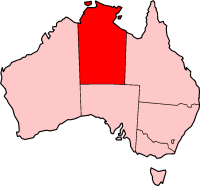
Geography and notable summits
The range extends roughly from Katamala Cone at the northern end to the Mantarur area in the south; several named features punctuate the chain. Peaks and prominent features include:
- Katamala Cone — a northern high point of the chain.
- Stevenson Peak — dominating the central section of the chain.
- Mantarur (including Butler's Dome) — marking the southern extent and among the higher points.
- Scattered smaller domes, mesas and ridges that appear as isolated rocky islands in the desert plain.
Landscape and geology
The Olia Chain is composed of resistant beds of sedimentary and metamorphic rocks, including sandstones, slates, quartzites and local limestone layers. These harder strata form flat-topped ridges and steep-sided outcrops after long episodes of uplift and erosion, while the lower ground between them is dominated by wind-blown sands and red earth. The resulting scenery is a mix of cliffs, stony talus slopes and level plateau tops that capture sparse vegetation typical of arid Australia.
Cultural and ecological significance
The area around the Olia Chain lies within the traditional lands of Aboriginal peoples of the region. Small outstations and communities, such as the Pitjantjatjara outstation Pirrulpakalarintja, maintain cultural connections to country, ceremonial sites and stories tied to the landscape. Ecologically, the rocky refuges support specialized plants and animals adapted to arid conditions and to the microhabitats offered by cliffs and rock hollows.
Access, research and conservation
Access to the Olia Chain is limited by its remoteness and by the fact that much of the area is held as Aboriginal land; permits and community permission are commonly required. The chain attracts interest from geologists studying Central Australian terrains, biologists surveying arid-zone species, and from travelers seeking remote landscapes. Conservation efforts and land management are typically coordinated with local Indigenous custodians and regional authorities.
Distinctive features and context
What distinguishes the Olia Chain is its character as a bridging element in central Australia: a compact set of rocky ridges that physically and geologically connects the Petermann Ranges with the Musgrave Ranges. Its flat-topped ridges, isolated domes and scattered outcrops are representative of long-term arid-land erosion processes and of the deep cultural layering that defines much of Australia’s interior.
Related links
- Coordinates and mapping reference
- Regional mountain ranges overview
- Northern Territory information
- Australia: geographic context
- Petermann Ranges
- Musgrave Ranges
- Mantarur and local features
- Pitjantjatjara people
- Local outstations and communities
- Sandstone and sedimentary rocks
- Slate and metamorphic beds
- Quartzite formations
- Limestone occurrences
Related articles
Author
AlegsaOnline.com Olia Chain (The Olias) — mountain range in southwest Northern Territory Leandro Alegsa
URL: https://en.alegsaonline.com/art/72372