
Olt River
Major Romanian river rising in the Carpathians and flowing south through Transylvania and Wallachia; historically known as Alutus/Aluta and important for valleys, hydroelectricity and local settlements.
The Olt is a principal river of Romania, historically known in Latin as Aluta/Alutus. In modern usage it is referred to by names in several languages: Romanian Olt, Hungarian Olt or variant forms, and German Alt. It is a river of Romania (country) that crosses diverse landscapes from the Carpathian highlands toward the south.
Image gallery
10 Images




Course and geographical features
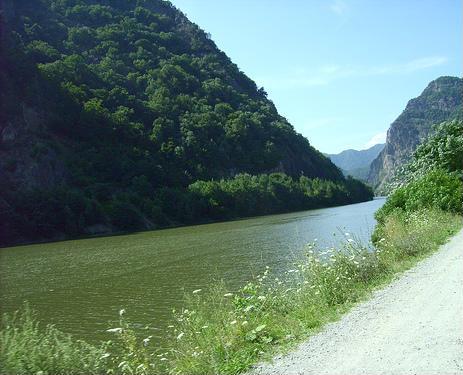
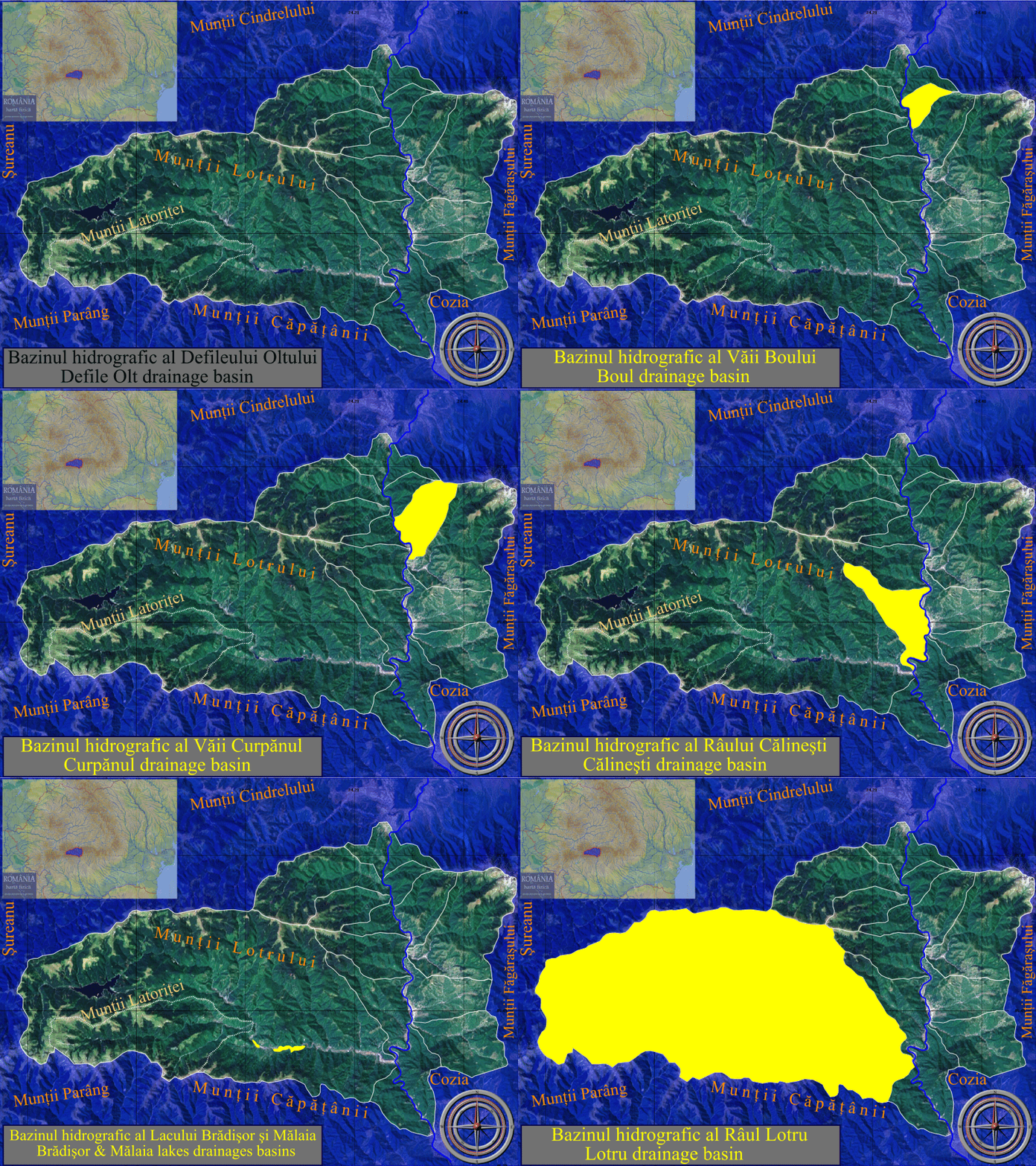
The river rises in the mountain area of Harghita and descends through a sequence of valleys and gorges before entering lower plains. Along its course it cuts a notable defile through the Southern Carpathians, a narrow and scenic stretch often referred to as the Olt Gorge or Turnu Roșu pass. The valley has shaped local transport routes and settlements for centuries.
Administrative regions and tributaries
The Olt flows through several Romanian counties including Harghita, Covasna, Braşov, Sibiu, Vâlcea and Olt. It receives water from a number of feeders and sub‑basins; among the better known tributaries are the Cibin and the Lotru.
History and names
In antiquity the river appears in Roman records under the names noted above and the Olt valley contained a string of forts and routes used during Roman times (Roman era). Over the medieval and modern periods the river valley has continued to function as a corridor between Transylvania and the southern provinces.
Uses and importance
Today the Olt has multiple economic and environmental roles: it supports irrigation and agriculture in the lowlands, provides sites for hydroelectric plants and reservoirs along stretches of its course, and supplies water to towns and industry. Navigation is limited; the river is more important as a regional transportation corridor and a source of renewable energy and freshwater.
Ecology and notable facts
The river and its riparian zones host typical Central and Eastern European freshwater habitats and species. Conservation concerns focus on water quality, habitat connectivity and managing the effects of dams and urbanization. For further general reference on the river and its regional context see the entries on the river itself (river) and the country (Romania), and the language‑linked name pages (RO, HU, DE). Additional sources and regional studies can be consulted via local geographic and hydrographic services (Covasna, Sibiu, Vâlcea, Olt).
Questions and answers
Q: What is the Olt River?
A: The Olt River is a river in Romania that flows through several Romanian counties, namely Harghita, Covasna, Braşov, Sibiu, Vâlcea, and Olt.
Q: What are the other names of the Olt River?
A: In Romanian and Hungarian, the Olt River is called Olt, while in German, it is called Alt. In Roman times, it was known as Alutus or Aluta.
Q: What is the significance of the Olt River?
A: The Olt River played an important role in the history of Romania as it served as a transportation and trade route.
Q: What counties in Romania are crossed by the Olt River?
A: The Olt River flows through several Romanian counties, namely Harghita, Covasna, Braşov, Sibiu, Vâlcea, and Olt.
Q: What was the Olt River called in Roman times?
A: In Roman times, the Olt River was known as Alutus or Aluta.
Q: What languages are used to refer to the Olt River?
A: The Olt River is referred to as Olt in Romanian and Hungarian, Alt in German, and Alutus or Aluta in Latin.
Q: What is the history of the Olt River?
A: The Olt River has played an important role in the history of Romania. During Roman times, it was known as Alutus or Aluta and served as a transportation and trade route.
Related articles
Author
AlegsaOnline.com Olt River Leandro Alegsa
URL: https://en.alegsaonline.com/art/72441