
Numerical control (NC) and computer numerical control (CNC)
Numerical control (NC) automates machine operation by executing stored instruction sequences; its computer-driven form, CNC, enables precise, repeatable and complex machining from CAD/CAM data.
Overview
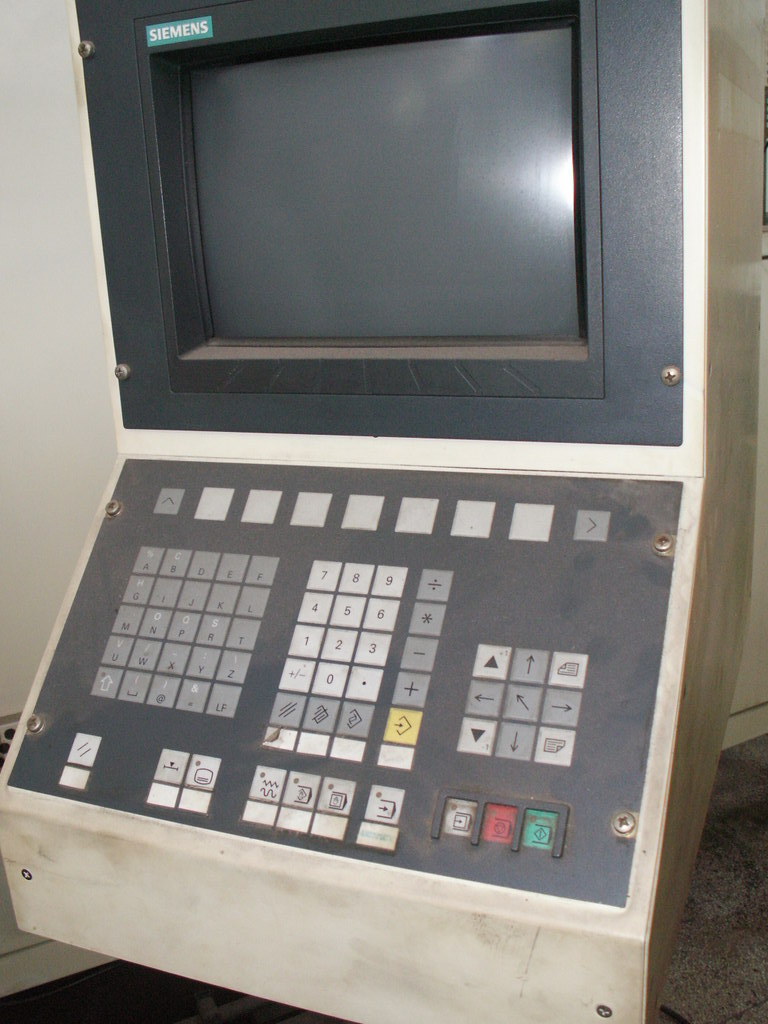
Numerical control (NC) refers to the automation of machine tools and related equipment by following a sequence of stored instructions rather than direct manual operation. Early NC systems used physical storage media to feed commands to machines; later developments replaced those media with electronic computers, giving rise to computer numerical control (CNC). NC and CNC systems translate program data into coordinated motion of toolheads and workpieces, allowing complex shapes and high repeatability across production runs. Many kinds of machine tools and manufacturing systems use numerical control.
Image gallery
10 Images


Components and how it works
At its core a numerical control system consists of a controller, motion-driving elements and feedback or sensing devices. Typical elements include:
- Controller: interprets the program (often in G-code) and issues commands to motors and drives.
- Servo or stepper motors and drives: produce precise, coordinated motion along machine axes (commonly X, Y, Z and optional rotary axes).
- Machine tool and fixtures: the physical cutting, shaping or forming equipment.
- Feedback systems: encoders or resolvers that help maintain accuracy in closed-loop systems.
Programs are prepared as a sequence of commands describing positions, feed rates, tool changes and auxiliary functions. Modern workflows commonly generate these programs from CAD drawings using CAM software to create toolpaths and machining strategies.
History and development
The idea of automating mechanical motion predates electronics. For example, the Jacquard loom used punched cards to control complex weaving patterns; it is often cited as an early concept of program-controlled machinery (Jacquard loom). Mid-20th century machine tools began to use punched tape and other media to encode instructions (punched tape), and by the 1950s electronic controllers and early digital computers were integrated into industrial equipment. When general-purpose computers were applied to machine control, the term computer numerical control (CNC) came into common use (computers), enabling more flexible programming, higher-level languages, and tighter integration with design systems.
Applications and importance
Numerical control is central to modern manufacturing. Common applications include milling, turning (lathes), drilling, grinding, laser cutting, waterjet cutting and routing. NC/CNC permits high precision, uniformity, and the economical production of complex parts that would be difficult or slow to produce manually. It also supports rapid prototyping and low-volume production when paired with CAD/CAM, and underlies many advanced processes in aerospace, automotive, electronics and toolmaking.
Variations, advantages and limitations
Variations range from simple point-to-point NC machines to full multi-axis CNC centers. Advantages include precision, repeatability, reduced operator fatigue, and the ability to reproduce complex geometries. Limitations include initial equipment and programming costs, the need for skilled programmers and maintenance, and setup time for small production runs. Standards and dialects for machine programming (for example, G-code and vendor-specific extensions) coexist, so interoperability can be a practical concern.
Notable facts and distinctions
NC emphasizes the general idea of program-driven control; CNC specifically denotes systems that use electronic computing for interpretation and control. The historical thread from mechanical cams and punched media to today's integrated CAD/CAM/CNC ecosystems shows a steady move toward greater flexibility and automation. Numerical control remains a foundational technology in manufacturing and continues to evolve with digital networking, simulation, and additive and hybrid manufacturing techniques.
Further reading and resources can be found via general technical references and manufacturer documentation; for introductory material see entries on historical devices such as the Jacquard loom, media like punched tape, and modern discussions of computer-based control and machine tools.
Related articles
Author
AlegsaOnline.com Numerical control (NC) and computer numerical control (CNC) Leandro Alegsa
URL: https://en.alegsaonline.com/art/71433