
Jacquard loom: programmable mechanism for patterned textiles
The Jacquard loom is an early 19th-century mechanical loom that uses punched cards to control individual warp threads, enabling complex woven patterns and influencing industrial automation and computing.
Overview
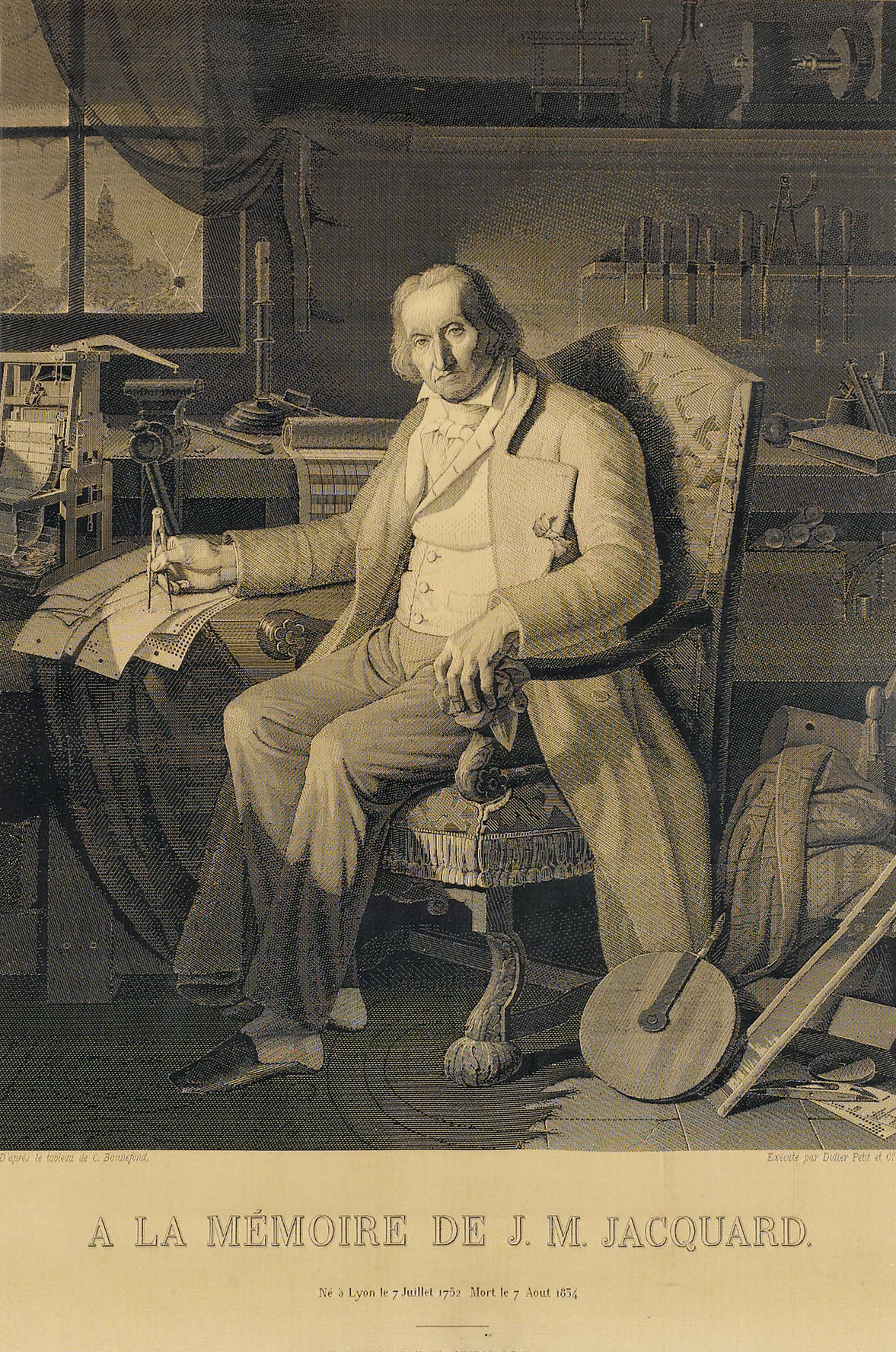
The Jacquard loom is a mechanical attachment for a power or hand loom that automates the selection of individual warp threads to produce intricate woven patterns. Invented and first used in 1801 by the French inventor Joseph Marie Jacquard, the device made it much easier and faster to weave brocades, damasks, tapestries and other complex textiles that previously required highly skilled manual labor.
Image gallery
8 Images



How it works
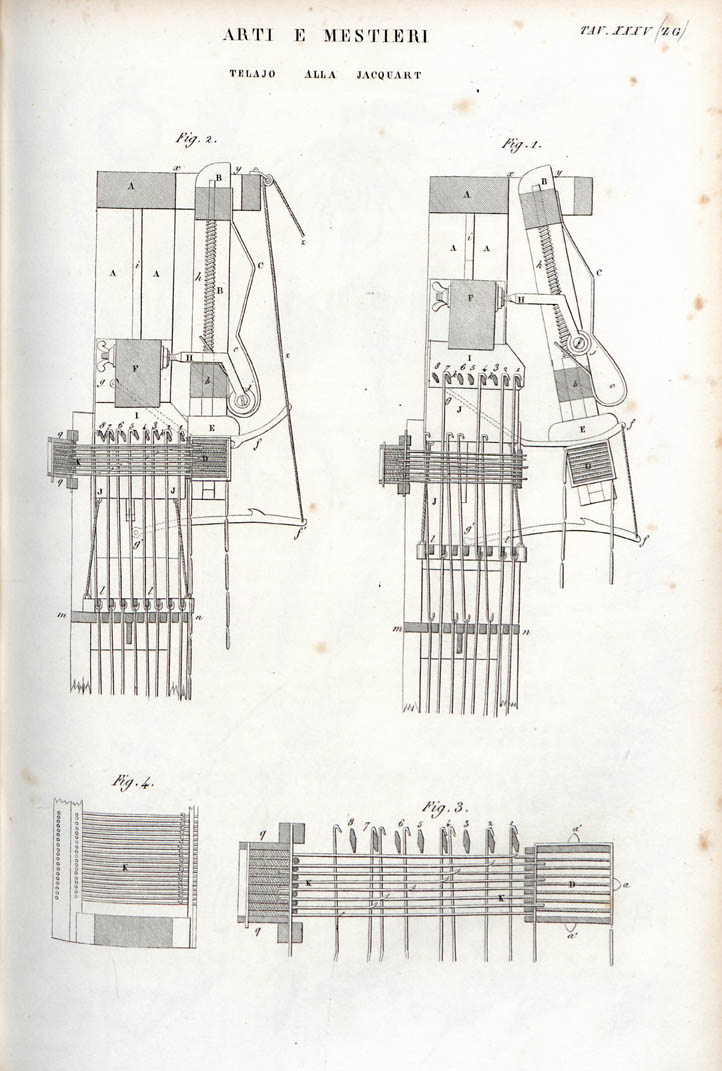
At the heart of the system is a series of punched cards, each card encoding one row of the pattern. The presence or absence of holes controls hooks and needles that raise or lower individual warp ends. The sequence of cards directs the loom through the design, so repeated or elaborate motifs can be woven without continuous manual intervention. The principle — using binary-like instructions encoded on cards to guide machinery — later became notable as an early step toward programmable machines.
Main components include:
- Card stack and card reader: a continuous chain or deck of punched cards.
- Hooks and needles: mechanical elements that engage or release warp threads.
- Warp beam and shed formation: the threads under control by the Jacquard head.
- Harness or head: the frame that integrates the Jacquard head with the loom.
For a technical description of the mechanism and historical diagrams, see the Jacquard mechanism and related loom components on specialist resources such as collections and museum pages (textile technology).
Uses and importance. The Jacquard loom transformed textile manufacture by enabling reproducible, complex patterns at scale. It was widely adopted in silk weaving centers and in factories producing upholstery, fashion brocades, and decorative cloth. The method also reduced the continuous need for a highly trained 'drawboy' or manual pattern-maker and altered the organization of weaving workshops.
Historical impact and distinctions. The Jacquard system built on earlier patterned weaving techniques such as the drawloom but differed by controlling individual warp threads with punched instructions rather than by manually operated mechanisms. Its punched cards are often cited as a conceptual precursor to later punched-card computation and data storage, and it prompted social and economic reactions among workers during the Industrial Revolution. For contemporary overviews and surviving examples in museums, consult curated collections and educational pages (further reading).
Modern looms have largely replaced physical cards with electronic controls, but the term "Jacquard" remains in use to describe fabrics and looms capable of individually addressing warp ends to create complex, programmable patterns.
Related articles
Author
AlegsaOnline.com Jacquard loom: programmable mechanism for patterned textiles Leandro Alegsa
URL: https://en.alegsaonline.com/art/49025
Sources
- commons.wikimedia.org : Jacquard looms
- christinalynn.com : "Fabric Glossary"