
Octopus card — Hong Kong contactless stored-value payment card
Octopus card is a reusable contactless stored-value smart card from Hong Kong used for public transport and small retail payments, introduced in 1997 and influential on later urban transit cards.
Overview
The Octopus card is a reusable contactless stored-value smart card introduced in Hong Kong in 1997 to simplify payment for public transport. It operates as a prepaid electronic purse that users tap at readers to pay fares and make small retail purchases. Over time the system expanded from transit fare collection to a broad range of everyday payments, becoming an integral part of daily life in Hong Kong and a model for other urban transit card systems.
Image gallery
8 Images


Design and technology
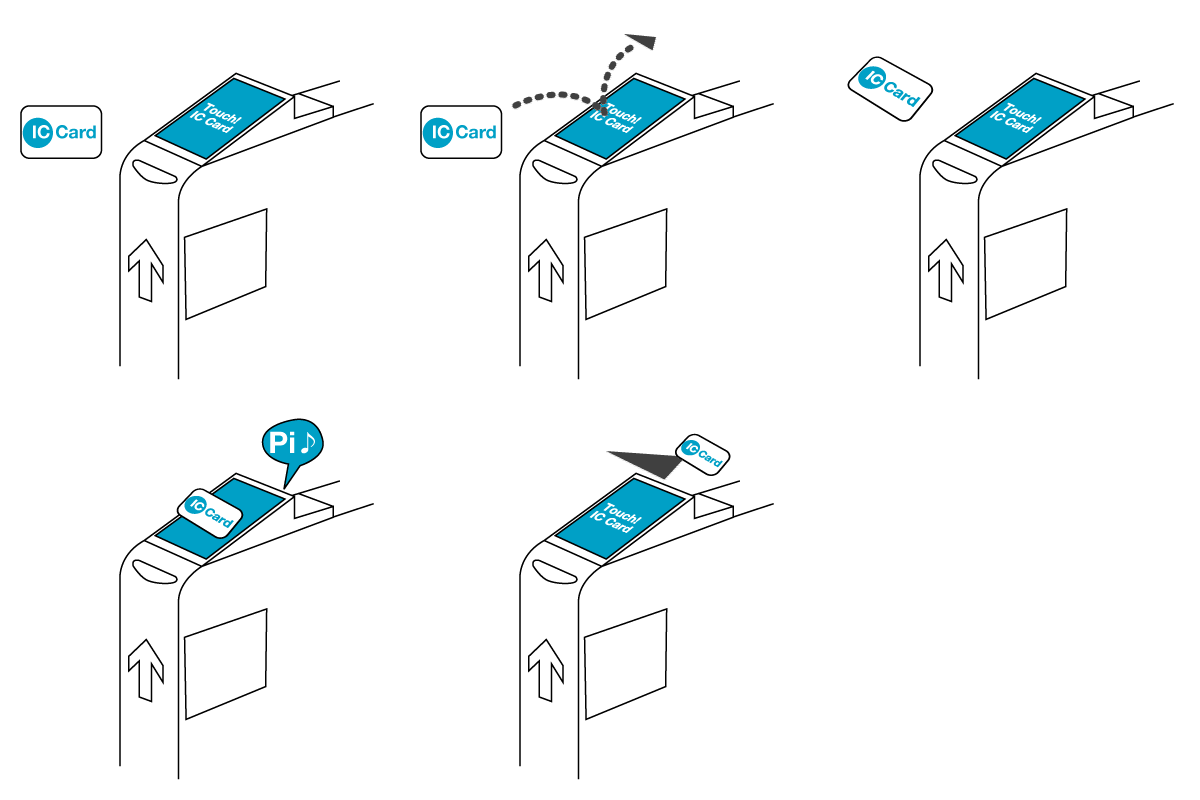
The card uses contactless radio-frequency technology to communicate with readers, based on a widely used platform for fast, short-range transactions. Its design emphasizes speed and reliability so commuters can pass through ticket gates with a quick tap. Many reload options exist, including ticket machines, retail outlets and automated top-up services. Mobile and virtual versions of the Octopus system have been introduced to work with compatible smartphones and wearable devices.
History and development
Launched initially to collect fares for the Mass Transit Railway (MTR), the Octopus program was among the earliest large-scale contactless smart-card deployments worldwide and followed related systems such as South Korea's Upass. Development involved cooperation between transport operators, retailers and a dedicated card company to build an interoperable payments network. The concept influenced later systems in other cities when planners sought faster, cashless fare collection.
Uses and adoption
Beyond trains and buses, Octopus is accepted at convenience stores, vending machines, parking facilities and many service providers for low-value transactions. Typical uses include transit fares, retail purchases, building access and small payments in canteens or vending machines. Its convenience and ubiquity helped high rates of adoption among residents and visitors.
Variants and notable facts
- Multiple card types exist for adults, students, the elderly and visitors to meet different fare rules and discounts.
- The system is run by a specialized operator that manages clearing, merchant agreements and technical infrastructure.
- Octopus influenced the design of other urban smart-card systems and demonstrated the value of interoperable contactless payments.
Further reading
For official and historical material, see: Octopus official information, technical background: technology notes, transport context: transit integration. For comparative systems and influence: international comparisons, London development inspired by Hong Kong: Oyster system background, additional resources and studies: further resources.
Related articles
Author
AlegsaOnline.com Octopus card — Hong Kong contactless stored-value payment card Leandro Alegsa
URL: https://en.alegsaonline.com/art/71933
Sources
- commons.wikimedia.org : Octopus card
- lnweb18.worldbank.org : "Hong Kong Smart Card System"
- octopus.com.hk : "八達通控股有限公司里程碑 (lit. Milestones of Octopus Holdings Limited)"