
Atlas (mythology): Titan condemned to bear the heavens
Atlas, a Titan in Greek myth, was punished to hold up the sky. Father of the Pleiades, he appears in tales with Heracles and Perseus and influenced art, geography and literary symbolism.
Atlas is one of the most enduring figures of ancient Greek myth, classed among the older generation of divine beings known as the Titans. Classical accounts identify him as a son of Iapetus and as the father of the seven sisters called the Pleiades, whose name was later given to a conspicuous star cluster. Atlas figures in a number of narrative cycles and genealogies, and his story has been reshaped in poetry, drama and visual art over many centuries. He is commonly associated with the idea of a titanic burden and with the westernmost lands of the ancient world.
Image gallery
10 Images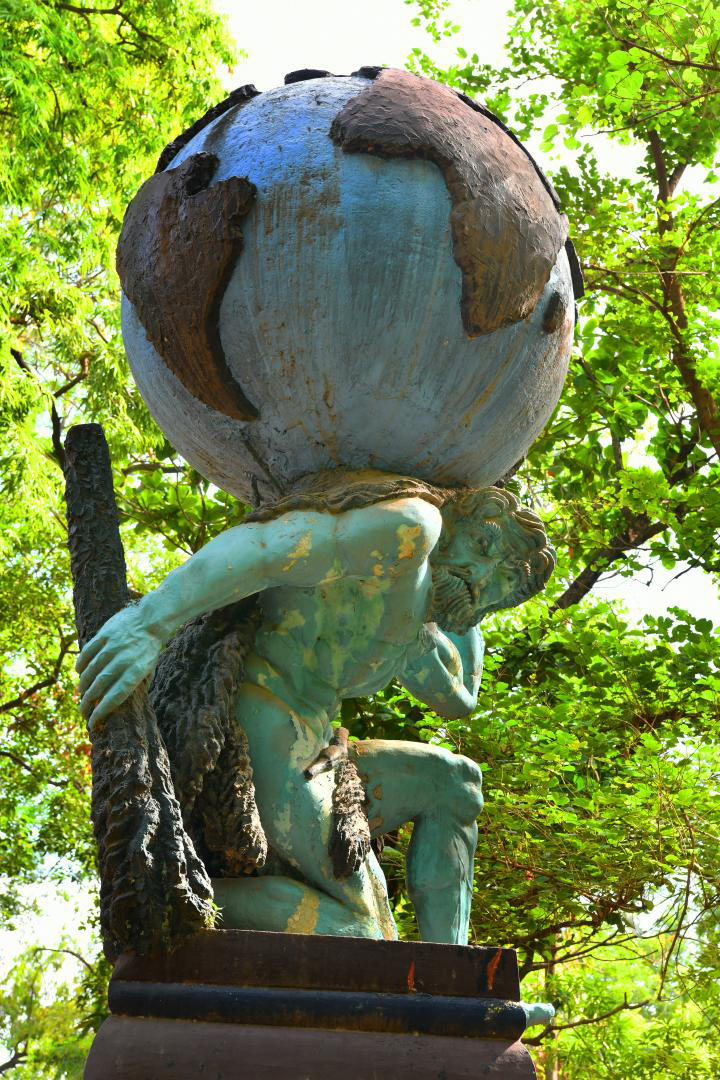


Family and identity
In surviving traditions Atlas is closely tied to family networks that connect Titans and Olympian divinities. He is usually presented as a son of Iapetus and as the consort of an Oceanid, with whom he fathered the Pleiades and in some variants other offspring. These genealogical links place Atlas within the mythic framework that explains both celestial arrangements (the stars and constellations) and the origin of certain peoples and places.
Punishment and the burden of the sky
Following the defeat of the Titans by the younger generation of Olympian gods, mythic tradition records that Atlas received a special sentence. Rather than being destroyed, he was condemned by Zeus to sustain the dome of the heavens, holding it apart from the earth. Ancient descriptions tend to stress that Atlas supports the sky itself rather than bearing a terrestrial globe; the popular image of him carrying the world on his shoulders is a later, artistic development. The location of his station is often placed at the extreme west of the world, a liminal zone associated with sunsets and distant horizons.
Stories with heroes: Heracles and Perseus
Two well‑known encounters highlight both the practical and emblematic aspects of Atlas. In the cycle of the labours of the hero often called Heracles, the hero needs the golden apples of a sacred garden and makes an arrangement with Atlas: the Titan will fetch the fruit if Heracles will temporarily take on his burden. After Atlas returns, some versions relate that Heracles tricks him into reassuming the sky. This episode emphasizes themes of strength, cunning and transitory relief from suffering.
Another prominent episode involves Perseus, who encounters Atlas after killing Medusa. In several accounts the sight of Medusa's severed head turns Atlas into rock, a metamorphosis that mythically explains the origin of a mountain range or a solitary peak. These tales illustrate how mythic narrative links heroic action with the shaping of the natural world.
Iconography and later uses
The figure of Atlas has been widely adopted in art and material culture. Sculptural figures that support architectural elements are sometimes called atlantes and recall the image of a strong man bearing a load. During the Renaissance and thereafter, artistic convention shifted toward portraying Atlas holding a spherical globe, an anachronistic but potent symbol that connected the ancient myth with emerging ideas of global geography and exploration. The name "Atlas" itself came to denote collections of maps, reflecting that association.
Geography, astronomy and cultural resonance
Geographical and astronomical names preserve connections to the myth. The mountain range in northwest Africa is commonly known as the Atlas Mountains, a toponym long associated in popular tradition with the Titan. The Pleiades star cluster remains tied to the story of Atlas's daughters and figures in both navigation and seasonal lore. In literature and philosophy Atlas often serves as a metaphor for endurance, burden, responsibility and the limits of strength.
Interpretation and variants
- Different sources and periods present variations: some emphasize Atlas' cosmic role holding the sky, others elaborate local etiologies that explain mountains and place‑names.
- Ancient poets, mythographers and later interpreters sometimes diverge on details such as his parentage, the number and names of his children, and the precise nature of his punishment.
- Modern readings treat Atlas as both a mythic character and a symbol used in art, cartography and popular imagination, attesting to the flexibility of myth across contexts.
For readers interested in broader context, the figure of Atlas can be explored alongside other elements of Greek mythology and the narratives of the Titans. The punishment imposed by Zeus and the connection to the Pleiades are recurring touchstones in surviving mythic materials. The idea of the western edge of the world and the heavens is sometimes referred to more simply as the heaven or firmament in older sources.
The persistence of Atlas in cultural memory underscores how a single mythic figure can serve explanatory, symbolic and aesthetic purposes across centuries. Whether read as a literal cosmic custodian, a genealogical ancestor, or a potent emblem in art and cartography, Atlas remains one of the most recognizable personifications of burden and endurance in the classical tradition.
See also discussions of related myths and characters such as the Pleiades and the heroes who meet Atlas in their respective exploits.
Related articles
Author
AlegsaOnline.com Atlas (mythology): Titan condemned to bear the heavens Leandro Alegsa
URL: https://en.alegsaonline.com/art/7016