
Medusa: Greek myth, iconography, and cultural legacy
Medusa, originally one of the Gorgons in Greek myth, became a symbol of danger, protection, victimhood, and artistic fascination—known for her snake hair, petrifying gaze, and the tale of Perseus.
Medusa is one of the best-known figures of ancient Greek myth. In early accounts she appears as one of the Gorgons, a trio of sisters whose appearance was terrifying and whose gaze could turn onlookers to stone. Unlike her sisters—who are often described as immortal—Medusa is commonly presented in classical sources as mortal. Her story intersects themes of transformation, divine jealousy, and the boundary between beauty and horror.
Image gallery
10 Images




Mythic narratives and variations
The details of Medusa's origin and fate vary between authors and eras. Some early Greek writers treat the Gorgons as monstrous from birth; later writers, notably the Roman poet Ovid, recount a more complex backstory in which Medusa was once beautiful. In Ovid's telling she suffered a sexual assault by Poseidon in the sanctuary of Athena. As punishment for the sacrilege that took place in her temple, the goddess transformed Medusa into a creature with serpents for hair and a petrifying gaze. Different traditions place blame and emphasize different moral lessons, so interpreters have long debated whether Medusa should be seen primarily as villain, victim, or both.
Perseus and the beheading
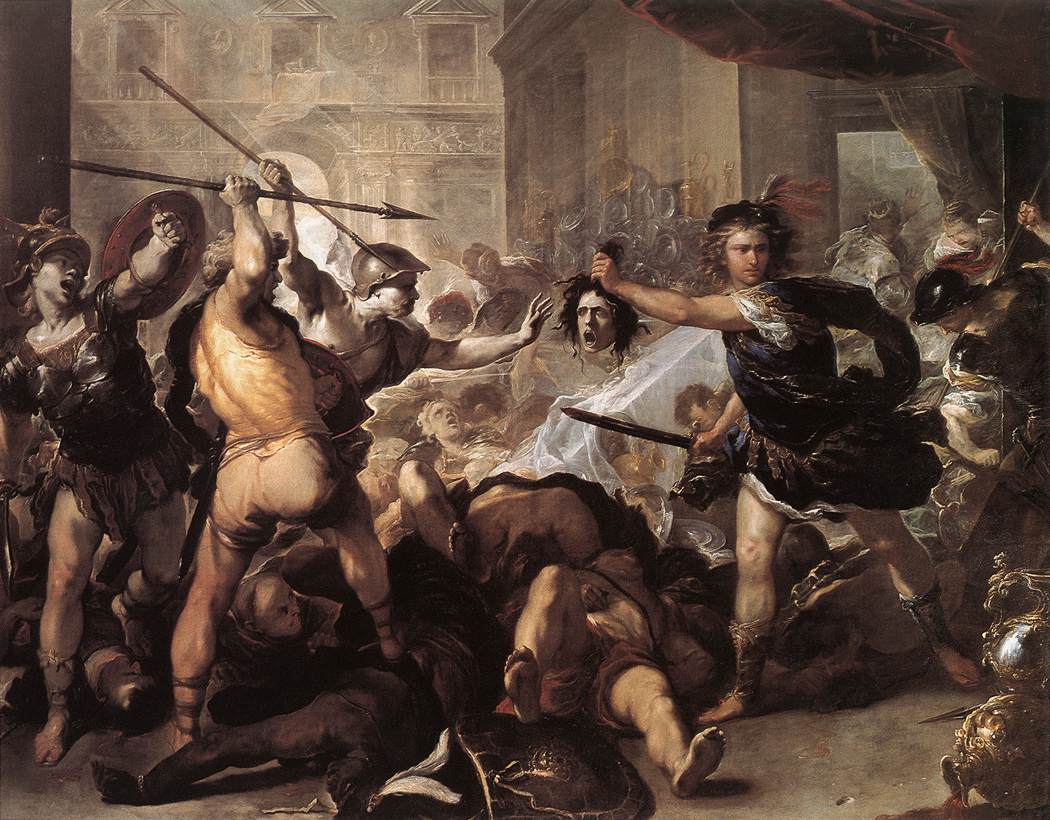
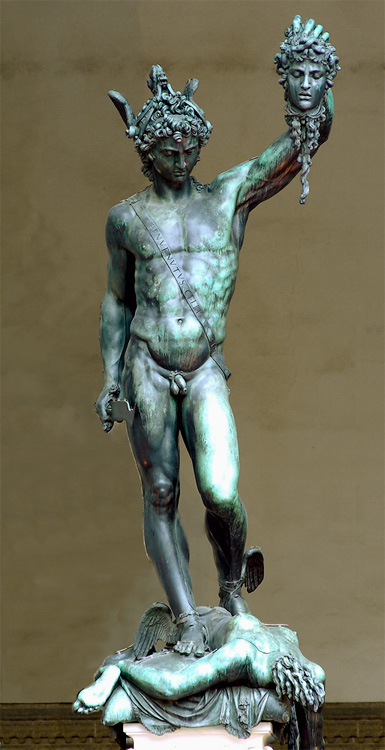
The most famous episode involving Medusa is her death at the hands of the hero Perseus. According to the common version of the tale, Perseus received divine assistance—often including a mirrored shield, winged sandals, and guidance from Athena or Hermes—which allowed him to view Medusa indirectly and avoid being turned to stone. He used the reflection in his shield to approach and behead her. From the blood of Medusa sprang the winged horse Pegasus and the warrior Chrysaor in some accounts, motifs that underscore the theme of life emerging from violent change.
Iconography and ritual use
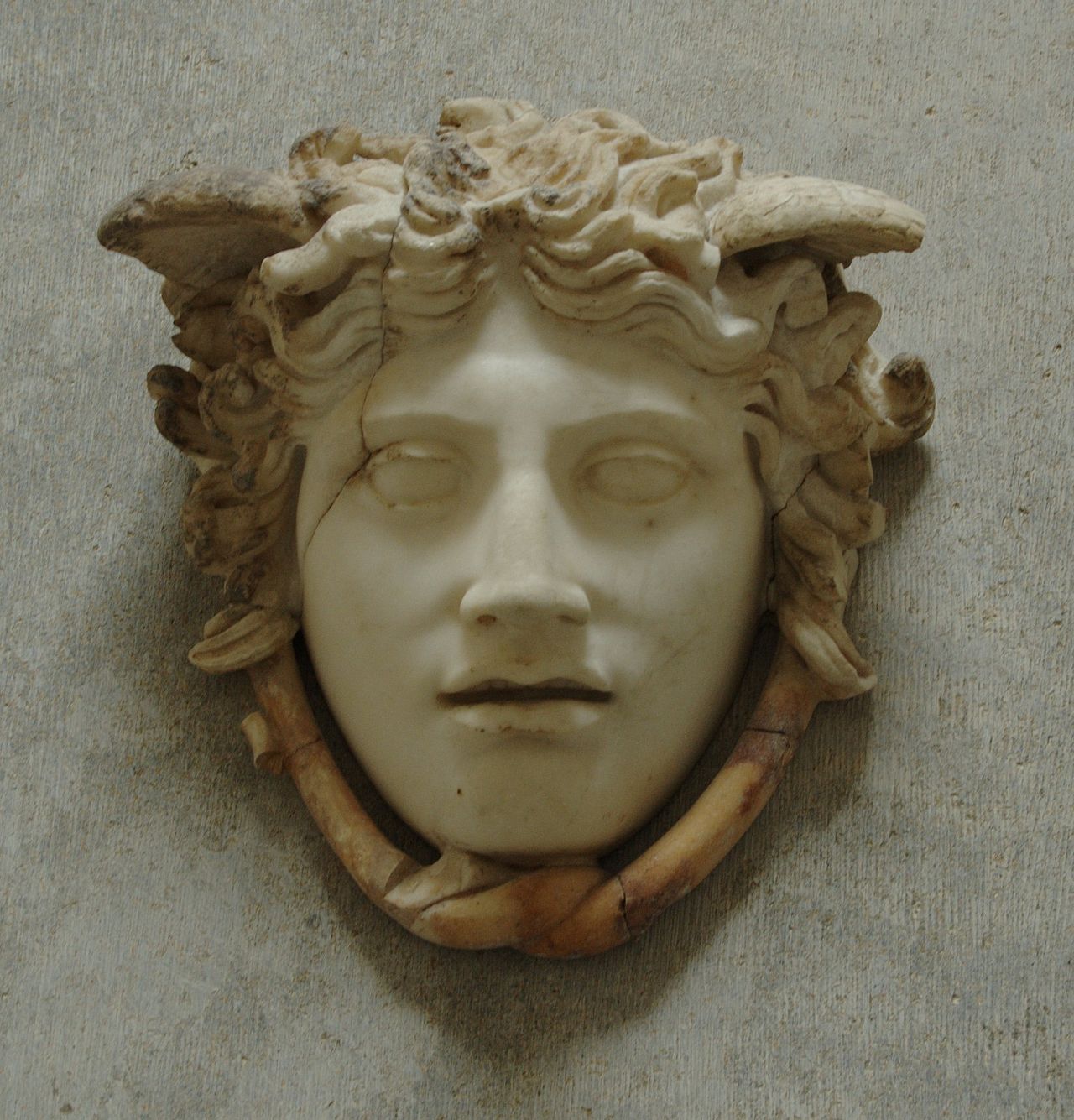
Beyond literary sources, Medusa was a pervasive image in ancient visual culture. The Gorgoneion, a stylized representation of Medusa's face, appears widely on pottery, amulets, armor, and architectural elements as an apotropaic device—meant to ward off evil or misfortune by confronting it with a more terrifying image. Early depictions show a grotesque, frontal face with staring eyes and exposed teeth; later artists sometimes softened her features, blending horror with classical beauty.
Interpretations and cultural legacy
Medusa has attracted diverse readings across history. In antiquity she functioned as both monster and protective emblem. In later periods she inspired Renaissance artists, writers, and thinkers, and in modern times she has been interpreted through lenses of psychoanalysis, feminism, and postcolonial critique. Some modern commentators emphasize her victimization and the injustice of her transformation, while others stress her agency and the potency of her destructive power.
Key themes and distinctions
- Gorgon versus individual: Medusa is often treated separately from her immortal sisters (Stheno and Euryale), emphasizing her mortality and tragedy.
- Apotropaic use: The Gorgoneion turns an emblem of terror into a protective symbol on shields, doorways, and buildings.
- Variation in sources: Accounts differ on cause, culpability, and consequences, so the myth resists a single definitive version.
- Modern reception: Medusa appears in literature, visual art, fashion, and scholarly debate, demonstrating enduring cultural resonance.
For further reading on primary sources and artistic representations, see translations and commentaries on classical texts such as Ovid's Metamorphoses, and surveys of Greek art and myth that discuss the roles of Poseidon, Athena, and the Gorgons. Discussions of the story's moral and symbolic dimensions also engage with modern analyses of sexual violence and divine retribution; background on those issues can be found in general works addressing mythic motifs and cultural change (assorted critical studies). Scholarly and popular treatments alike continue to revisit Medusa as a complex figure whose image functions both to terrify and to protect in different contexts (Athena and related myths).
Questions and answers
Q: Who wrote about Medusa in ancient times?
A: The Latin poet Ovid wrote about Medusa in his Metamorphoses.
Q: What did Poseidon do to Medusa?
A: Poseidon raped Medusa in the temple of Athena.
Q: How did Athena punish Medusa for this crime?
A: Athena changed Medusa into a monster with snakes for hair as punishment.
Q: How have artists depicted Medusa over time?
A: Artists have made statues and paintings of Medusa for thousands of years, and Ancient Greeks and other ancient people painted her face on pots and doors and other things. In Greek art from this time, artists usually painted or carved people looking out to the side, but they almost always carved images of Medusa looking out of the picture toward the viewer. These pictures are called Gorgoneions.
Q: What is the purpose behind depicting Medusa like this?
A: The purpose behind depicting her like this was so that she could scare evil things away, just like Perseus used her against his enemies.
Q: What is Book IV of Ovid's Metamorphoses about?
A: Book IV of Ovid's Metamorphoses is about Poseidon raping Medusa in the temple of Athena, and how Athena punished her by changing her into a monster with snakes for hair.
Tags
Related articles
Author
AlegsaOnline.com Medusa: Greek myth, iconography, and cultural legacy Leandro Alegsa
URL: https://en.alegsaonline.com/art/63457