
Avalon (mythology)
Avalon is a legendary island in Arthurian tradition, famed as a place of healing, enchantment, and the origin/return of Excalibur; it appears across medieval romances and later literary traditions.
Overview
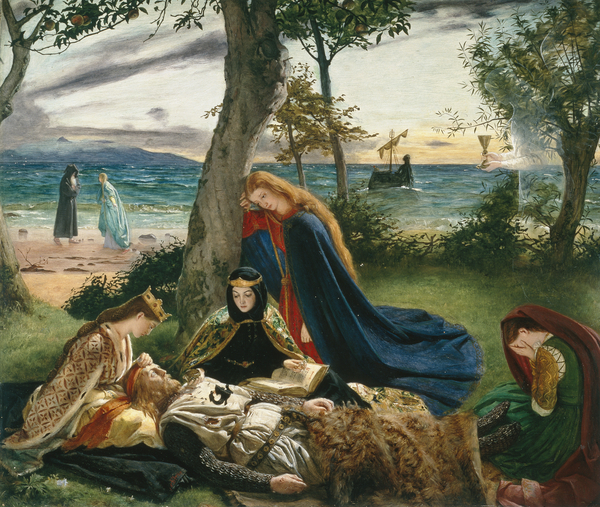
Avalon is a legendary island that appears throughout Arthurian literature as an otherworldly place of rest, magic and recovery. In many medieval and later accounts it is the site where the wounded King Arthur is carried after his last battle and where the famous sword Excalibur is either forged, given, or returned. The island functions as a liminal realm — partly supernatural, partly geographical — and its exact nature changes with the storyteller.
Image gallery
8 Images



Names and characteristics
Avalon is commonly called the "Isle of Apples" (from Welsh Ynys Afallon) and is sometimes rendered as the "Isle of Glass" in medieval texts. Authors emphasize a few recurring qualities: healing springs or balms, timelessness, skilled enchantresses, and an atmosphere of sanctuary. These elements combine to make Avalon both a paradise and a place of powerful, mysterious arts.
Medieval sources and development
The island first takes shape in early medieval romance and chronicle traditions. Writers such as Geoffrey of Monmouth, Robert de Boron and the later compilations of Sir Thomas Malory shaped the familiar image of Avalon as a repository of magical knowledge and a final refuge for Arthur. Different traditions assign different roles to its inhabitants; for example, the figure known as the Lady of the Lake is linked to Avalon in some versions, while in others the island is ruled by Morgan le Fay or a collective of otherworldly women.
Typical motifs and inhabitants
- Healing: herbs, balms or waters that restore wounds and prolong life.
- Magic: teachings of enchantment and knowledge beyond the mortal world.
- Notable figures: enchantresses such as Morgan le Fay, the Lady of the Lake, and other fairy-like attendants.
- Association with Excalibur: the sword is often presented as coming from Avalon and being returned there after Arthur is incapacitated.
Later interpretations and cultural legacy
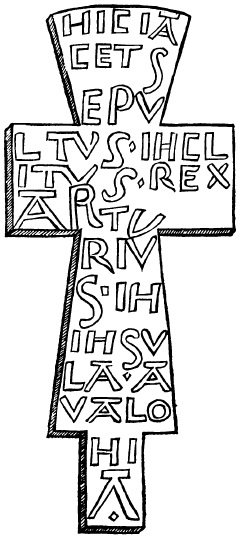
From the Middle Ages onward Avalon inspired a wide variety of interpretations: a literal island, an otherworldly paradise, or a spiritual symbol of death and rebirth. In the late twelfth century some English chroniclers identified Avalon with Glastonbury, a claim that influenced tourism, archaeology and national myth-making. Across later poetry, novels and popular culture, Avalon remains a potent emblem of lost golden ages, feminine power, and the possibility of renewal.
Distinctions and ambiguity
Because the island appears in many independent romances, its features are inconsistent: in some tales it is accessible only by magic, in others it sits within reach of boats; some versions emphasize medical science, others pure enchantment. This plurality is part of Avalon's enduring appeal: it is simultaneously a place, a power, and a story that authors continue to reinterpret.
Related articles
Author
AlegsaOnline.com Avalon (mythology) Leandro Alegsa
URL: https://en.alegsaonline.com/art/7675