
Pleiades (Greek mythology)
Seven sister-nymphs—daughters of Atlas and Pleione—transformed into the Pleiades star cluster. Companions of Artemis, associated with Orion and seasonal lore in ancient Greek tradition.
The Pleiades are a group of seven sister-nymphs in ancient Greek myth, commonly named Maia, Electra, Taygete, Alcyone, Celaeno, Sterope (also Asterope) and Merope. They are traditionally described as daughters of the Titan Atlas and the sea-nymph Pleione. Classical storytellers link them both to the heavenly star cluster now called the Pleiades and to various local cults and seasonal rites.
Image gallery
5 Images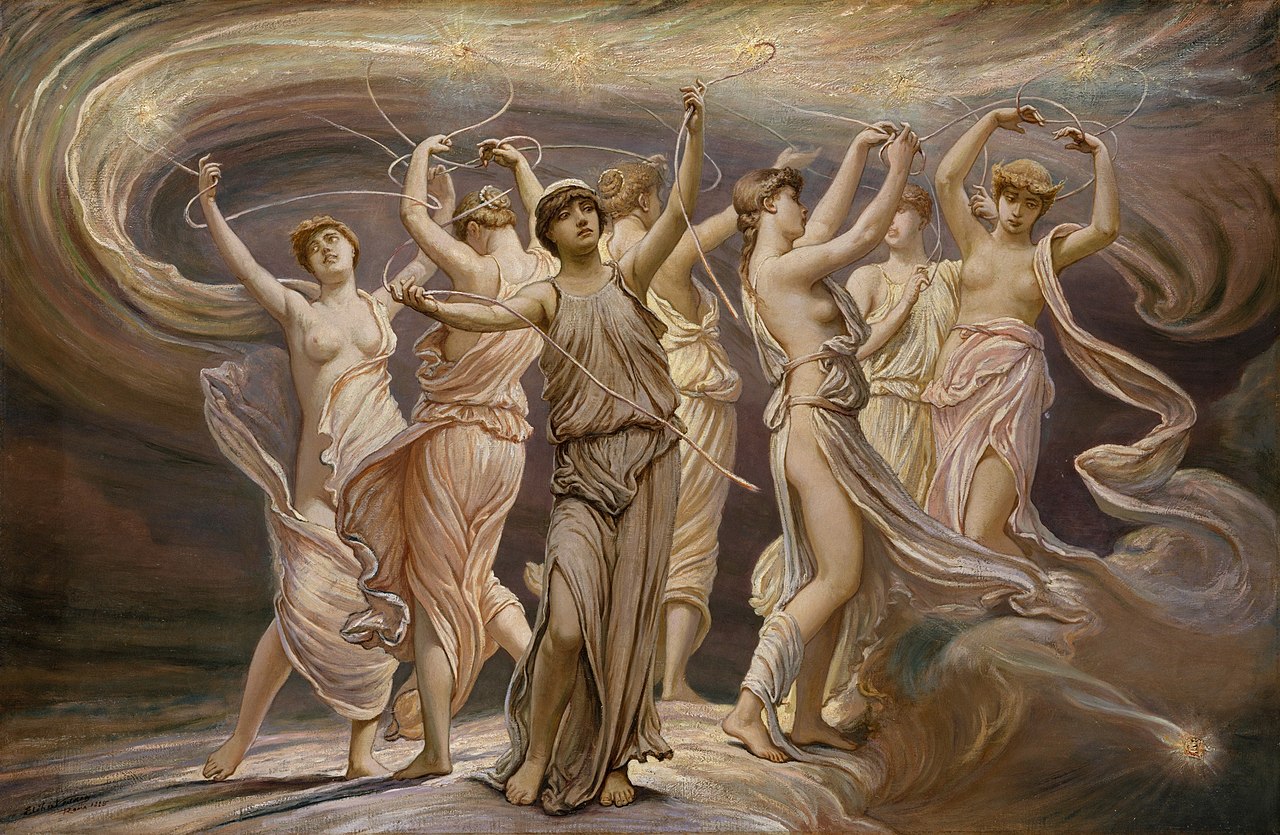


Origins and mythic narrative
According to many accounts the sisters were born on Mount Cyllene in Arcadia. Different poets and mythographers offer variants: in some versions they are attendants of the goddess Artemis, in others they attract the pursuit of the hunter Orion and are changed into stars by Zeus or their grieving father to save them from harm. Some narratives explain one sister, Merope, as dimmer because she married a mortal (Sisyphus) or for other symbolic reasons.
Names and roles
- Maia — often mother of Hermes in mythic genealogies;
- Electra — linked to exile myths and tragic foundations;
- Taygete, Alcyone, Celaeno, Sterope, Merope — each bears local associations with cults, mountains or lovers.
The sisters function as companions to goddesses, idealized maidens in poetry, and as etiological figures explaining a conspicuous cluster of stars. Ancient writers used their story to connect human events with celestial patterns.
Cultural and astronomical significance
The Pleiades star cluster is prominent in the winter sky and played a role in Greek calendars and seafaring lore: the rising and setting of the group marked seasonal work and navigation. The visible cluster contains six or seven bright points to the naked eye, a detail that inspired several mythic explanations. Modern astronomy identifies the cluster as an open group of young stars in the constellation Taurus, often referred to simply as the Pleiades.
For further cultural and regional details see regional summaries and primary literary sources at classical collections and studies of Arcadian cults at local guides. The Pleiades remain a touchstone for discussions of how myth and sky-watching intersect in ancient Greece.
Related articles
Author
AlegsaOnline.com Pleiades (Greek mythology) Leandro Alegsa
URL: https://en.alegsaonline.com/art/77446