
New Amsterdam: Dutch colonial settlement on Manhattan
New Amsterdam was the 17th-century Dutch settlement at Manhattan's southern tip, capital of New Netherland. Captured by the English in 1664 and renamed New York, it shaped the city's early character and institutions.
New Amsterdam was the Dutch colonial settlement established at the southern tip of what is now Manhattan. Founded in the early 17th century, it served as the administrative center and principal trading post of the province of New Netherland. The name appears in period records and maps produced by the Dutch West India Company and other colonial actors.
Image gallery
10 Images


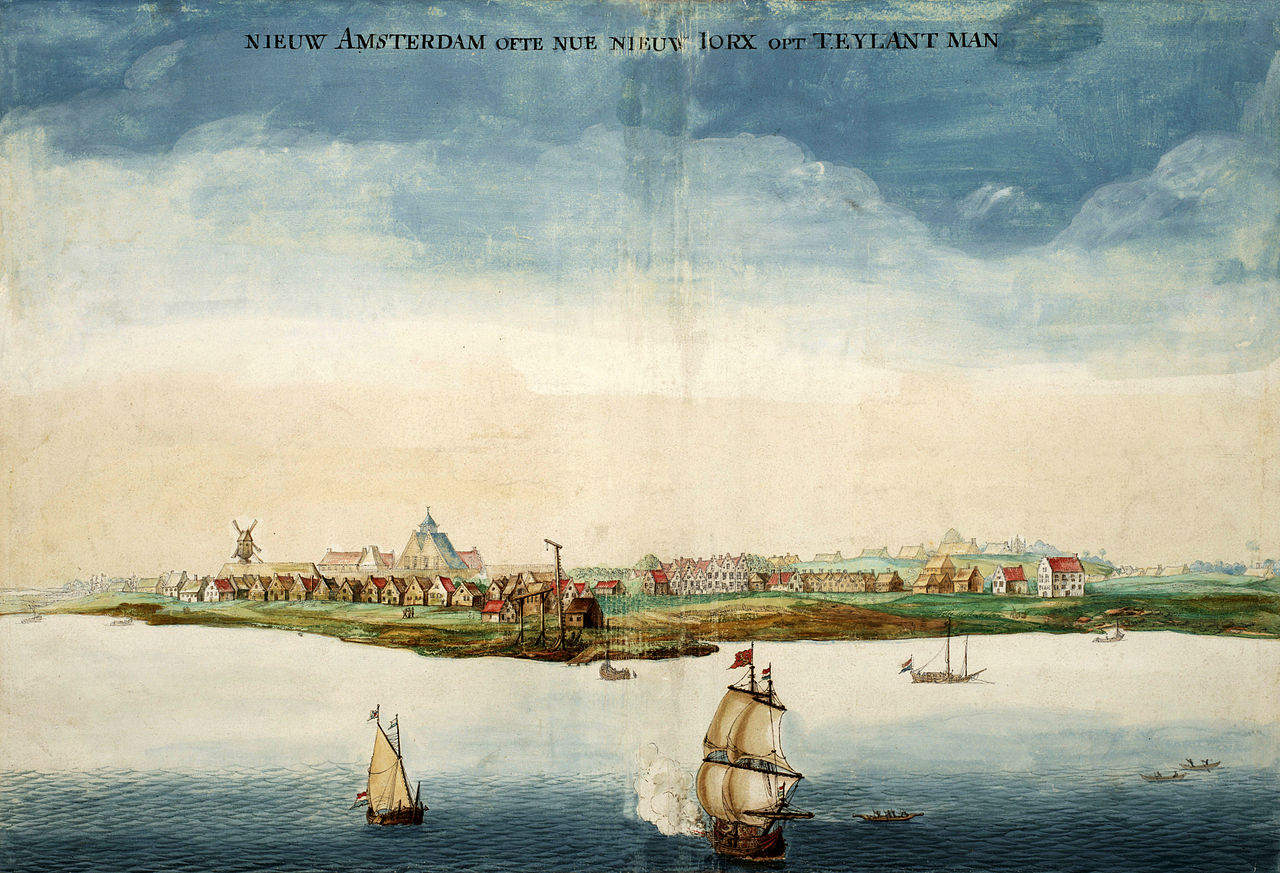

Origins and founding
European occupation began when Dutch agents took control of the island territory and negotiated with local Indigenous groups. The customary account describes a purchase of land on Manhattan from local Native inhabitants; that transaction is usually dated to the 1620s. The settlement grew around a defensive post known as Fort Amsterdam on the southern shore of Manhattan, with houses, warehouses and wharves supporting trade.
Role and characteristics
As capital of New Netherland, New Amsterdam was a multicultural port where European, African, and Indigenous people interacted. It had a mixed economy of fur trading, small-scale farming, ship provisioning and crafts. Its street pattern and place names (for example, the path that became Broadway and the defensive island wall that gave Wall Street its name) reflect Dutch planning and later adaptation.
English takeover and legacy
In 1664 a fleet sent by the English took control of the settlement without prolonged urban combat; the colony was then renamed New York. Despite the change of sovereignty, Dutch legal practices, property holdings and cultural influences persisted in the region for decades, shaping municipal institutions and commerce.
Notable facts and significance
- New Amsterdam was the primary Dutch foothold in North America and important to Atlantic trade networks.
- Its population was ethnically diverse compared with many contemporaneous English colonies.
- Several modern New York place names and civic customs trace back to the Dutch period.
Histories of New Amsterdam examine colonial governance, cross-cultural contact, and urban development; archaeological and documentary research continues to refine our understanding of daily life in the early settlement.
Related articles
Author
AlegsaOnline.com New Amsterdam: Dutch colonial settlement on Manhattan Leandro Alegsa
URL: https://en.alegsaonline.com/art/69458