
Nevado Sajama
Nevado Sajama is a 6,542 m extinct volcano in the Bolivian Andes. The mountain is Bolivia's highest peak, a landmark within Sajama National Park and a destination for high‑altitude trekking and scientific study.
Overview
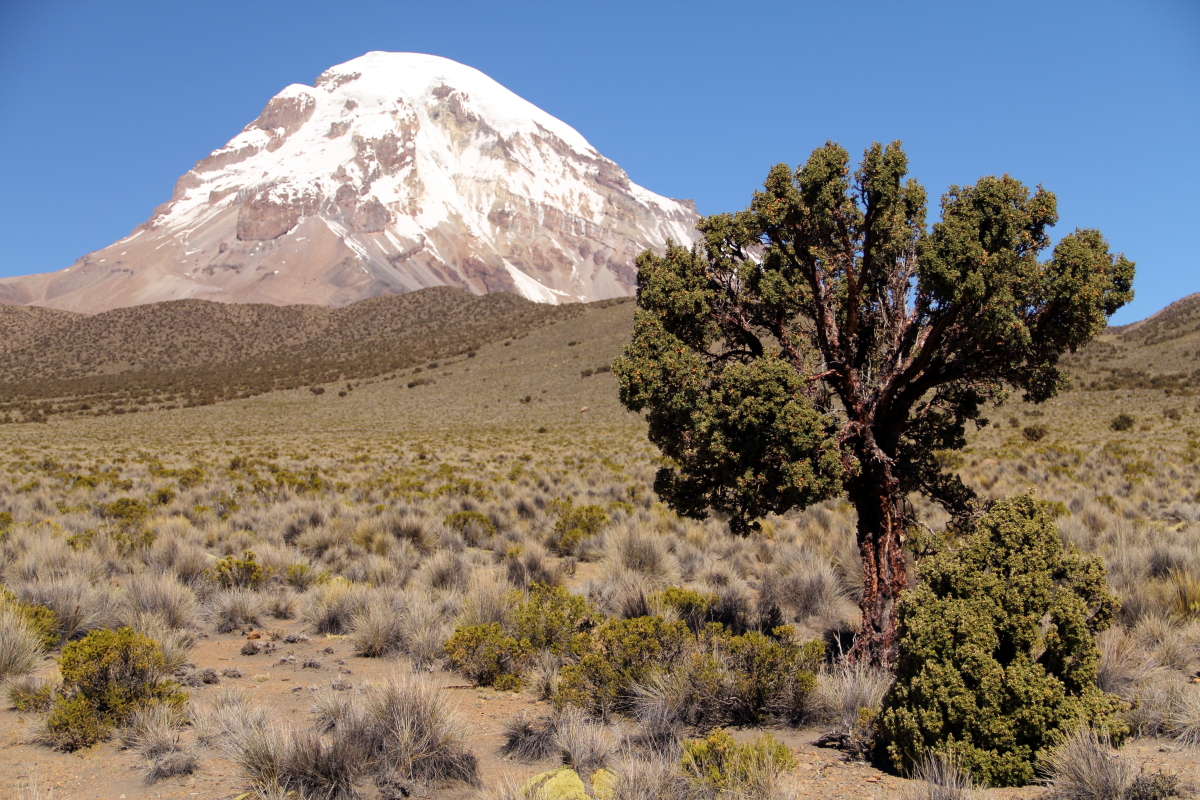
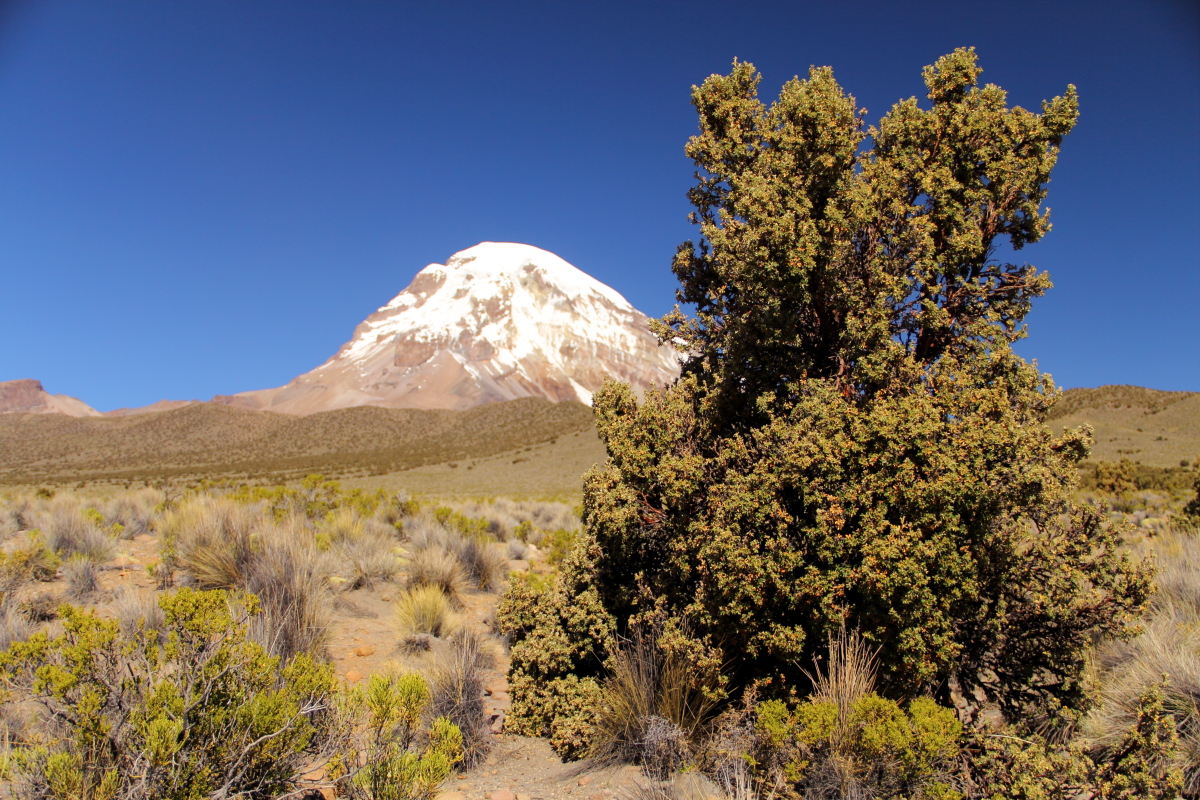
Nevado Sajama rises to about 6,542 metres (21,463 ft) and stands as the highest mountain in Bolivia. It is located in the western Cordillera Occidental of the Andes, close to the border with Chile. The peak's snow‑capped summit and broad volcanic cone make it a prominent landmark in the high puna landscape.
Image gallery
7 Images


Geology and physical characteristics
Sajama is an extinct stratovolcano whose long history of eruptions and glaciation shaped the surrounding topography. Persistent snowfields and small glaciers occupy the upper slopes, feeding seasonal meltwater that supports wetlands and streams below. The mountain's basaltic to andesitic rocks reflect the typical volcanic arc composition of the western Andes.
Ecology and protected area
The mountain sits within Sajama National Park, which conserves high‑altitude ecosystems such as puna grassland and stands of specialized polylepis trees. These fragile habitats support native camelids like vicuñas, Andean foxes, and a range of bird species adapted to thin air and cold conditions. Hot springs, archaeological ruins and traditional herding communities contribute to the park's cultural and biological value.
Human use and mountaineering
Sajama is important to local indigenous peoples and to scientists studying high‑altitude ecology, glaciology and volcanic history. For mountaineers the mountain offers high‑altitude climbing that generally involves glacier travel and careful acclimatisation. Routes vary in technical difficulty and weather can change rapidly; climbers commonly approach from towns and villages that serve as base points for expeditions.
Notable facts and distinctions
- Sajama's summit elevation is commonly given as 6,542 m, making it Bolivia's highest peak and one of the taller massifs in the Bolivia sector of the Andes.
- The mountain is often listed among the higher Andean summits and appears on lists of prominent peaks in the range (rankings and comparisons).
- Conservation of the mountain's glaciers and highland ecosystems is a continuing concern in the face of climate change and regional land use.
Visitors and researchers are encouraged to respect local regulations and cultural practices when entering the park or attempting climbs. The combination of geological significance, natural beauty and cultural heritage makes Nevado Sajama a key feature of the central Andean highlands.
Related articles
Author
AlegsaOnline.com Nevado Sajama Leandro Alegsa
URL: https://en.alegsaonline.com/art/69425