
New Forest: landscape, history and conservation in southern England
The New Forest is a large area of pasture, heath and ancient woodland in southern England. It is a landscape of distinctive habitats, long-standing rural customs, and protected status as a national park and district.
The New Forest is a distinctive mixed landscape of open pasture, heathland and woodland located in southern England. It is noted for retaining one of the largest areas of unenclosed grazing land and semi-natural habitat in an otherwise densely populated region, and for the visible interaction between people, livestock and nature in a long-established rural system. The name applies both to the historic forest area and to modern administrative and protected designations that overlap its boundaries.
Image gallery
10 Images


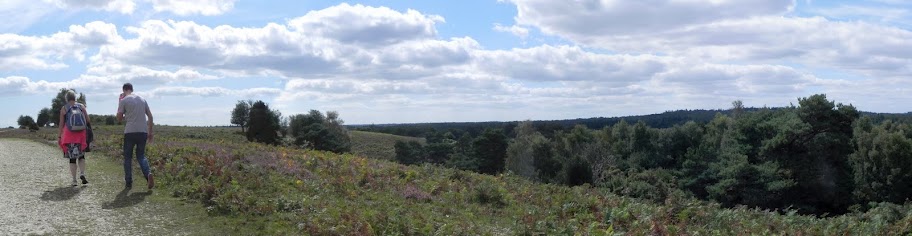


Location and natural characteristics
Set mainly across south‑west Hampshire and extending toward south‑east Wiltshire and east Dorset, the New Forest contains heath, mires, grassland and broadleaved woodland. The mosaic of habitats supports a variety of wildlife and plant communities adapted to open, grazed conditions as well as shaded ancient woods. Small towns and many villages lie within and around the area, and lanes and tracks cross the landscape, creating a pattern of settlement and commons.
History and cultural practices
The area was designated a royal forest after the Norman Conquest and its name — "New Forest" — dates from that period. Over centuries it has been shaped by deliberate grazing and wood pasture management. A notable feature is the system of commoning, where local people have traditional rights to pasture animals such as ponies, cattle and pigs. These rights and customary management practices continue to influence the forest’s appearance and ecology.
Protection, governance and recreation
Today the term also covers the New Forest National Park, created to conserve the landscape, wildlife and cultural heritage while allowing public enjoyment and sustainable land use. The local government area known as the New Forest district administers much of the territory within Hampshire. Local institutions and arrangements help regulate grazing, forestry and development, balancing conservation with farming, tourism and community life. Visitors come for walking, cycling, wildlife watching and to see the free‑roaming ponies and other stock that are a familiar sight.
Key features and importance
- Varied habitats: heath, wetland, pasture and ancient woodland that sustain diverse species.
- Living traditions: commoning and grazing that maintain open habitats and cultural continuity.
- Protected status: national park and district designations aimed at conservation and sustainable use.
- Accessible countryside: networks of paths and local settlements supporting recreation and rural economies.
The New Forest is therefore significant both as a wildlife stronghold and as a landscape where traditional land use and modern conservation meet. For more detailed information on visiting, management and ecology see local guides and official sources such as the national park authority and district council (regional information), or community resources and conservation organisations (visitor guidance, management plans, wildlife reports).
Questions and answers
Q: What is the New Forest?
A: The New Forest is an area of southern England that includes one of the largest remaining pieces of open pasture land, heathland and forest in the heavily-populated south east of England.
Q: What does the name "New Forest" refer to?
A: The name "New Forest" refers to the New Forest National Park which has similar boundaries.
Q: Where does the New Forest extend to?
A: The New Forest extends into south-west Hampshire and extends into south-east Wiltshire and towards east Dorset.
Q: Is the New Forest a local government district?
A: Yes, the New Forest local government district is a subdivision of Hampshire which covers most of the Forest.
Q: Are there any villages in the New Forest?
A: Yes, there are many villages dotted around the area.
Q: Are there any towns in the New Forest?
A: Yes, there are several small towns in the Forest and around its edges.
Q: What does the New Forest have that is unique?
A: The New Forest includes one of the largest remaining pieces of open pasture land, heathland and forest in the heavily-populated south east of England.
Related articles
Author
AlegsaOnline.com New Forest: landscape, history and conservation in southern England Leandro Alegsa
URL: https://en.alegsaonline.com/art/69511
Sources
- newforest.gov.uk : "Commoning in the New Forest"
- newforestnpa.gov.uk : "History of the New Forest"
- envf.port.ac.uk : "Old Hampshire Gazetteer (citing Muir, 1981)"
- envf.port.ac.uk : "Blome, Richard (1673) Britannia: or, a geographical description of the kingdoms of England, Scotland, and Ireland"
- whc.unesco.org : Entry on the UNESCO Tentative List
- newforestnpa.gov.uk : History of the New Forest National Park