
Aster (genus) — Old World asters and their taxonomy
Aster is a genus of Eurasian flowering plants in the family Asteraceae, noted for daisy-like late-season flowers. 1990s taxonomic revisions moved many North American species to other genera; about 180 species remain.
Aster is a genus of herbaceous flowering plants in the family Asteraceae. The name Aster means "star," referring to the radiating arrangement of ray florets around a central disk. Species traditionally called asters are valued for conspicuous, daisy-like flower heads that often bloom in late summer and autumn and thus are important for late-season pollinators.
Image gallery
3 Images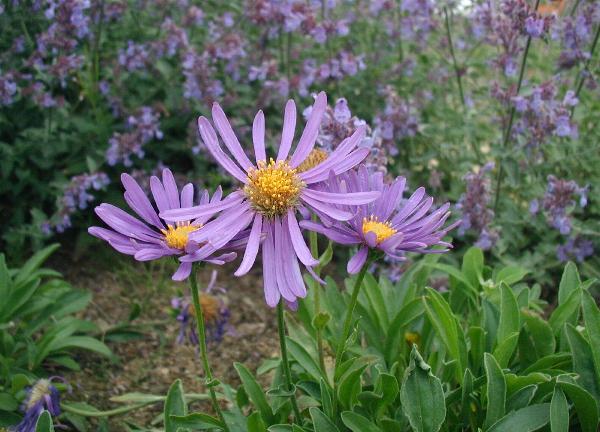


Description
Plants in the genus are generally perennial herbs, sometimes forming clumps or spreading by rhizomes. Flower heads (capitula) are composite structures composed of central tubular disk florets and petal-like ray florets. Ray florets are commonly white, pink, purple or lilac. Leaves, stems and growth habit vary among species, allowing asters to occupy meadows, woodland edges, alpine slopes and disturbed sites.
- Flower structure: composite capitulum with disk and ray florets;
- Bloom time: typically late summer to autumn;
- Habitat: grasslands, open woods, montane regions;
- Ecological role: nectar and pollen source for bees, butterflies and other insects.
Taxonomy and history
Historically the genus Aster included nearly six hundred named species distributed across Eurasia and North America. Detailed morphological comparisons and later molecular phylogenetic studies during the late 20th century showed that the broad, traditional circumscription of Aster was not monophyletic. Subsequent research resulted in a major taxonomic revision: most North American species were reassigned to a series of related genera.
As a result of these revisions, the strictly defined genus Aster is now largely Eurasian, with roughly 180 species retained. Many North American plants long known as "asters" are now treated under other genera; for information on those treatments see resources on North American species and the series of other genera used by modern floras.
Distribution and habitat
True Old World asters occur across temperate Eurasia, from lowland meadows to montane and subalpine zones. They are adapted to a range of soils and moisture conditions, and several species are specialists of particular habitats such as calcareous grassland or woodland margins.
Uses and cultivation
Asters are popular in horticulture for autumn color and for attracting pollinators. Garden cultivars have been selected for compact habit, prolonged bloom time and a range of flower colors. Gardeners should consult up-to-date botanical names because nursery labels and older references may retain deprecated names; see general summaries on the concept of a genus and on flowering plants for background on naming practices.
Conservation and notes
Some species of Aster face threats from habitat loss and land-use change, while others are common or cultivated. Accurate identification and current taxonomy are important for conservation assessments, ecological studies and horticulture. For regional treatments and nomenclatural details consult specialized floras and recent taxonomic literature.
For further reading and taxonomic treatments, follow the linked resources above and consult contemporary botanical databases and monographs that reflect the post-1990s reclassification of many former Aster species.
Tags
Related articles
Author
AlegsaOnline.com Aster (genus) — Old World asters and their taxonomy Leandro Alegsa
URL: https://en.alegsaonline.com/art/6787
Sources
- commons.wikimedia.org : Aster
- species.wikimedia.org : Aster
- efloras.org : "Astereae"