
Morphology (biology)
Morphology in biology studies the form and structure of organisms—their external shapes and internal anatomy—its methods, history, and role in taxonomy, development, medicine, and evolutionary study.
Morphology is the branch of biology concerned with the form, shape and structural organization of organisms. It examines both external features — such as size, shape, surface patterning and appendages — and internal arrangements, including organs, bones and tissues. Morphology can be descriptive (documenting what structures look like) and analytical (comparing structures across individuals, species or developmental stages). Its questions range from how a trait looks and varies, to how similar forms reflect shared ancestry or convergent solutions to similar problems.
Image gallery
2 Images
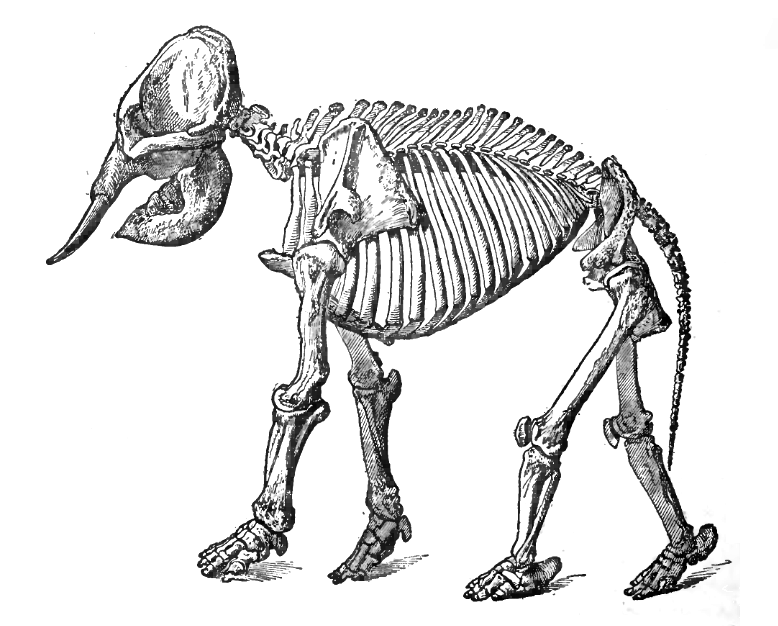
Scope and key concepts
Morphological study covers several overlapping areas. External morphology (sometimes called eidonomy) focuses on visible traits like limbs, coloration and body plan. Internal morphology (anatomy) treats the arrangement of organs, musculature and skeletal elements. Comparative morphology contrasts structures across taxa to infer relationships or functional parallels. Developmental morphology traces how form changes as an organism grows. Morphometrics applies quantitative tools to measure shape and variation.
Methods and approaches
Researchers use a range of techniques: direct observation, dissection and light microscopy for many tissues; electron microscopy and histology for fine structure; imaging methods such as X-ray, CT and MRI for non‑destructive internal views; and statistical shape analysis for quantitative comparisons. Comparative work often integrates morphological data with genetics and phylogenetic methods to place structural change in an evolutionary context.
History and influential figures
The modern concept of biological morphology developed in the late 18th and early 19th centuries. Literary and scientific thinkers contributed to early ideas about form and its relation to function and development. For example, the German writer and natural philosopher Goethe is often credited with influential observations on form, and anatomists such as Karl Friedrich Burdach helped establish morphology as a scientific discipline. These foundations were expanded by later anatomists, embryologists and evolutionary biologists who linked form to growth processes and evolutionary history.
Applications and importance
- Taxonomy and systematics: Morphological characters remain essential for identifying and classifying species, especially where genetic data are limited.
- Paleontology: Fossil morphology is the primary record of extinct life and informs reconstructions of ancient organisms and environments.
- Developmental biology: Understanding how tissues and organs form clarifies the mechanisms that generate shape and pattern.
- Medicine and veterinary science: Anatomical morphology underpins diagnosis, surgery and understanding of congenital malformations.
- Engineering and design: Biological forms inspire biomimetic solutions in robotics, materials and architecture.
Distinctions and related fields
Morphology is often contrasted with physiology, which investigates how structures work, while morphology focuses on their form and arrangement. It overlaps with anatomy (often used synonymously for internal structure), developmental biology (how form arises during growth), and evolutionary biology (how form changes over time). Morphology bridges observation and inference: shapes suggest function and history, but functional experiments and phylogenetic analysis are commonly needed to test those interpretations.
Because form both constrains and reflects biological processes, morphology remains a central discipline in biology. Modern studies increasingly combine traditional descriptive work with imaging, quantitative analysis and molecular data to produce integrated views of how organisms are shaped. For further conceptual reading see discussions of function in biological systems and how form and function interact across levels of organization.
Questions and answers
Q: What is morphology?
A: Morphology is the branch of biology that focuses on the study of the form of organisms and their specific structural features.
Q: Who were the individuals who developed the concept of morphology?
A: Johann Wolfgang von Goethe (1790) and Karl Friedrich Burdach (1800) were the individuals who developed the concept of morphology independently.
Q: What are the aspects covered in morphology?
A: In general, morphology covers the form and structure of an organism as a whole, which includes all internal and external structures. It includes aspects of the outward appearance (shape, structure, colour, pattern) as well as the form and structure of the internal parts like bones and organs.
Q: What is the contrast between morphology and physiology?
A: The branch of biology dealing with the study of the form of organisms and their specific structural features is morphology, whereas physiology deals primarily with function.
Q: Is morphology solely studied in relation to humans?
A: No, it is not. Morphology is studied in relation to both animal and human form or body shape.
Q: What does physiology focus on?
A: Physiology focuses on the study of the function of living organisms and their parts.
Q: What does the word "morphology" generally refer to?
A: The word "morphology" generally refers to the form and structure of an organism as a whole, including all internal and external structures.
Related articles
Author
AlegsaOnline.com Morphology (biology) Leandro Alegsa
URL: https://en.alegsaonline.com/art/66745
Sources
- askoxford.com : "Morphology"
- askoxford.com : askoxford.com/
- merriam-webster.com : "Morphology"
- eng.uc.edu : "Polymer morphology"
- ceas.uc.edu : ceas.uc.edu/