
MP-40 (Maschinenpistole 40) — German World War II submachine gun
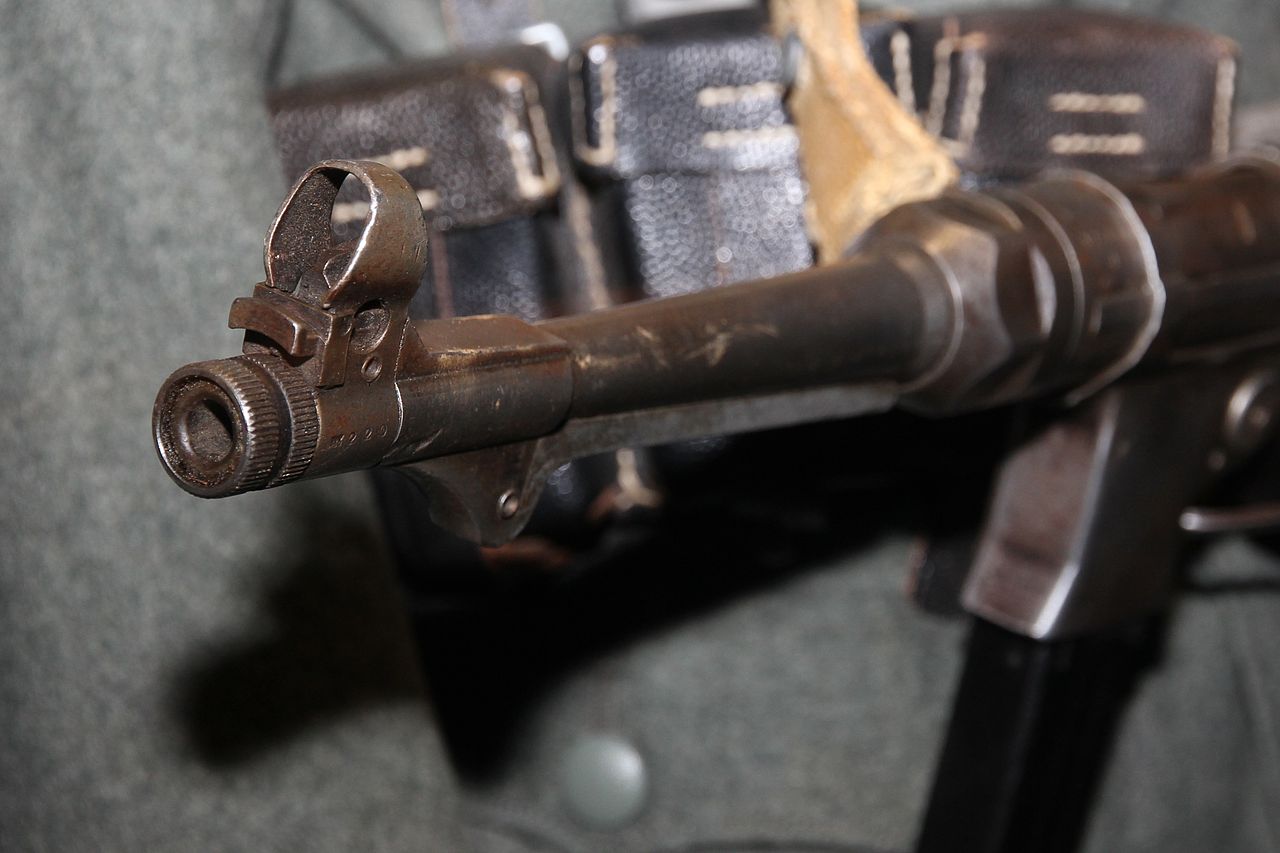
The MP-40 is a German 9×19mm submachine gun introduced in WWII. Known for stamped‑metal construction and simple blowback action, it influenced later SMG design and saw widespread frontline and vehicle use.
Overview
The MP-40, formally known in German as the Maschinenpistole 40 and sometimes rendered in English as the Machine Pistol 40, was a compact, blowback-operated submachine gun used extensively by German forces during the Second World War. Developed from earlier designs in the late 1930s, it became a standard short-range automatic weapon for infantry, paratroopers, vehicle crews and support personnel. Popular lore often attributes the weapon to the designer Hugo Schmeisser, but the MP-40's design lineage more directly traces to earlier German factory work and the MP38 development team.
Image gallery
6 Images




Design and characteristics
Technically a simple open-bolt, blowback firearm, the MP-40 fired the 9×19mm Parabellum cartridge from a straight 32-round detachable magazine. It was produced with an emphasis on economy and ease of manufacture: many parts were made from pressed or stamped metal and fitted with early synthetic parts rather than fully machined steel. These construction choices made the weapon lighter and quicker to produce than many contemporary designs.
The MP-40 was issued primarily as a full-automatic weapon; it lacked a standard semi-automatic selector. However, its relatively moderate cyclic rate—commonly cited near 500 rounds per minute—made controlled short bursts or even individual aimed shots practicable in trained hands, a fact sometimes noted in contemporary accounts and training manuals (single, aimed shots despite full-auto capability).
Manufacturing and materials
To reduce cost and production time the MP-40 used pressed and stamped components along with polymer-like materials for some furniture. Period descriptions point to the use of early plastics and bakelite for non-structural items, alongside predominately stamped steel construction. These methods contrasted with earlier, more labor-intensive machining and helped Germany equip large numbers of front-line troops without the same expenditure of skilled labor.
Service use and tactical role
Introduced in the early 1940s, the MP-40 served in many German formations and saw action across multiple theaters. It was valued for close-quarters combat, trench raids, and urban fighting where its short length, manageable recoil and high ammunition capacity were advantageous. Because it fired the same general cartridge family as many Allied submachine guns, captured MP-40s were sometimes pressed into service by enemy troops; accounts note that British troops and others would make use of captured weapons when convenient. Comparisons are often made with the British Sten gun: both fired the 9mm family, but magazines and many parts were not reliably interchangeable despite the shared cartridge type (same cartridge type).
Legacy and notable points
The MP-40 influenced subsequent submachine gun concepts by demonstrating how stamped construction and simplified mechanisms could yield an effective mass-produced infantry weapon. It had shortcomings—an open-bolt design that could allow ingress of dirt, and a lack of a semi-automatic setting were sometimes criticized—but its ergonomic handling and overall reliability in common combat roles secured its reputation. After the war, captured stocks and licensed or improvised copies appeared in various regions, and the MP-40 remains a widely recognized symbol of WWII small arms in both historical study and popular culture.
Key features
- Caliber: 9×19mm Parabellum (common wartime pistol cartridge)
- Action: open-bolt, simple blowback
- Feeding: detachable box magazine (commonly 32 rounds)
- Construction: pressed/stamped metal with early plastic components and stamped steel
- Role: close-quarters and support arm for infantry and vehicle crews
For additional reading and images, consult specialist references and archival material that focus on design, production variants and tactical employment of the MP-40 during and after World War II.
Related articles
Author
AlegsaOnline.com MP-40 (Maschinenpistole 40) — German World War II submachine gun Leandro Alegsa
URL: https://en.alegsaonline.com/art/67238