
Mount Rushmore National Memorial
A carved granite monument in the Black Hills of South Dakota featuring four U.S. presidents; an American landmark with artistic, historical, and cultural significance and ongoing debates over its origins.
Overview
Mount Rushmore is a monumental sculpture carved into a granite massif near Keystone, South Dakota, in the United States. The site, often called the Mount Rushmore Memorial, depicts the 60-foot heads of four U.S. presidents — George Washington, Thomas Jefferson, Theodore Roosevelt, and Abraham Lincoln — carved into the Black Hills rock face. The memorial is managed as a national site and receives visitors for its scale, craftsmanship, and role in public memory.
Image gallery
10 Images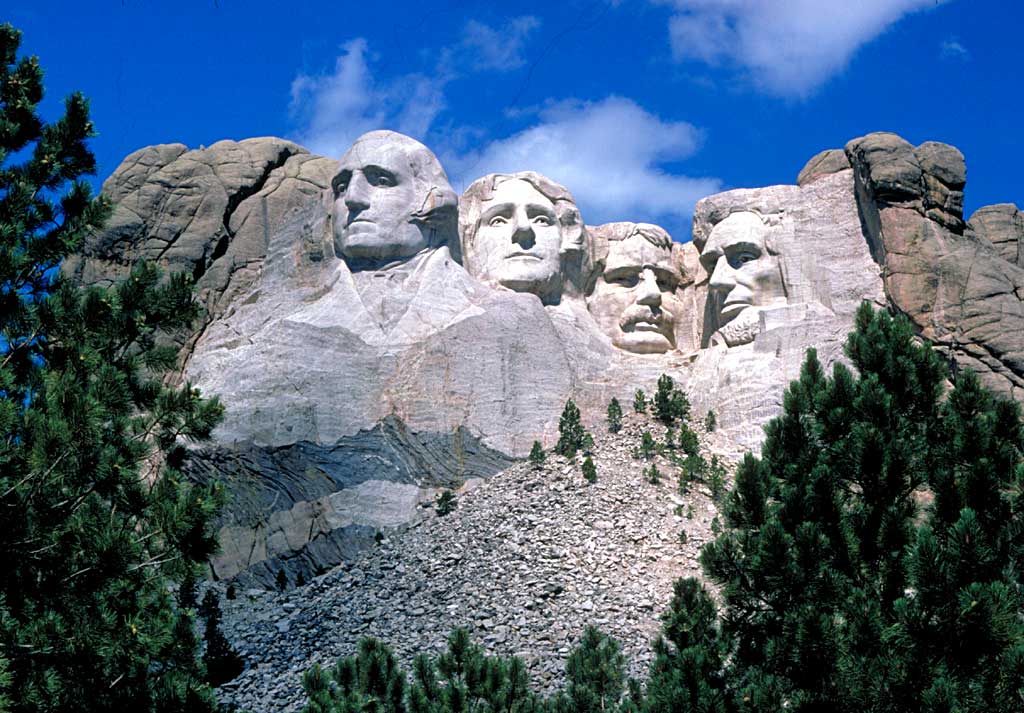



Design and construction
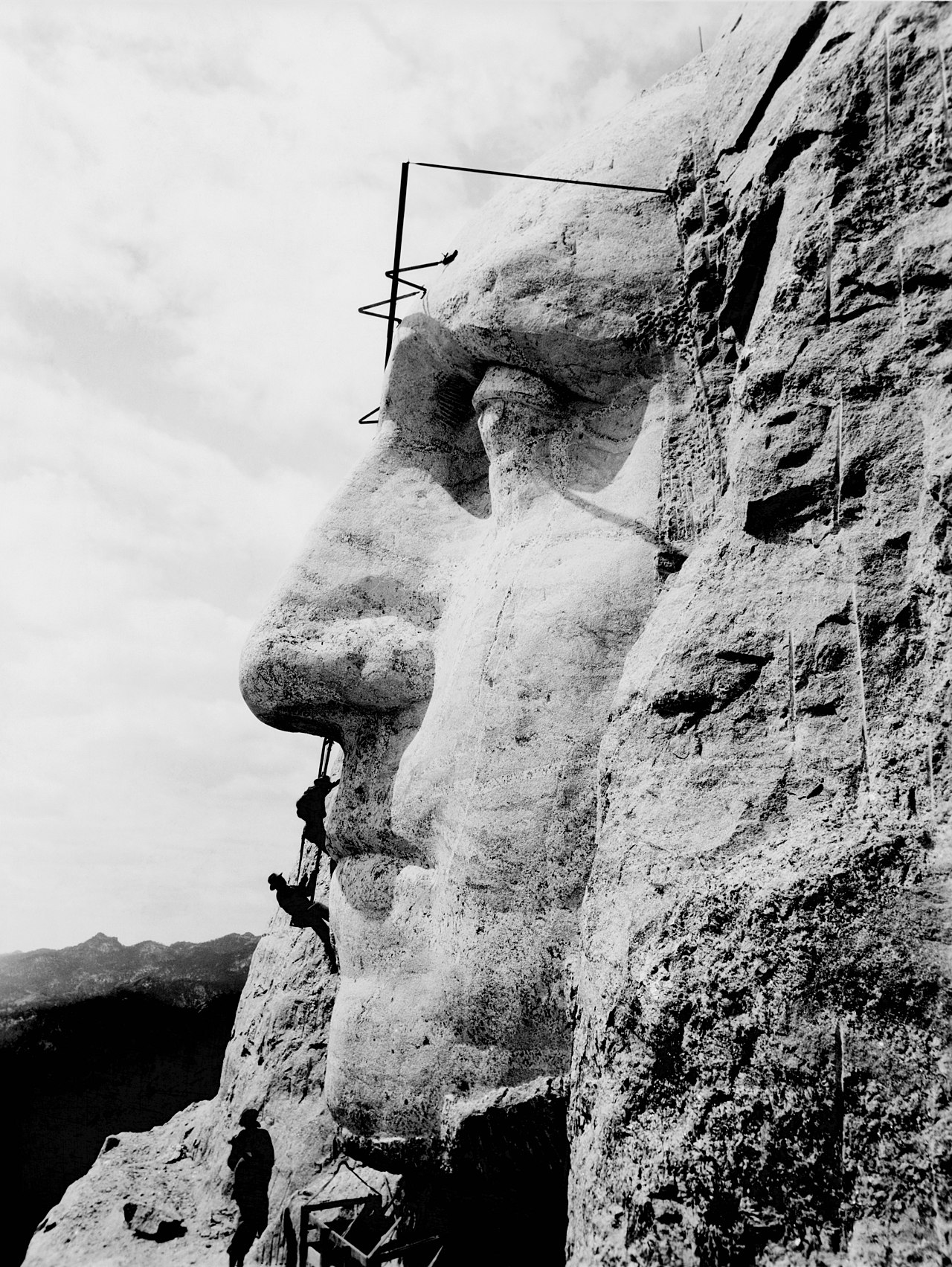
The project was led by sculptor Gutzon Borglum, with work beginning in the late 1920s and continuing into the early 1940s. It combined large-scale carving techniques, drilling, and controlled dynamite removal of rock to expose the faces. The sculpture was never completed to the original, more ambitious plans; funding limits and the onset of World War II curtailed extensions of the work. A chamber behind the heads, intended as a "Hall of Records," remains only partially finished.
Location and physical characteristics
Mount Rushmore sits on a federally administered tract of land that includes scenic overlooks, a visitor plaza, and interpretive exhibits. The carved heads are each roughly 60 feet (18 meters) tall. The wider memorial area covers more than twelve hundred acres, and the site stands at an elevation commonly cited near 5,725 feet; visitors can reach overlooks and trails that provide different perspectives on the carving and surrounding Black Hills landscape (elevation and park details).
History, origins and controversies
The mountain and surrounding region have long been significant to Indigenous peoples, notably the Lakota Sioux, for whom the Black Hills hold spiritual importance. The peak had earlier names before being renamed after a white prospector. The decision to carve presidential likenesses was part artistic commission, part civic monument to national ideals, but it has also generated debate. Critics point to the dispossession of native lands, the choice of subjects, and the monument's symbolism; supporters emphasize its engineering achievement and educational role. These tensions form an important part of the site's contemporary story.
Visiting and cultural significance
Today the memorial functions as a major tourist destination with a visitor center, museum exhibits about the carving process, and periodic ceremonies. Guided walks, interpretive panels, and evening illumination events help explain both the technical aspects of the sculpture and the historical narratives it represents. The site also figures in art, film, and political imagery, often serving as a shorthand for national identity.
Quick facts
- Principal sculptor: Gutzon Borglum (assisted by his son and many workers).
- Primary subjects: George Washington, Thomas Jefferson, Theodore Roosevelt, Abraham Lincoln.
- Location: near Keystone, South Dakota in the United States.
- Site type: national memorial carved into a granite mountain.
- Visitor resources and park information: see on-site exhibits and official materials for accessibility, trails, and historical context (park info).
Mount Rushmore remains an iconic but contested landmark: admired for its scale and technical achievement while also serving as a focal point for discussions about land, memory, and the stories nations choose to enshrine.
Related articles
Author
AlegsaOnline.com Mount Rushmore National Memorial Leandro Alegsa
URL: https://en.alegsaonline.com/art/67085
Sources
- commons.wikimedia.org : Mount Rushmore National Memorial
- mountrushmoreinfo.com : Mount Rushmore Info
- peakbagger.com : Mount Rushmore, South Dakota
- nps.gov : Carving History
- buzzle.com : Mount Rushmore History