
Mount Rowan: extinct volcano near Ballarat, Victoria
Mount Rowan is a small extinct volcano on the outskirts of Ballarat, Victoria. Its lava flows date to the Pliocene and it forms part of the Western Victorian Volcanic Plains and local volcanic field.
Overview
Mount Rowan, historically also called Waldies Hill, is a modest volcanic remnant rising at about 518 metres above sea level on the edge of the city of Ballarat. It is not an active cone in the human timescale but preserves evidence of volcanic activity from the early Pliocene. The hill and its surrounding outcrops are part of a larger cluster of volcanic centres that helped shape the landscape of western Victoria.
Image gallery
2 Images
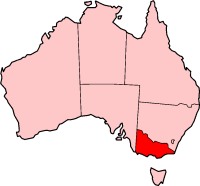
Geology and age
Geological studies indicate that lava flows associated with Mount Rowan were emplaced roughly 2.1 to 2.9 million years ago. These flows are basaltic in composition, typical of intraplate volcanism that produced thin, widespread sheets of lava rather than very tall stratovolcanoes. Mount Rowan belongs to the local Ballarat–Daylesford volcanic field, one of many small volcanic centres in the region, and forms a component of the extensive Western Victorian Volcanic Plains.
Landscape and physical characteristics
As a relatively small volcano, Mount Rowan’s most notable features are its remnant cone and the outlying lava flows that blanket nearby lowlands. Over millions of years weathering and soil formation have altered the original volcanic surface, producing fertile soils in places and a subdued topography in others. From the surrounding city areas the hill can appear as a low rise rather than a dramatic peak.
Regional context and number of centres
The volcano is one of many in the Ballarat and Daylesford area; regional inventories count over a hundred small volcanic centres in this part of Victoria. In that context Mount Rowan is one representative of the roughly 123 volcanic sites recorded in the local field, illustrating the episodic, dispersed nature of volcanic activity across the plains and hills of western Victoria. For regional studies see the summary of the Ballarat and Daylesford volcanic area.
Human interaction, research and risk
Mount Rowan has been the subject of local geological mapping and informal study because it lies close to an urban centre. In 2009 a geologist commented on the possibility that volcanic activity in the wider Ballarat area could reoccur on geological timescales; such remarks are cautious reminders that volcano classification (active, dormant, extinct) can be complex. Today, Mount Rowan is treated as an extinct or long-dormant feature, and any discussion of risk is framed by expert monitoring of the broader volcanic province rather than by signs of imminent eruption at this site.
Importance and notable facts
- Alternate name: Waldies Hill.
- Elevation: approximately 518 m above sea level.
- Age of lava flows: estimated between 2.1 and 2.9 million years.
- Part of the Western Victorian Volcanic Plains, a widespread basaltic region of Australia.
- One of about 123 volcanic centres recorded in the local Ballarat–Daylesford field.
Mount Rowan illustrates how modest volcanic eruptions can leave long-lasting marks on regional topography, soil and land use patterns. It remains of interest to geologists, educators and residents who study or enjoy the landscape shaped by ancient lava flows.
Related articles
Author
AlegsaOnline.com Mount Rowan: extinct volcano near Ballarat, Victoria Leandro Alegsa
URL: https://en.alegsaonline.com/art/67083
Sources
- services.land.vic.gov.au : "VICNAMES - Place Details"
- maps.bonzle.com : "Map of Mount Rowan in Victoria - Bonzle Digital Atlas of Australia"
- books.google.com.au : "Intraplate volcanism in eastern Australia and New Zealand - Google Books"
- thecourier.com.au : "New volcano could raise its head here - Local News - News - General - The Courier"