
Mount Batur
Mount Batur is an active volcano on Bali rising inside a large caldera; notable for its dramatic crater, Lake Batur, long eruptive history and popular sunrise treks near villages within the caldera.
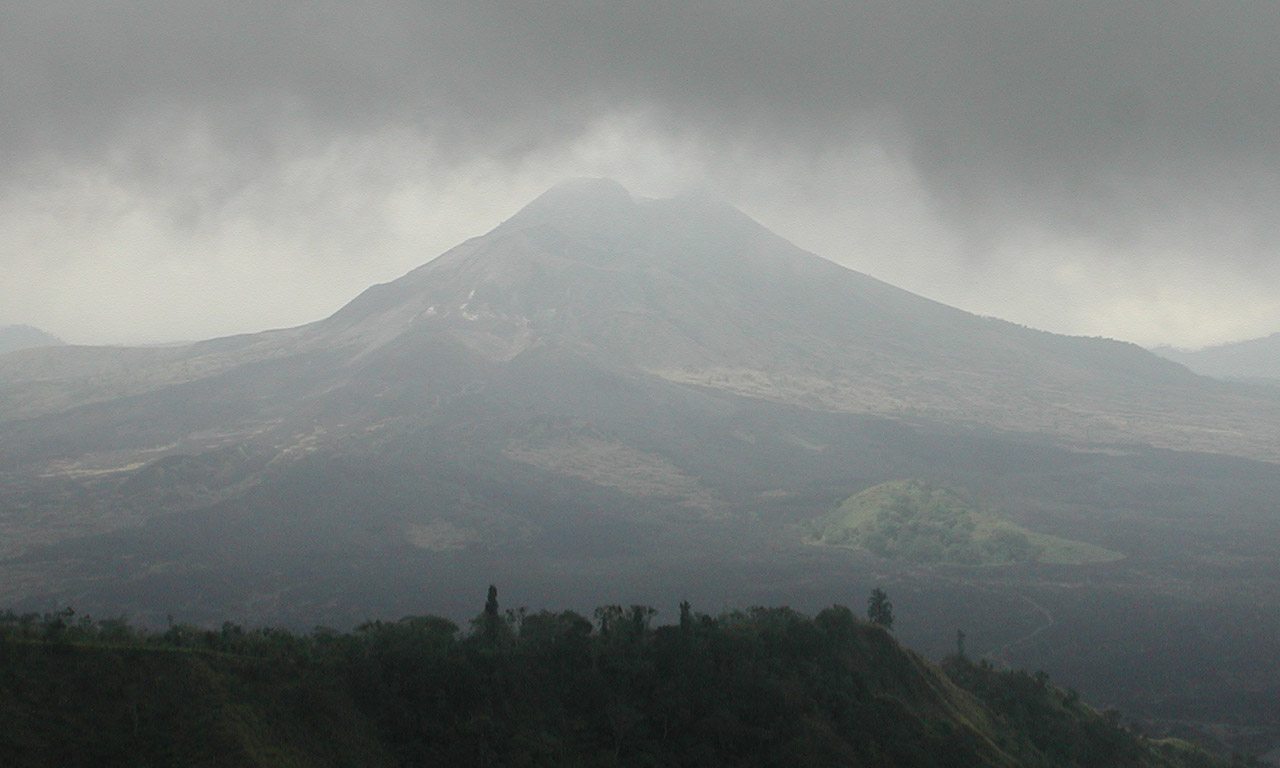
Mount Batur is an active volcano located on the Indonesian island of Bali. Rising to about 1,717 metres above sea level, Batur occupies the floor of a much larger collapse structure and is surrounded by Lake Batur. The current cone sits inside an older, expansive caldera that shapes the landscape and supports agriculture and communities within its rim.
Image gallery
10 Images


Geology and structure
Batur is a nested volcanic system: a younger stratovolcanic cone formed within the depression left by a far larger prehistoric eruption. The enormous caldera-forming event occurred around 30,000 years ago and is considered one of the most significant eruptions in the region’s geological record. Smaller cones, lava flows and the present crater have developed since, producing the familiar conical profile visitors see today.
Activity and notable eruptions
The mountain has produced numerous eruptions in historic times. Accounts identify frequent activity through the 20th century; the last recorded eruption occurred in 2000. Eruptions at Batur are typically explosive to effusive, producing ash, lava and periodic pyroclastic material that can affect nearby villages and air quality.
Human presence and cultural importance
Unique among many volcanoes, whole villages lie on the fertile slopes and inside the caldera rim. Farmers cultivate orchards, vegetables and rice terraces nourished by volcanic soils. The mountain and its lake also hold religious and cultural significance for local Balinese communities, who maintain rituals and traditions connected to the landscape and seasonal cycles. The caldera itself is a dominant feature in local identity and land use (caldera).
Tourism, uses and safety
Batur is a popular destination for tourists and hikers; sunrise treks to the crater rim offer panoramic views over the lake and surrounding highlands. Hot springs fed by geothermal activity are another attraction. Because the volcano is active, visitors are advised to follow guidance from local authorities and monitoring services. Scientific observatories and Indonesia’s volcanological agencies keep watch for signs of unrest, and hazard plans exist to protect the communities around the slopes.
Quick facts
- Elevation: ~1,717 m
- Setting: cone within a larger caldera
- Major caldera-forming event: ~30,000 years ago
- Last significant historic activity: 2000
- Important for: agriculture, religion, tourism
Related articles
Author
AlegsaOnline.com Mount Batur Leandro Alegsa
URL: https://en.alegsaonline.com/art/67003