
Caldera (volcanic collapse formation)
A caldera is a large volcanic depression formed when a magma chamber empties and the ground above collapses; this article explains formation, types, famous examples, impacts and monitoring.
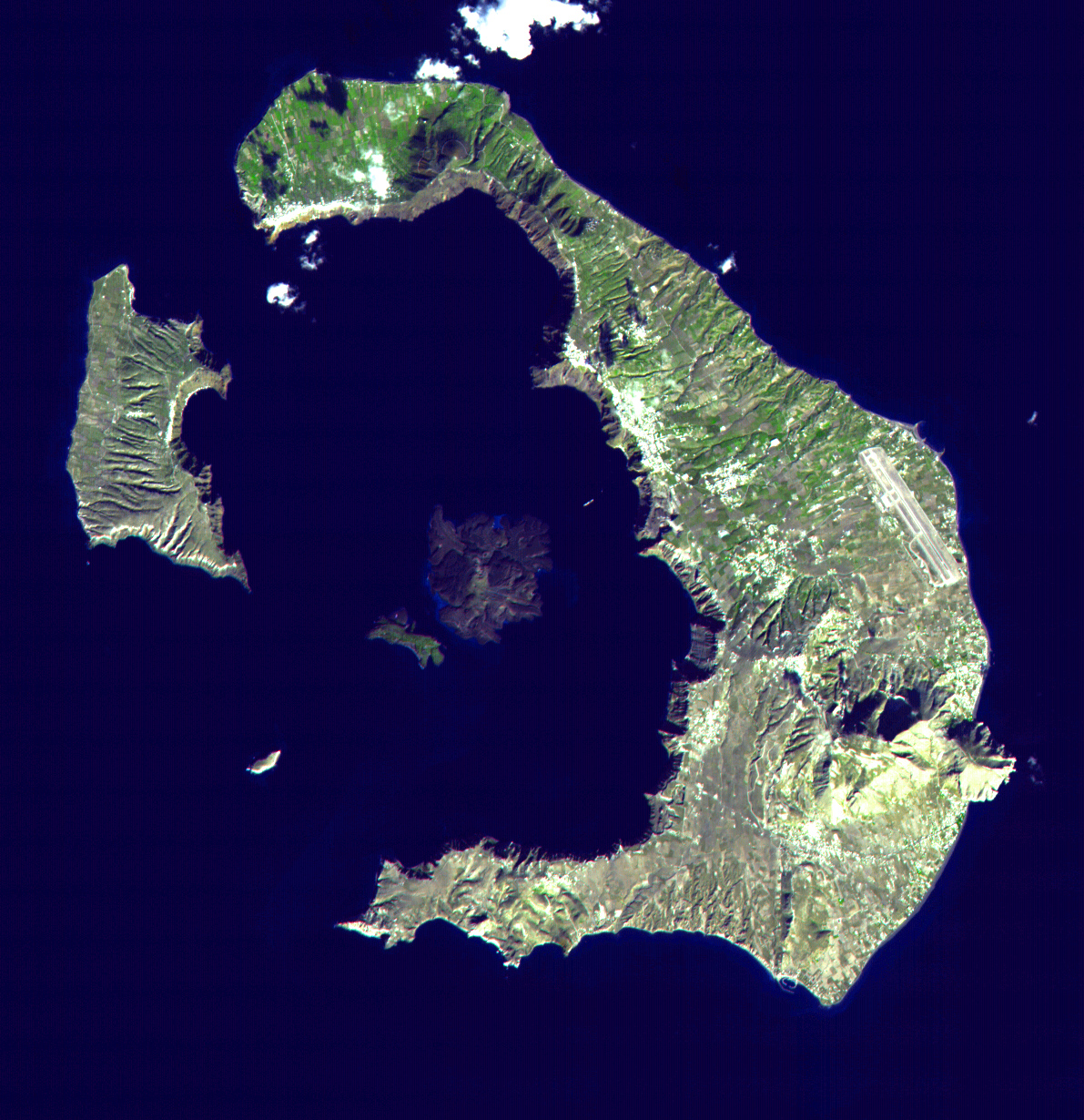
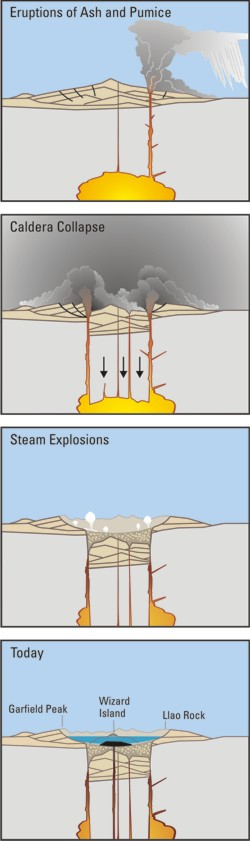
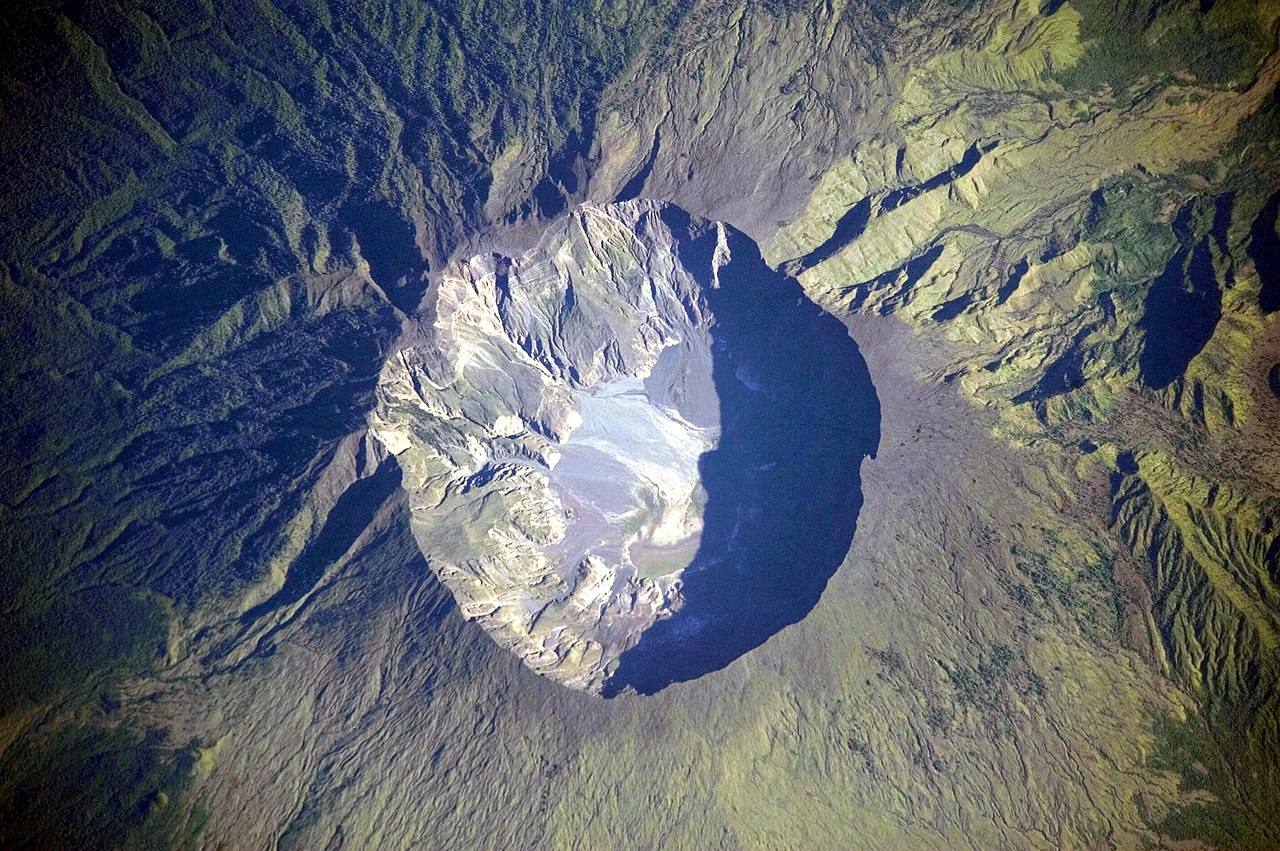
A caldera is a broad, often steep-sided depression that forms when a large volume of magma is removed from a shallow magma chamber, causing the ground above to collapse. Unlike a typical volcanic crater that is excavated by explosive ejection of material, a caldera results chiefly from downward collapse. Calderas range from a few hundred metres to tens of kilometres across and may host lakes, resurgent domes, or new volcanic vents.
Image gallery
10 Images




How calderas form
The most common sequence begins with a powerful eruption that ejects large quantities of magma and volcanic ash. When the withdrawing magma leaves a structurally unsupported cavity, roof rocks fracture along a ring of faults and drop, forming a depression. Some calderas develop in stages: initial collapse can be followed by renewed magma intrusion that uplifts part of the floor (a resurgent dome) or by smaller eruptions that build new cones inside the depression. In other cases, the roof simply sags without discrete faulting.
Characteristics and types
- Summit-collapse calderas: produced by explosive emptying of a central chamber.
- Resurgent calderas: show later uplift as magma re-enters below the collapsed floor.
- Subsidence or downsag calderas: formed mainly by gradual sagging rather than block-fault collapse.
Caldera floors often collect water to form crater lakes and can host geothermal systems. Structural features include ring faults, breccia-filled zones, and concentric fractures that control later volcanic activity.
Terminology and comparisons
The term "caldera" derives from Portuguese, where it means a large cooking pot or cauldron (meaning), reflecting the saucer-like shape. Although the words "crater" and "caldera" are sometimes used interchangeably in casual speech, geologists distinguish them: a crater is primarily an opening created by explosive or erosive processes, while a caldera is the collapse structure that follows major magma withdrawal.
Notable examples and geological significance
Large caldera-forming eruptions are rare but can have global consequences. The Yellowstone system underwent several caldera-forming eruptions; the most recent of the largest events occurred about 640,000–650,000 years ago and is estimated to have produced an enormous volume of volcanic material that affected wide regions of North America (Yellowstone). By contrast, the 1980 eruption of Mount St. Helens released far less material, illustrating the comparative scale of caldera eruptions.
Lake Toba in Sumatra is another well-known caldera whose eruption roughly 74,000–75,000 years ago ejected very large volumes of ash and pyroclastic material. The Toba event (often called the Toba eruption or Toba eruption, Indonesia) has been studied for its environmental effects. Some researchers proposed that the event triggered a severe volcanic winter and contributed to a human population bottleneck (Toba catastrophe theory), but this hypothesis remains debated and not universally accepted; evidence for a global population collapse is limited and contested (volcanic winter, human population).
Impacts, hazards and monitoring
Caldera-forming eruptions can produce widespread ashfall, pyroclastic flows, and atmospheric effects that alter climate for years. Locally, they create long-lived hazards: unstable slopes, ash deposits that alter hydrology, and recurrent hydrothermal activity. Because calderas can host renewed eruptions, monitoring focuses on seismic activity, ground deformation, gas emissions and thermal anomalies. Modern techniques—seismometers, GPS and satellite radar—help detect magma movement beneath caldera systems and inform hazard planning.
Geologists study calderas to understand crustal magma systems, the timescales of large eruptions, and the interplay between tectonics and volcanism. Famous calderas such as Yellowstone, Toba, and several in Iceland, Japan and the Mediterranean illustrate the variety of forms and consequences that this powerful volcanic process can produce.
For further reading see introductory material on caldera mechanics and case studies of major caldera eruptions (magma chamber dynamics, crater vs caldera, Yellowstone studies).
Questions and answers
Q: What is a caldera?
A: A caldera is a volcanic feature formed by the collapse of land surface after a gigantic volcanic eruption. It is created when the volcano's magma chamber empties enough for the ground above it to drop.
Q: How does a caldera differ from a crater?
A: A crater is made by blasting outward, while a caldera is made by collapsing inward.
Q: Where does the word "caldera" come from?
A: The word "caldera" comes from the Portuguese language, meaning "cauldron".
Q: How much material was released during Yellowstone Caldera's last eruption?
A: During Yellowstone Caldera's last eruption some 650,000 years ago, it released about 1,000 km3 of material.
Q: When did Lake Toba erupt and how much material was released?
A: Lake Toba erupted about 75,000 years ago and released about 2,800 km3 of ejecta. This was one of the largest explosive eruptions within the last 25 million years.
Q: What theory suggests that this eruption reduced human population to between 2000-20 000 people?
A: Anthropologist Stanley Ambrose suggested that this volcanic winter induced by this eruption reduced human population to between 2000-20 000 people.
Q: Is there any direct evidence that supports this theory?
A: No, there is no direct evidence that supports this theory and some evidence that suggests it may not be correct.
Tags
Related articles
Author
AlegsaOnline.com Caldera (volcanic collapse formation) Leandro Alegsa
URL: https://en.alegsaonline.com/art/16057
Sources
- physicalgeography.net : "Glossary of Terms: C"
- anthro.illinois.edu : "Professor Stanley H Ambrose PhD | Anthropology at Illinois"
- bbc.co.uk : Supervolcanoes
- toba.arch.ox.ac.uk : "Middle Paleolithic assemblages from the Indian subcontinent before and after the Toba super-eruption"
- ncbi.nlm.nih.gov : PMID 17615356