
Moai: the monumental statues of Easter Island
Moai are the large carved stone figures of Rapa Nui (Easter Island). This article explains their design, quarrying, transport theories, cultural role, later history and modern conservation.
The moai are the iconic monolithic statues carved on Rapa Nui, commonly known in English as Easter Island. These figures, produced chiefly from volcanic rock, were carved between roughly the late first and second millennia CE and placed along the island's shorelines and ceremonial platforms. They are widely recognised for their oversized heads, elongated features and the sense of presence they project across the landscape.
Image gallery
10 Images
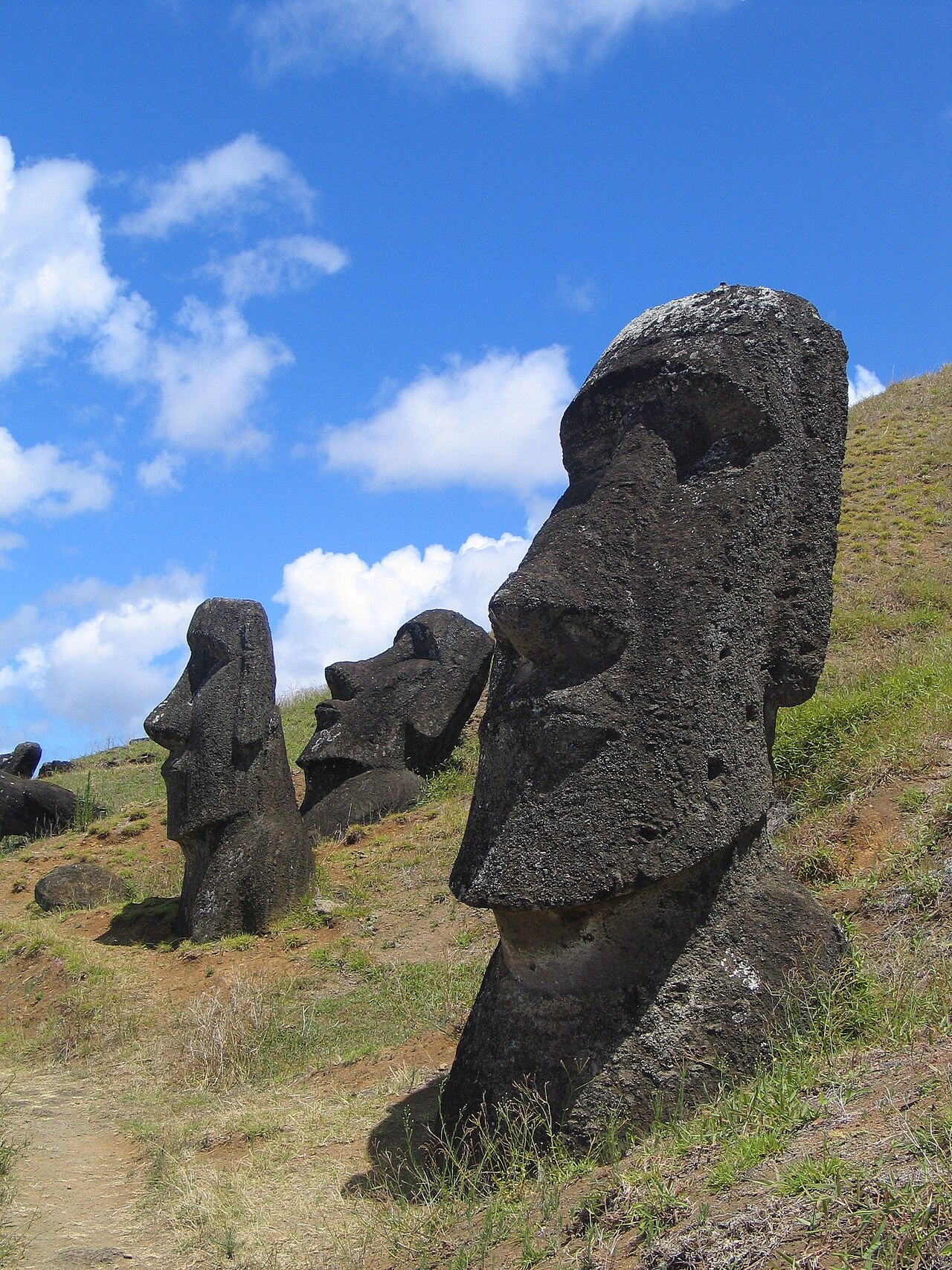
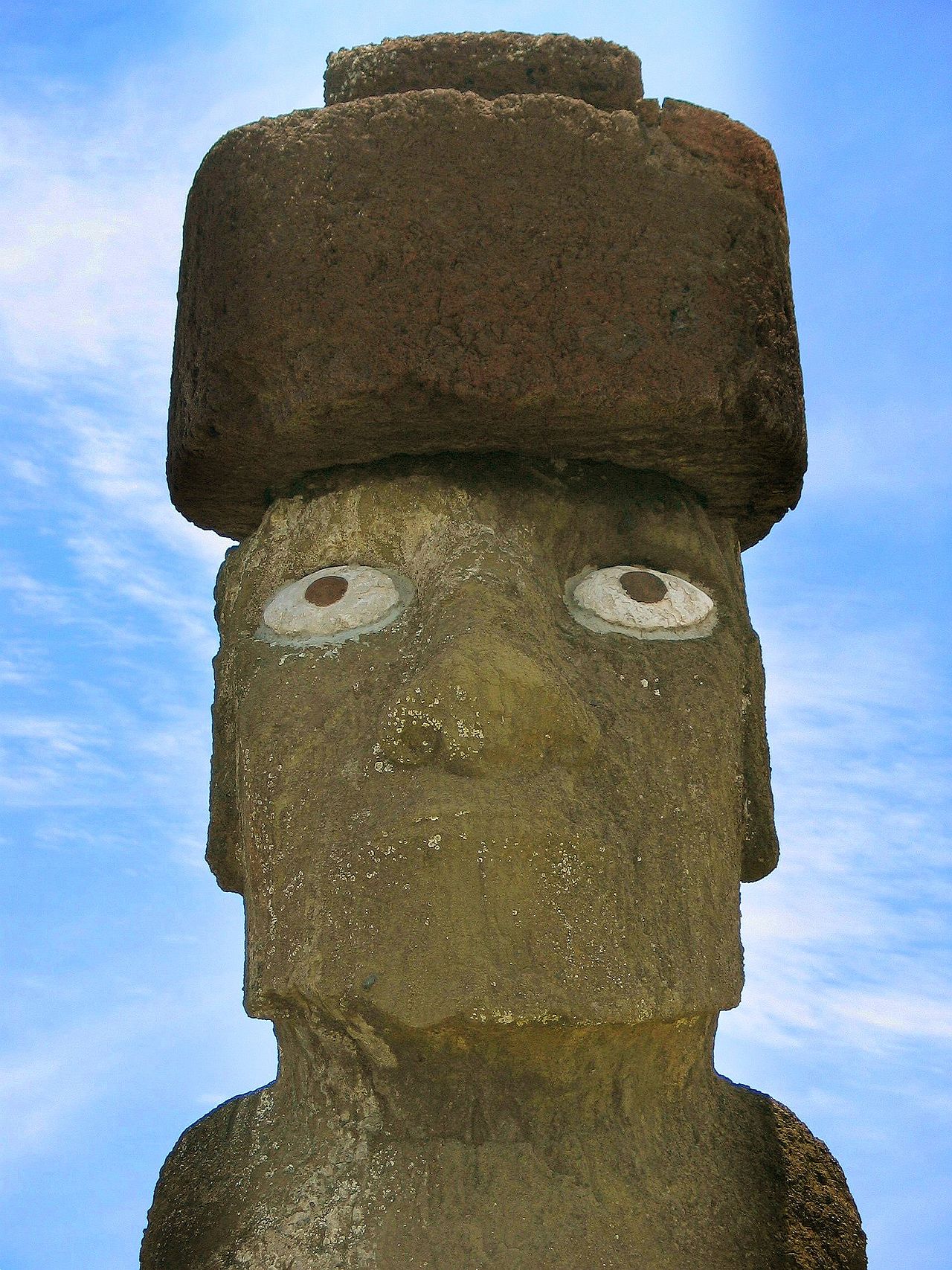


Form, materials and typical features
Most moai are single-block sculptures with a pronounced head, heavy brows, long noses and thin, carved lips. Although often described as "heads," many statues include torsos, shoulders and carved arms whose proportions are small compared with the head; in time many moai became partly buried so only the heads remained visible. The majority were cut from a relatively soft volcanic tuff found in the quarry at Rano Raraku, while a smaller number and distinctive topknots (pukao) were made from red scoria from other deposits. Typical heights range from about 2.5 to 10 metres, and many weigh several tonnes; the island hosts around one thousand placed statues and several hundred unfinished examples left at the quarry.
Quarrying and carving
Carving was concentrated at the slopes of Rano Raraku, where sculptors worked the rock with stone tools to shape faces and bodies directly from the bedrock. The partly completed moai remaining in the quarry provide a sequence of working stages from rough blocking through finer detailing. Some moai received additional elements after erection: deep eye sockets were later fitted with white coral and red scoria or obsidian pupils, and a subset were topped by cylindrical pukao—red stone hats—set on the crowns.
Transport and erection theories
How large statues were moved from the quarry to coastal ahu (ceremonial platforms) has been a subject of debate. Proposed methods include wooden sledges or rollers, transport on greased tracks, and a "walking" technique in which ropes and coordinated rocking caused the statue to pivot forward. Experimental archaeology has shown several of these methods are feasible under certain conditions, but no single approach is universally accepted; the most likely reality is that techniques varied over time and according to statue size and local circumstances.
Cultural role and meaning
The moai are generally understood as ancestral representations linked to social and ritual life. Scholars suggest they served to embody and project the mana (spiritual power) of important lineages and to watch over villages from their ahu platforms. Carving and raising moai required organised labour and resources, indicating complex social structures on the island. Oral traditions and archaeological evidence point to ancestor veneration as a central element in their significance, though precise beliefs and ceremonies changed across generations.
Later history and modern conservation
Contact with Europeans and internal stresses in the island society during the 18th and 19th century contributed to population decline, social upheaval and, in many cases, the toppling of moai. By the time sustained external attention arrived many statues lay fallen. From the 20th century onward archaeologists and Rapa Nui community members have worked to study, document and restore selected moai and ahu. Conservation today balances the physical preservation of stone, management of visitor impact and respect for local cultural rights and traditions.
Notable facts and distinctions
- The largest moai erected on an ahu reaches around 10 metres in height; a few unfinished figures in the quarry are even larger.
- Many moai were carved by Polynesian peoples who settled the island; evidence ties their origins and cultural practices to broader Polynesian traditions and seafaring networks (Polynesians).
- Because of erosion and burial, some famous statues appear as isolated heads, but most have full bodies largely concealed by soil.
For further overviews and archaeological reports see resources linked from visitor and research portals such as the island's cultural sites and scholarly syntheses (Easter Island, general references), geological summaries of the volcanic materials used (volcanic rock), and field studies of the Rano Raraku quarry (measurements and dimensions, site details). Additional academic discussion of social change on Rapa Nui during the late pre-contact period remains active and accessible to those seeking deeper study.
Researchers and visitors alike continue to learn from the moai—both as remarkable feats of lithic art and as focal points for understanding the history, ingenuity and resilience of Rapa Nui society.
Related articles
Author
AlegsaOnline.com Moai: the monumental statues of Easter Island Leandro Alegsa
URL: https://en.alegsaonline.com/art/65653
Sources
- www2.hawaii.edu : Rapanui (Easter Island)
- museumsnett.no : The "Walking" Moai of Easter Island