
Mission San Luis Obispo de Tolosa
Spanish mission founded in 1772 on California's Central Coast. The fifth of 21 missions, it remains an active parish and museum, noted for adobe architecture, mission-era artifacts and complex colonial and Indigenous histories.
Overview
Mission San Luis Obispo de Tolosa was founded in 1772 by Junípero Serra as part of Spain's effort to establish a chain of religious and colonial outposts along what is now the coast of California. Located on the Central Coast, approximately midway between San Diego and Monterey, the mission gave its name to the modern city of San Luis Obispo. It was the fifth of twenty-one missions established in Alta California and served spiritual, agricultural and administrative roles in the colonial period.
Image gallery
6 Images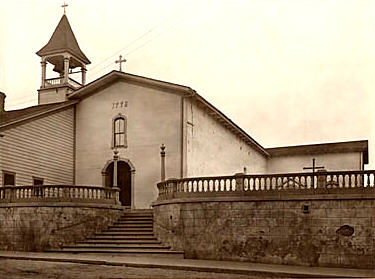




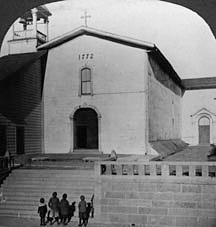
Architecture and mission complex
The mission complex traditionally included a church, living quarters, workshops, storerooms and agricultural installations arranged around a central courtyard. Construction commonly used adobe masonry, timber roofing and whitewashed surfaces; tile roofs and a bell tower are features often noted in descriptions and restorations. Interior spaces display religious art, carved furnishings and objects used in daily worship and work. Garden areas and orchards supported food production and were integral to the mission's economy.
Economy and daily life
San Luis Obispo operated as an agricultural hub, raising crops, vineyards and livestock and supporting a variety of skilled crafts such as leatherwork, weaving and carpentry. The mission system combined religious instruction with labor, and residents—both Spanish and Indigenous—took part in domestic, agricultural and artisan tasks. Surplus produce and goods sometimes supplied other colonial settlements or were traded locally.
Indigenous peoples and colonial impact
Local Indigenous communities had long inhabited the region before the mission's founding. Encounters between Indigenous people and mission settlers involved trade, labor and cultural exchange, but also brought significant disruption: new diseases, altered land use and social change affected Indigenous ways of life. Contemporary interpretation at the site emphasizes these complex and often painful histories and seeks to present multiple perspectives.
Transition, secularization and restoration
Following Mexican independence, the mission system was secularized and its lands redistributed, altering ownership and use. Over the nineteenth and twentieth centuries, preservation and restoration efforts sought to stabilize surviving structures and conserve historical artifacts. These efforts have combined archaeological study, architectural repair and archival research to interpret the site's layered past.
Present-day role
Today Mission San Luis Obispo de Tolosa functions as an active Catholic parish and as a museum and cultural site open to visitors. Exhibits display liturgical objects, period furnishings and interpretive material about mission-era agriculture, crafts and daily life. Educational programs and guided tours address both the religious history associated with the name of Saint Louis, bishop of Toulouse, and broader themes of colonization, Indigenous resilience and regional development.
Significance and public engagement
The mission remains a landmark on the Central Coast and a focal point for scholarship, tourism and community events. Its preserved architecture and collections provide a tangible entry point into California's colonial era, while ongoing dialogue and research emphasize conservation, historical accuracy and respectful engagement with descendant communities.
Visitor information and scholarship
Visitors can see restored rooms, participate in tours and consult interpretive displays that explain construction methods, agricultural practices and the mission's changing roles over time. Scholars and local historians continue to study the site to better understand mission-era lifeways and their long-term consequences for the region.
Questions and answers
Q: What is Mission San Luis Obispo de Tolosa?
A: Mission San Luis Obispo de Tolosa is a Spanish mission founded by Father Junipero Serra in 1772.
Q: Where is Mission San Luis Obispo de Tolosa located?
A: Mission San Luis Obispo de Tolosa is located on the central coast of California, halfway between San Diego and Monterey.
Q: Who was Mission San Luis Obispo de Tolosa named after?
A: Mission San Luis Obispo de Tolosa was named after Saint Louis, the bishop of Toulouse.
Q: How many missions were there in California at the time Mission San Luis Obispo de Tolosa was founded?
A: There were five missions in California when Mission San Luis Obispo de Tolosa was founded, and it was the fifth of twenty-one.
Q: What is Mission San Luis Obispo de Tolosa known for?
A: Mission San Luis Obispo de Tolosa is known for its beautiful architectural features, mission life, and historical events.
Q: Who founded Mission San Luis Obispo de Tolosa?
A: Mission San Luis Obispo de Tolosa was founded by Father Junipero Serra.
Q: When was Mission San Luis Obispo de Tolosa founded?
A: Mission San Luis Obispo de Tolosa was founded in 1772 by Father Junipero Serra.
Related articles
Author
AlegsaOnline.com Mission San Luis Obispo de Tolosa Leandro Alegsa
URL: https://en.alegsaonline.com/art/65477
Sources
- missionsanluisobispo.org : missionsanluisobispo.org/
- californias-missions.org : californias-missions.org/individual/mission_slo.htm