
Junípero Serra
18th‑century Franciscan friar who led the Spanish mission effort in California, founding missions, later canonized, and remembered with a contested legacy because of the missions' impact on Indigenous peoples.
Overview
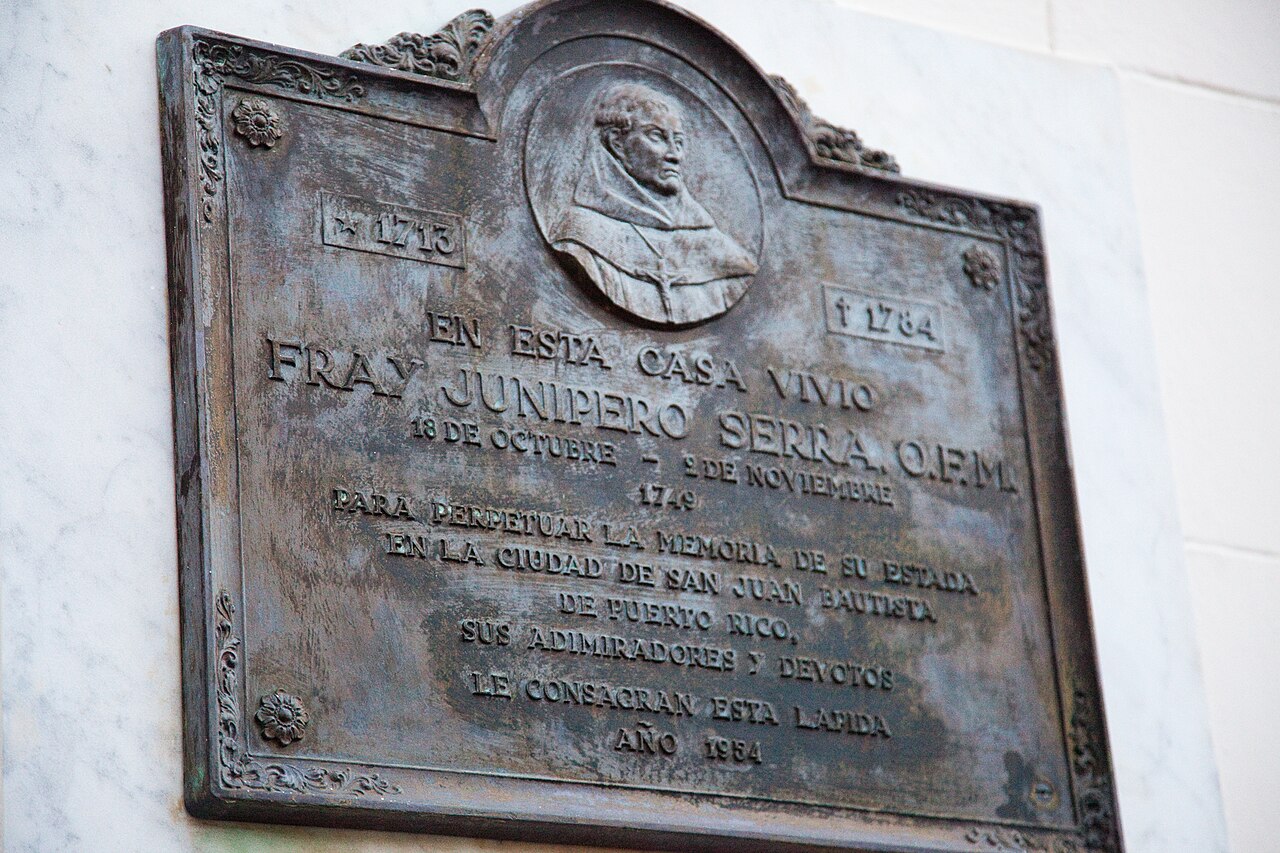
Junípero Serra y Ferrer (November 24, 1713 – August 28, 1784) was a Franciscan friar born on the island of Majorca. He is widely known for his role as a missionary and administrator in Spain's late‑18th‑century expansion along the Pacific coast of North America. Serra helped establish the Spanish mission system that extended Spanish colonial influence and Catholic evangelization across what is now the state of California. His career combined religious aims, educational activity, and collaboration with colonial authorities.
Image gallery
10 Images





Early life and formation
Serra entered the Franciscan order as a young man and trained as a priest and teacher of philosophy and theology. Before his mission work in the Californias, he taught and served in pastoral roles in Spain and in New Spain (colonial Mexico). His training as a religious educator shaped his approach to mission organization and catechesis.
Mission work in the Californias
In 1768 Serra was appointed to lead Franciscan missionary efforts in the Californias. He first worked in Baja California, where Franciscans succeeded the Jesuits and established mission activity. Soon after, he joined Spain's overland and maritime campaigns to colonize Alta California. Serra founded and supervised a chain of missions, beginning with Mission San Diego de Alcalá and ultimately establishing or guiding nine missions in Alta California. These mission settlements functioned as centers for religious instruction, agriculture, craft production, and Spanish settlement and were closely linked to military presidios and colonial governors. Serra often operated from the presidial capital in Monterey, which served as a political and logistical base for the colony.
Practices, goals, and Indigenous impact
The stated goals of the mission system were religious conversion and the instruction of Indigenous peoples in Christian doctrine, European agricultural methods, and trades. Mission life sought to organize communities into parish‑style settlements where friars taught, baptized, and administered sacraments. In practice, the missions also imposed new labor expectations, disrupted traditional economies and social structures, and exposed Indigenous populations to European diseases to which they had little immunity. Indigenous responses were diverse: many people accommodated, adapted, or sought benefits from new resources and technologies; others resisted, fled missions, or maintained aspects of their customary lives. Modern scholarship emphasizes that the mission era brought both cultural change and significant suffering for native communities, and it treats Serra as a central figure within those complex processes.
Recognition, sainthood, and public debate
After his death in 1784, Serra remained a prominent figure in histories of Spanish California. The Roman Catholic Church advanced his cause for sainthood: he was beatified by Pope John Paul II and formally beatified in 1988. In 2015 the church canonized him as a saint, a decision associated with canonization ceremonies conducted by Pope Francis. These religious honors have themselves been subjects of public discussion; supporters highlight Serra's devotion, missionary zeal, and role in founding communities, while critics point to the harms of the mission system and the suffering experienced by Indigenous peoples.
Monuments, memory, and contested legacy
Throughout the United States, Serra's image and memorials — including a statue placed to represent California in the National Statuary Hall in the U.S. Capitol — have become focal points for conversations about historical memory. In recent decades some communities have reexamined how Serra and the mission era are commemorated. Monuments, place names, and civic honors associated with Serra have been reassessed, and in some cases removed or reinterpreted, as part of broader debates about colonial histories and Indigenous rights.
Historical assessment
Historians and Indigenous scholars approach Serra's life with attention to context and consequences. He is studied both as a religious actor who sought to expand the reach of the Franciscan order and as a participant in Spain's imperial project. Scholarship emphasizes that assessments of Serra must consider the institutional goals of the missions, the agency and voices of Indigenous peoples, the demographic and cultural impacts of contact, and the long‑term legacies of colonialism in California. Public and academic debates continue about how to interpret, teach, and commemorate this past.
Notable facts
- Founder: Serra founded the first Spanish mission in Alta California and oversaw a chain of missions that shaped early colonial settlement in the region.
- Religious recognition: He was beatified in 1988 and canonized in 2015, events that prompted both praise and protest.
- Contested legacy: Commemorations of Serra have prompted debate, reinterpretation, and sometimes removal of monuments as communities reassess the mission era's impacts on Indigenous peoples.
Understanding Junípero Serra involves balancing the religious and colonial aims that drove the mission project with careful attention to the experiences and perspectives of the Indigenous peoples who lived through profound change. His life remains a subject of study, commemoration, and contestation in California's public history.
Related articles
Author
AlegsaOnline.com Junípero Serra Leandro Alegsa
URL: https://en.alegsaonline.com/art/51670