
Mink: semi-aquatic mustelids, biology, distribution and human interactions
Minks are small semi-aquatic mustelids with dense fur, opportunistic diets and complex relations with people, including fur farming, wild conservation concerns and invasive populations.
Overview
Minks are small, short-legged carnivores that belong to the broader mustelid family. They are adapted for a life closely associated with water and are noted for sleek, water-resistant fur and a largely carnivorous diet. The common name "mink" covers animals on more than one continent, most notably the American and the European mink, which differ in size, distribution and conservation status.
Image gallery
5 Images


Taxonomy and species
The term "mink" refers primarily to two forms found in different regions. The American mink is the species most widely known from wild populations and from fur farming. The European mink is more restricted in range and is often the subject of conservation concern. These animals are members of a diverse family that also includes weasels, otters and polecats.
Physical characteristics
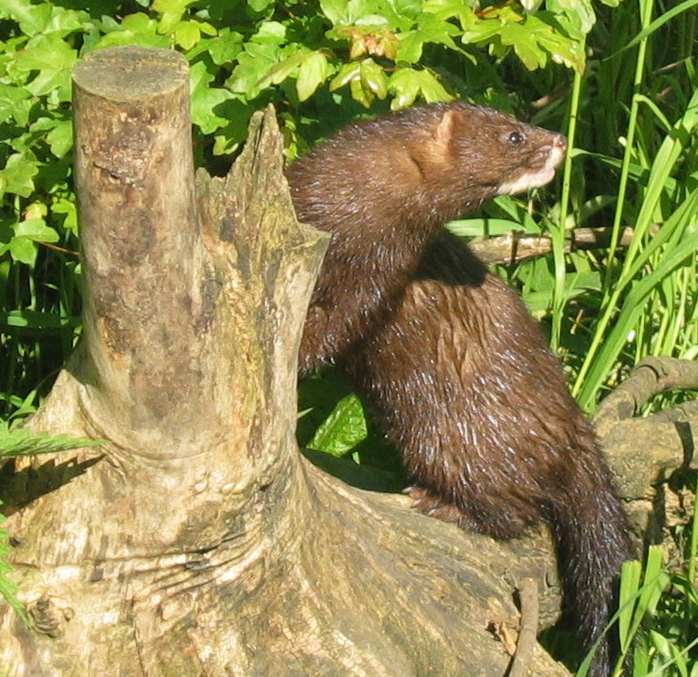
Minks have long, slender bodies; short legs; partly webbed feet; and thick, insulating fur that traps air when they enter the water. Their tails are moderately long and help with swimming. Pelage colour ranges from dark brown to nearly black in many wild individuals, and selective breeding on farms has produced a variety of fur colours.
Behavior and diet
Minks are agile hunters and capable swimmers, divers and climbers. They are generally solitary and territorial; adults may be aggressive toward rivals. Diets are opportunistic and typically include fish, crustaceans, amphibians, small mammals, birds and eggs. Activity often peaks at dawn, dusk and night, but minks can be active during the day depending on local conditions.
Reproduction and life cycle
Breeding usually takes place annually; females prepare dens near water and raise litters of pups alone. Like many members of the mustelid family, mink reproduction can involve delayed implantation, which causes variation in the length of time between mating and birth. Lifespan in captivity can reach around eight to ten years; in the wild individuals commonly live shorter lives because of predation, disease and human impacts.
Distribution and habitat
Minks occupy riparian and wetland habitats such as rivers, marshes, lakes and coastal shorelines. Native ranges include parts of North America, much of Europe and the far west of Asia. The American mink has established populations outside its native range in some regions following escapes from fur farms; the European mink has a more fragmented distribution and has declined in several areas.
Human interactions, conservation and management
Minks have been valued for their fur for centuries, which led to large-scale trapping and the development of intensive fur farming. Farm escapes and deliberate releases have created feral populations that can predate on native wildlife and compete with local mustelids. Conservation concerns include habitat loss, competition and hybridisation in some regions, and the vulnerable status of the European mink in parts of its range. Disease outbreaks on farms have prompted additional public and regulatory attention in recent years.
Practical notes
- Management of invasive mink commonly involves trapping, habitat modification and monitoring to protect vulnerable species.
- Conservation actions for native mink focus on wetland protection, reducing pollution and limiting harmful interactions with introduced populations.
- Ongoing research addresses ecology, population trends and the effects of farming and escapees on native ecosystems.
Human attitudes toward mink vary widely—from interest in their biology and role in ecosystems to ethical debate over fur production and animal welfare. For further general information see resources on the mustelid family and regional wildlife pages for North America, Europe and Asia.
Related articles
Author
AlegsaOnline.com Mink: semi-aquatic mustelids, biology, distribution and human interactions Leandro Alegsa
URL: https://en.alegsaonline.com/art/65254