
Mixosaurus — a small, cosmopolitan Triassic ichthyosaur
Mixosaurus was a small, widespread Triassic ichthyosaur known from many global localities; an important transitional form between primitive eel-like and advanced dolphin-shaped ichthyosaurs.
Overview
Mixosaurus was a relatively small marine reptile that lived during the Middle to Late Triassic period. It belongs to the group commonly known as ichthyosaurs, a clade of fish-like reptiles adapted to life in the sea. Individual animals of Mixosaurus were modestly sized compared with later ichthyosaurs, with most specimens measuring around one metre long. Fossils show it was common and widespread, indicating a successful and adaptable genus in Triassic oceans.
Image gallery
10 Images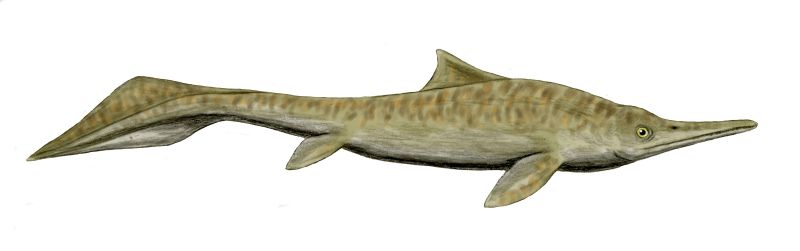


Anatomy and distinguishing features
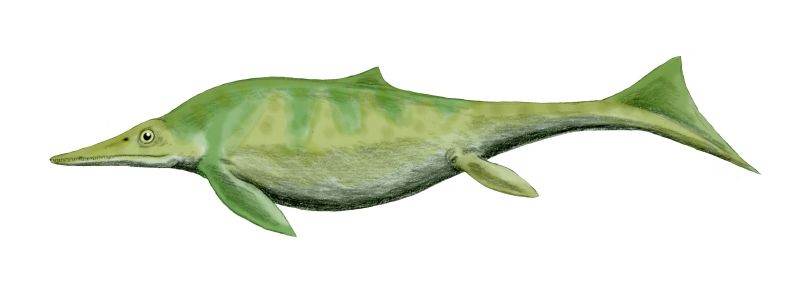
Mixosaurus combined primitive and derived traits. Its body plan retained some elongated, eel-like aspects seen in early relatives while also showing the development of paddle-like limbs and a more rigid torso that anticipated later, faster-swimming ichthyosaurs. Notable characteristics include a relatively long skull with numerous conical teeth suited for catching small fish and cephalopods, well-developed fore- and hind-limbs modified into flippers, and a tail region showing incipient features of a downward lobe.
Geographic distribution and fossil record
Remains of Mixosaurus have been found in many parts of the world, reflecting a near-global distribution through the Tethys realm and adjacent seas. Important localities include:
These widespread occurrences help scientists reconstruct Triassic marine connections and show that Mixosaurus occupied a range of latitudes and ecological settings.
Evolutionary significance
Mixosaurus is often considered a transitional genus that links very primitive, elongated ichthyosaurs with the more derived, compact, dolphin-shaped types of the later Mesozoic. In comparative studies it has been contrasted with early eel-like forms such as Cymbospondylus and interpreted as part of the evolutionary sequence leading toward the streamlined body plans of advanced euichthyosaurs. Its mixture of primitive and advanced anatomical traits makes it important for understanding how swimming adaptations evolved in marine reptiles.
Paleobiology and ecological role
Although small, Mixosaurus was likely an active predator feeding on small fish and invertebrates. Tooth shape and wear patterns suggest a diet of slippery prey, while limb and tail morphology indicate moderate swimming ability—capable of both maneuvering in nearshore environments and pursuing prey in open water. Juvenile and adult specimens have been found, implying successful reproduction in the marine realm but little is known about its breeding strategy compared with later ichthyosaurs.
Notable facts and research context
Mixosaurus continues to be the subject of research into Triassic marine faunas and ichthyosaur evolution. Its taxonomic history has been revised multiple times as new specimens and better-preserved material were described, and it serves as a reference point for studies of anatomy, growth, and paleobiogeography. For further reading and specimen data, consult specialist literature and collections listed by regional research institutions and the linked resources above.
Questions and answers
Q: What was Mixosaurus?
A: Mixosaurus was a small, common and cosmopolitan Triassic ichthyosaur.
Q: How long was Mixosaurus?
A: Mixosaurus was only about a meter in length.
Q: Where have fossils of Mixosaurus been found?
A: Fossils of Mixosaurus are known from Alaska, Canada, China, Timor, Indonesia, Italy, Nevada, New Zealand, Spitsbergen, and Svalbard.
Q: Where did Mixosaurus live?
A: Mixosaurus lived in the Tethys Sea but also ventured further afield.
Q: What is Mixosaurus considered to be in terms of the evolution of ichthyosaurs?
A: Mixosaurus seems to have been a transitional form between the more primitive eel-shaped icthyosaurs such as Cymbospondylus and the more advanced Shatsasaurs and Euichthyosaurs.
Q: What are some examples of the more advanced ichthyosaurs?
A: The more advanced ichthyosaurs include Shatsasaurs and Euichthyosaurs, which include the familiar dolphin- or porpoise-shaped icthyosaurs.
Q: How does Mixosaurus compare to other ichthyosaurs in terms of size and abundance?
A: Mixosaurus was small and common, making it a ubiquitous ichthyosaur during the Triassic period.
Related articles
Author
AlegsaOnline.com Mixosaurus — a small, cosmopolitan Triassic ichthyosaur Leandro Alegsa
URL: https://en.alegsaonline.com/art/65611