
Metro‑North Railroad
Metro‑North Railroad is a suburban commuter rail system serving New York City, the Hudson Valley and parts of Connecticut. Operated by the MTA, it is one of the largest commuter rail networks in the U.S.
Metro‑North Railroad is a regional commuter rail system serving the northern suburbs of New York and portions of southern Connecticut, with multiple lines converging on New York City. Managed by the Metropolitan Transportation Authority (MTA), Metro‑North provides frequent weekday and weekend train service for commuters, students and leisure travelers. It is widely regarded as one of the largest commuter railroads in the United States and is typically ranked near the top by annual ridership figures (see ranking).
Image gallery
2 Images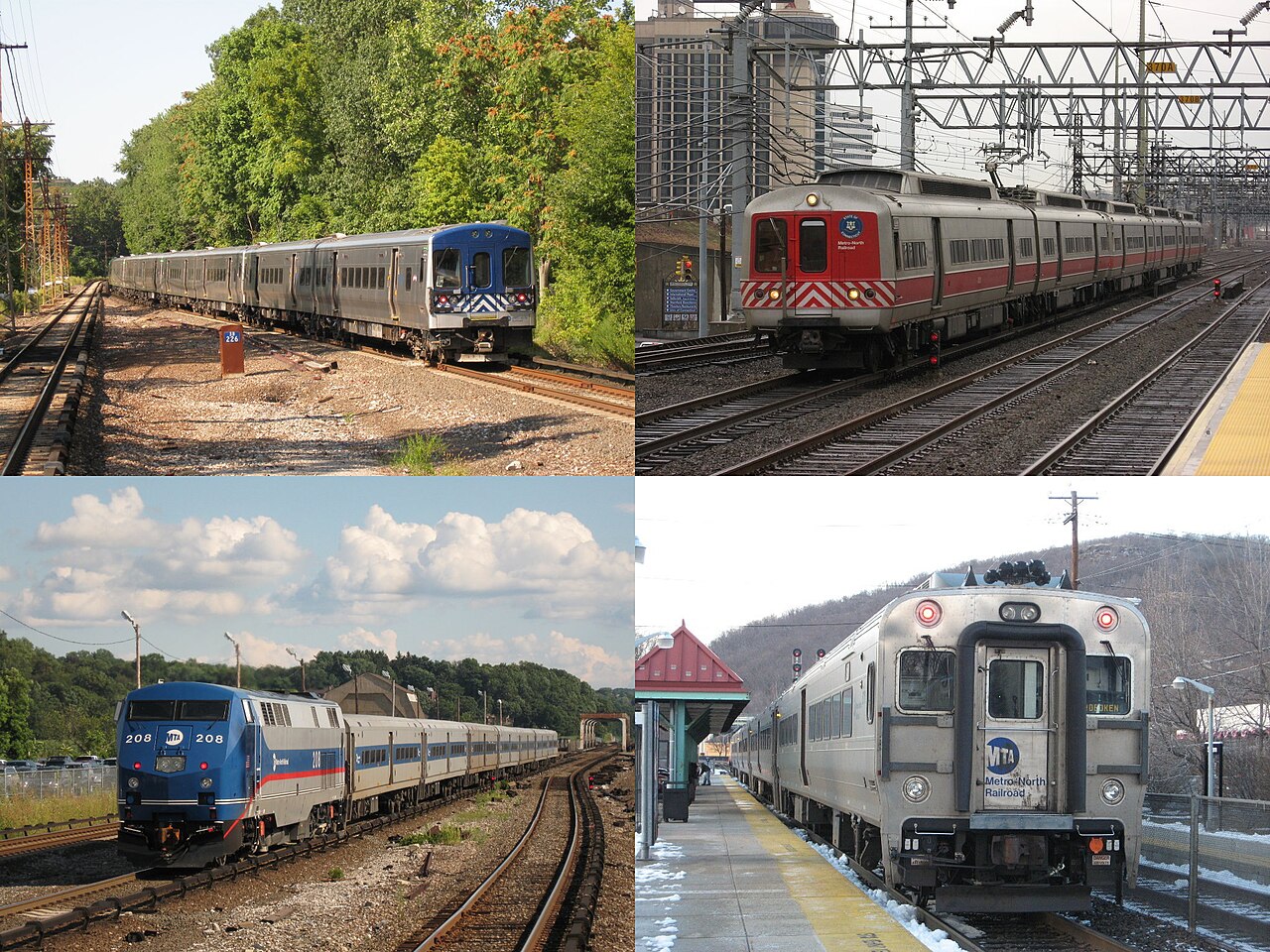

Network and characteristics
The system comprises five primary corridors radiating from Manhattan and the Bronx into the Hudson Valley and western Connecticut. Metro‑North operates approximately five hundred route miles and more than seven hundred miles of track when accounting for multiple tracks and branches; the system serves roughly one hundred twenty to one hundred twenty‑four stations across its network. Fares vary by distance and by geographic fare zones, with lower fares for travel wholly within the city and higher fares for longer suburban or interstate trips.
Lines, branches and service patterns
Metro‑North’s main corridors are traditionally identified as the Hudson, Harlem and New Haven lines; several branch lines extend service to smaller communities. Typical service patterns include express and local trains during peak periods and consistent off‑peak frequencies aimed at all‑day travel. Key features of the network include through‑running into New York terminals, timed connections with local transit, and commuter peak flows inbound to the city in the morning and outbound in the evening.
- Hudson Line: runs north along the east bank of the Hudson River.
- Harlem Line: extends northeast from Manhattan through Westchester County.
- New Haven Line: connects Manhattan and southwestern Connecticut and shares track and stations with intercity services.
- Branches and shuttle services: include short branches such as New Canaan, Danbury and Waterbury that provide local connections to mainlines.
Rolling stock and electrification
Metro‑North uses a mix of electric multiple units (EMUs) and locomotive‑hauled coaches. Electrified segments on the Hudson and Harlem lines commonly use third‑rail electric multiple units similar to those on other regional commuter systems, while the New Haven Line is energized with overhead catenary to maintain compatibility with intercity trains. Modern EMUs such as Kawasaki M8s operate on the New Haven Line, and other fleets—including various M3 and M7 series cars and coach equipment—serve electrified and diesel‑hauled portions. Diesel locomotives and dual‑mode units handle non‑electrified branches and off‑peak or transfer runs.
Operations, governance and connections
Metro‑North is operated by the MTA, the same agency that runs the New York City Transit subways and buses as well as the Long Island Rail Road. Through agreements and operational arrangements, services west of the Hudson River are closely coordinated with neighboring agencies; in some cases regional partners operate service under contract. The authority maintains jurisdiction over lines on both sides of the river and coordinates regional planning, capital improvements and fare integration (jurisdiction). Metro‑North also interchanges with intercity carriers and commuter systems to provide broader regional connectivity (commuter rail link).
History, importance and development
The network grew from older mainlines built in the 19th and early 20th centuries and was reorganized under public authority control in the late 20th century to stabilize and improve commuter service. Today Metro‑North is a vital component of the greater metropolitan transportation system, supporting daily commuting, regional economic activity and access to suburban and rural communities. Ongoing projects typically focus on improving reliability, accessibility, station modernization and capacity—efforts that reflect the system’s role in a dense, multimodal urban region. For further background and service details consult agency resources and regional planning documents (Hudson Valley) or operator information (New York City) and (Connecticut).
Service arrangements sometimes involve neighboring agencies: for example, some cross‑river or western Hudson service is operated under contract with adjacent transit providers to ensure continuity of suburban service. Riders can find schedules, fare maps and advisories from Metro‑North and partner agencies as they plan trips across the metropolitan region (state) and beyond (LIRR).
For official timetables, rolling stock descriptions and planned expansions, consult MTA publications and regional transportation plans; these resources provide the most current operational and capital project information (Hudson River) and will indicate future service changes and infrastructure investments (jurisdiction). Additional technical and historical material is available from transit research organizations and public archives (rankings).
Related articles
Author
AlegsaOnline.com Metro‑North Railroad Leandro Alegsa
URL: https://en.alegsaonline.com/art/64238
Sources
- web.mta.info : "The MTA Network"
- web.mta.info : "Comprehensive Annual Financial Report for the Years Ended December 31, 2012 and 2011"
- web.mta.info : "MTA Metro-North Railroad"