
Mikoyan-Gurevich MiG-21 (Fishbed) — Soviet supersonic jet fighter
Soviet-era lightweight supersonic fighter first flown in 1956. Delta-wing single‑engine design produced in very large numbers, used worldwide in Cold War conflicts and still in limited service.
Overview
The Mikoyan-Gurevich MiG-21, known by NATO as "Fishbed," is a lightweight, single‑engine supersonic jet fighter developed in the Soviet Union. Built by the Mikoyan design bureau, it was intended as a fast, affordable front-line fighter and interceptor. The type first flew in 1956 and later became one of the most widely produced supersonic combat aircraft in history.
Image gallery
10 Images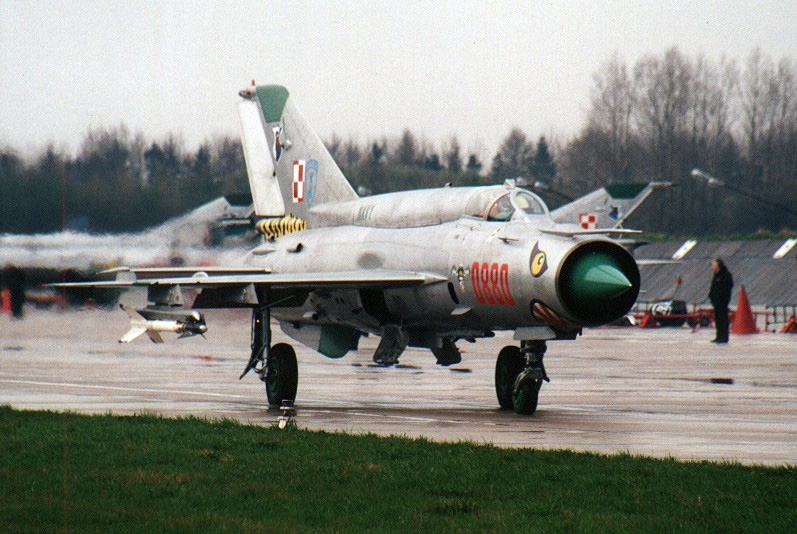


Design and characteristics
The MiG-21 is recognizable for its small, streamlined fuselage and characteristic tailless delta wing. It combines a simple airframe with a powerful turbojet to give short climb times and high top speed. Typical features include a compact cockpit, radar and gun/missile armament packages appropriate to each variant, and a focus on minimal maintenance and ease of production.
- Manufacturer: Mikoyan
- Aircraft class: supersonic fighter
- First flight: 1956
- Wing: delta wing
- Production scale: more than 10,000 airframes
Development and production
Conceived during the 1950s to meet the need for a simple, high‑performance fighter, the MiG-21 underwent many incremental improvements. Its production run spanned several decades and produced numerous variants for air combat, interception, reconnaissance and training. The design prioritized low weight and aerodynamic efficiency so that a single engine could deliver high speed and straightforward trackability in dogfights.
Operational history and users
The MiG-21 saw extensive combat service during the Cold War and regional conflicts. It was flown by the Soviet Air Force and exported to dozens of countries across Asia, Africa and Europe. The type saw notable action in conflicts such as the Vietnam War and many Middle Eastern and African engagements. Despite age, upgraded examples remained in limited service with several air forces into the 21st century.
For more technical summaries and operational records see a general aircraft database entry: Airframe reference, and for specific wartime use consult historical summaries such as those covering the Vietnam War.
Variants and legacy
MiG-21 variants include single-seat fighters, two-seat trainers, and specialized reconnaissance versions. Its long service life and widespread distribution made it influential: engineers and pilots around the world encountered and adapted to the platform, and several countries produced licensed or derivative designs. The MiG-21's combination of speed, simplicity and low cost left a lasting mark on military aviation.
Notable facts and distinctions
- The MiG-21 is one of the most-produced supersonic jet fighters; see production notes at production summary.
- Its NATO reporting name, Fishbed, is widely used in Western literature; technical and service details can be cross-referenced at fighter class records.
- Many air forces upgraded avionics and weapons on surviving airframes rather than replace them immediately; further reading at wing and structural references and development timelines.
For manufacturer history and design lineage consult the Mikoyan bureau overview: Mikoyan overview, and for comparative studies of Cold War fighters use a general reference: comparative aircraft guide or archival collections at conflict histories and production archives.
Related articles
Author
AlegsaOnline.com Mikoyan-Gurevich MiG-21 (Fishbed) — Soviet supersonic jet fighter Leandro Alegsa
URL: https://en.alegsaonline.com/art/64895