
McCarthyism: The U.S. anti‑Communist campaign of the mid‑20th century
McCarthyism refers to the intense anti‑Communist suspicion and political repression in the United States during the late 1940s–1950s, associated with Senator Joseph McCarthy, loyalty programs, blacklists and high‑profile hearings.
Overview
McCarthyism is the name commonly used for a period of heightened anti‑Communist sentiment and political coercion in the United States that peaked in the late 1940s through the 1950s. The label derives from Senator Joseph McCarthy of Wisconsin, whose public accusations and investigatory style became emblematic of the era. During this time many Americans feared subversion inside government, industry, academia and the arts, and public debate was often shaped by allegations of Communist sympathies or espionage.
Image gallery
10 Images


Origins and development
The phenomenon grew from a combination of international and domestic factors: the onset of the Cold War, revelations about Soviet spying programs, political competition at home, and anxieties about Communist advances abroad. Federal loyalty programs and congressional investigations expanded after World War II, while the Korean War and the establishment of Soviet influence in Eastern Europe intensified public alarm. Although Senator McCarthy's name became synonymous with the period, a broader set of institutions and actors—politicians, committees, journalists and private employers—contributed to the climate of suspicion.
Mechanisms and characteristics
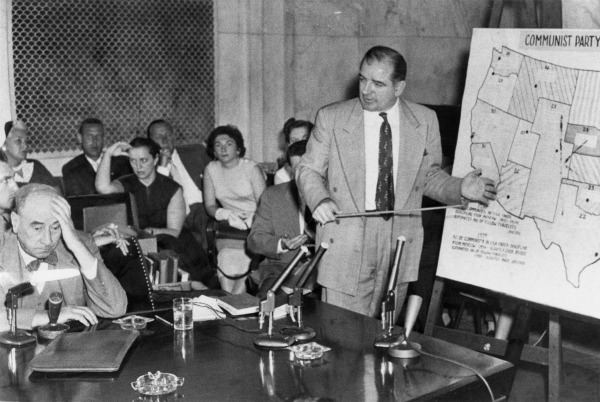
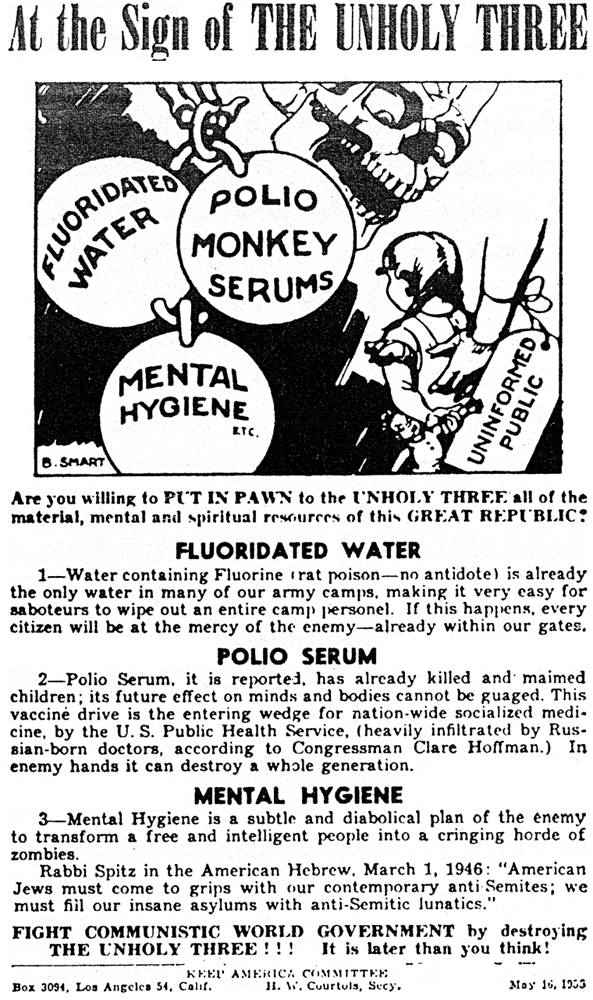
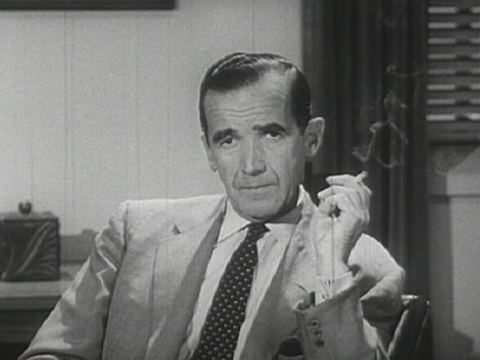
Key features of McCarthyism included public accusations often unsupported by conclusive evidence, aggressive congressional hearings, and informal punishments such as blacklisting. Investigative bodies and congressional committees sought testimony and lists of names, and government loyalty reviews examined employees' political affiliations. In many cases careers were damaged or ended through publicity, refusal to answer questions, or association with suspected organizations. Television and newspapers amplified accusations, shaping public opinion quickly.
Notable events and examples
Several episodes came to symbolize the era: congressional inquiries into alleged subversion, high‑profile trials and convictions for espionage, and the Hollywood blacklist that barred many writers and performers from work. The Army–McCarthy hearings, televised in 1954, were pivotal in shifting public perception by exposing McCarthy's tactics to a broad audience. Cultural responses also appeared: Arthur Miller's play The Crucible used the Salem witch trials as an allegory for the pressures and injustices of the time.
Consequences and legacy
The immediate effects included ruined reputations, curtailed employment opportunities, censorship of entertainment and scholarship, and a chilling effect on dissent. Over the longer term, McCarthyism prompted debates about the balance between national security and civil liberties, influenced legal protections for speech and association, and left a cautionary legacy about the dangers of political demagoguery and guilt by accusation. Historians and commentators continue to assess how fear, partisanship and institutional incentives combined to produce excesses.
Distinctions and clarifications
The period is often called the Second Red Scare to distinguish it from earlier post‑World War I anti‑radical movements. While concerns about Soviet espionage and Communist influence were not without basis—evidence later confirmed that actual spying occurred in some high‑profile cases—the broader pattern of accusations frequently exceeded available proof and bypassed ordinary legal safeguards. McCarthyism thus refers both to a historical era and to a style of political attack that relies on allegation and innuendo.
Further reading and references
- Context and background overview
- Cold War timeline and events
- Early postwar developments
- Mid‑1950s political climate
- Biographical material on Joseph McCarthy
- McCarthy's political profile
- First Red Scare comparisons
- Historical parallels and origins
- 1917 and early Soviet history
- Post‑World War I reactions
- Longer‑term effects of earlier scares
- Concerns about Communist influence
- Espionage cases and investigations
- Soviet policies and global strategy
- Rosenberg case studies
- Soviet consolidation in Europe
- Central European developments
- Eastern Europe under Soviet influence
- Chinese Revolution and global impact
- 1949 events and consequences
- Korean War context
- Korean War years
- Post‑armistice effects
- Arthur Miller's The Crucible and its themes
- Salem witch trials as allegory
For balanced study, readers should consult primary documents from the period, scholarly histories, and collections of contemporary journalism to see how public fears, institutional responses and individual actions combined to shape this controversial chapter of American history.
Related articles
Author
AlegsaOnline.com McCarthyism: The U.S. anti‑Communist campaign of the mid‑20th century Leandro Alegsa
URL: https://en.alegsaonline.com/art/63201