
Martin Bormann — Nazi official, Hitler's private secretary, and wartime power broker
German Nazi Party official Martin Bormann (1900–1945) rose to extreme influence as Hitler's private secretary and head of the Party Chancellery; convicted at Nuremberg, his fate was confirmed decades later.
Overview
Martin Ludwig Bormann (born 17 June 1900 in Wegeleben; died 2 May 1945 in Berlin) was a senior official of the National Socialist German Workers' Party (NSDAP). Over the 1930s and early 1940s he accumulated administrative authority by controlling access to Adolf Hitler and by directing the Party Chancellery. Although he spent much of his career outside front-line military command, his influence within the Nazi leadership made him a central figure in the regime's internal operations.
Image gallery
5 Images

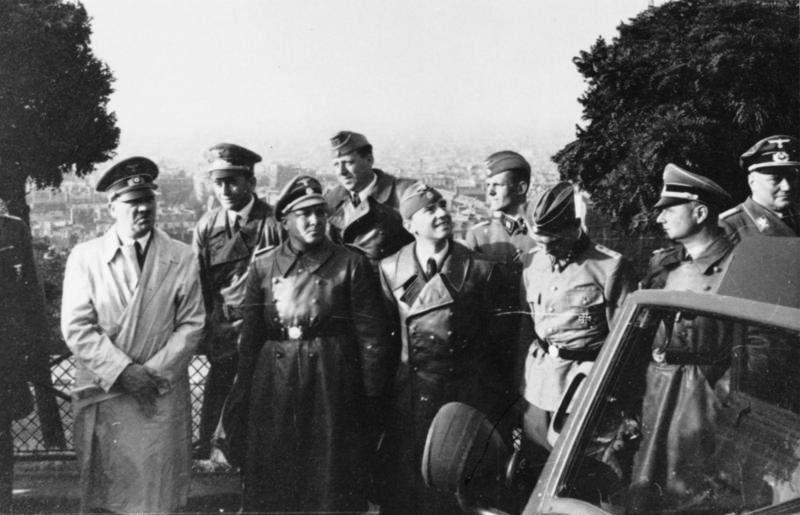


Early life and political rise
Bormann came from a modest background in the province of Prussia and became active in nationalist circles after World War I. He joined the Nazi Party in the late 1920s and later entered the SS, where he achieved high rank. His administrative skills and willingness to enforce party discipline brought him to the attention of senior leaders. During the 1930s he moved from party organizational work into a role that put him close to Adolf Hitler and the inner circle of the Nazi state.
Positions, responsibilities and influence
By the early 1940s Bormann had assumed control of the Nazi Party Chancellery, taking on many of the duties vacated when other leaders left or were sidelined. He became increasingly important as a gatekeeper to Hitler, deciding who could see the Führer and shaping which recommendations reached him. In this capacity Bormann coordinated personnel decisions, managed party correspondence, and exercised influence over resource allocation within the party apparatus. He also held high SS rank and was frequently described as one of the most powerful men in Germany during the later war years.
Role during the war and the final days
Throughout World War II Bormann’s power derived from his control of information and access rather than battlefield command. In the chaotic last weeks of the war he remained in Berlin and continued to handle many administrative and logistical matters for the doomed Nazi leadership. Contemporary accounts and later research indicate that he attempted to escape from the ruined capital in early May 1945. For many years his precise fate was unknown, and he was tried and sentenced in absentia at the International Military Tribunal in 1946.
Death, discovery of remains and historical assessment
Long after 1945 there was uncertainty about whether Bormann had survived. Human remains uncovered in Berlin in the early 1970s were later examined and, after additional forensic study in the 1990s, identified as likely belonging to Bormann; prevailing scholarly opinion holds that he died in Berlin in May 1945, probably by suicide while attempting to flee. Historians view Bormann as an extremely effective bureaucrat whose real power rested on managing the inner workings of the party and the flow of information to Hitler, and as an enabler of regime policies through administrative control.
Notable facts, distinctions and legacy
- Administrative power: Bormann exemplified how bureaucratic control and personal proximity to a leader can translate into political power.
- SS rank: He rose to a senior rank within the SS and used party institutions to expand influence.
- Nuremberg outcome: Tried in absentia at Nuremberg and sentenced to death in 1946.
- Historical debate: His actions and influence have been the subject of extensive study, particularly concerning how party administration enabled Nazi policies.
Related entries and primary references
- Birthplace and early biography
- Germany: political context
- Final days in Berlin
- Prussian administrative background
- German national history
- Nazi Party overview
- Political roles and offices
- Party membership and organization
- Private secretary responsibilities
- Adolf Hitler: leadership structure
- Hitler's cabinet and government
- Inner-circle advisors
- Early legal troubles and convictions
- Reichsminister and formal ranks
- Rudolf Hess and intra-party changes
- Hess's flight to Scotland context
- Nuremberg Trials and verdicts
For a deeper study, consult specialized biographies and archival sources that examine Bormann’s correspondence, administrative records, and the postwar forensic work that clarified his fate. These materials shed light on how a relatively uncharismatic bureaucrat came to wield disproportionate influence within one of the twentieth century’s most notorious regimes.
Related articles
Author
AlegsaOnline.com Martin Bormann — Nazi official, Hitler's private secretary, and wartime power broker Leandro Alegsa
URL: https://en.alegsaonline.com/art/62346
Sources
- credoreference.com : "Bormann, Martin from Chambers Biographical Dictionary"
- spiegel.de : "Martin Bormann"
- credoreference.com : "Bormann, Martin (1900 to 45) from Chambers Dictionary of World History"