
Marine angelfish (family Pomacanthidae): appearance, behavior and care
Marine angelfish (Pomacanthidae) are colorful reef fishes found in tropical seas worldwide. This article summarizes their taxonomy, appearance, ecology, aquarium importance and conservation concerns.
Overview
Marine angelfish belong to the family Pomacanthidae, a group of about seven genera and roughly 86 described species found primarily on shallow coral reefs. They occur across the tropical Atlantic, Indian and western Pacific oceans, where they are among the most conspicuously colored reef fishes.
Image gallery
10 Images



Key characteristics
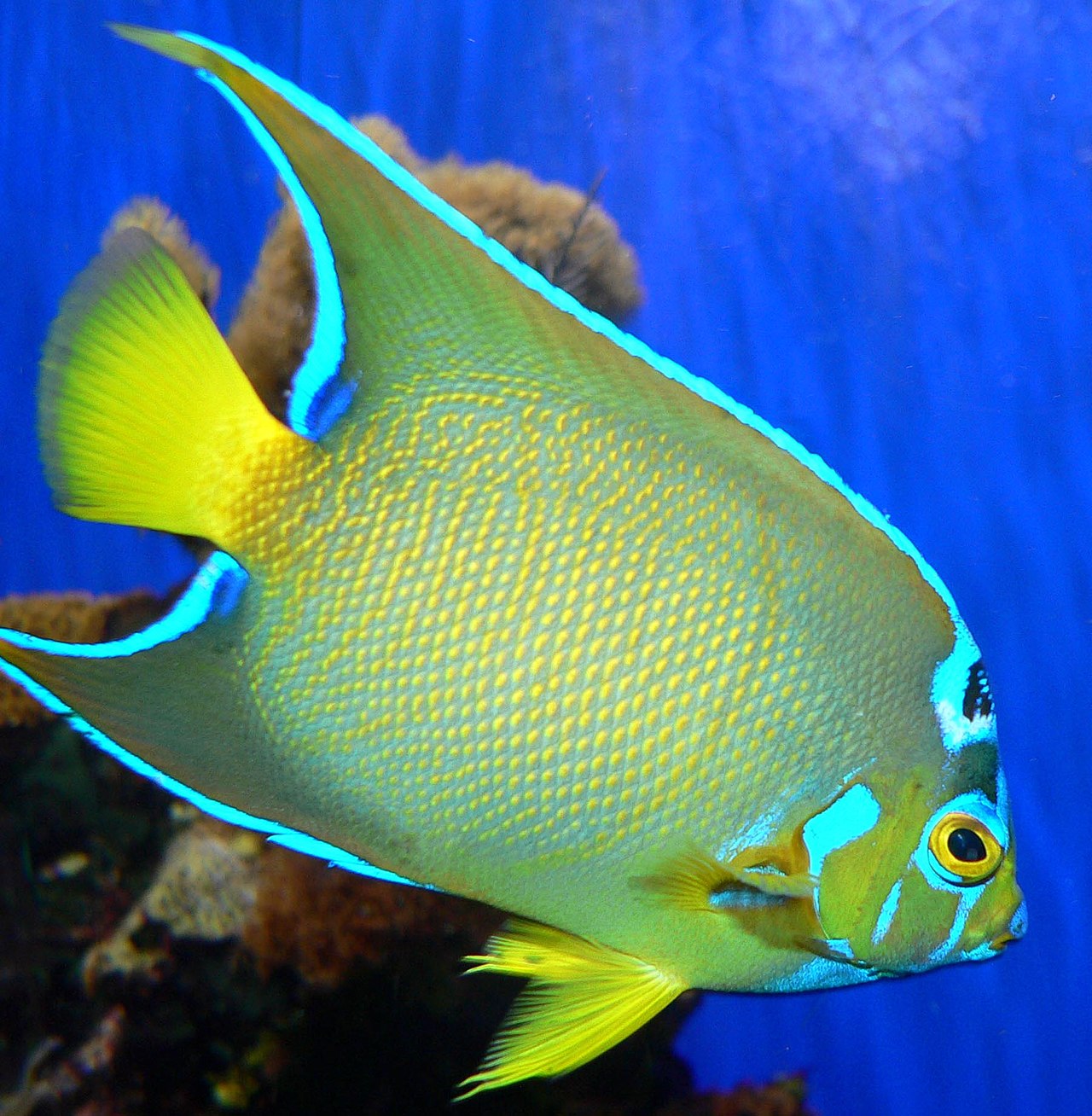
Angelfish are noted for bold coloration, laterally compressed bodies and a strong spine on the preopercle (gill cover) that helps distinguish them from superficially similar families. Sizes range from small "dwarf" species to larger forms; some reach more than 40 cm in length. Juveniles of many species show very different patterns from adults and may occupy different reef microhabitats.
Diet and ecology
Most marine angelfish are omnivores. Their diets typically include sponges, tunicates, algae and small invertebrates, and feeding habits influence their role on reefs. By grazing and pruning sponges or algae they affect local benthic communities. Some species form pairs or small social groups and defend feeding territories.
Reproduction and life history
Spawning is usually pelagic: pairs release eggs and sperm into the water column. Social structure varies by species; while many form long-term pairs, others aggregate to spawn. In certain species sequential hermaphroditism (a change in sex during life) has been reported, though reproductive strategies differ widely across the family.
Relationship with people
- Aquaria: Marine angelfish are popular in public and advanced home marine aquaria because of their color and behavior, but many species require large tanks, specific diets and sensitive water quality.
- Fisheries and trade: Collection for the aquarium trade and local fisheries occurs throughout their range; some species are more resilient than others.
- Conservation: Coral-reef habitat loss, climate change and destructive collection methods threaten populations at local scales; several species are monitored for declines.
Notable genera and distinctions
Well-known genera include Pomacanthus and Holacanthus (larger reef angelfish) and Centropyge (dwarf angelfish). The strong preopercular spine, marked juvenile-to-adult color changes, and a mix of sponge- and algae-based diets help distinguish the family from related reef fishes such as butterflyfishes.
Understanding marine angelfish involves their striking appearance, complex ecological roles on reefs and the practical challenges of maintaining them in captivity. For further taxonomic or conservation resources see specialist databases and regional reef guides via the links above.
Related articles
Author
AlegsaOnline.com Marine angelfish (family Pomacanthidae): appearance, behavior and care Leandro Alegsa
URL: https://en.alegsaonline.com/art/61934