
Marrella (Marrella splendens): a Cambrian arthropod from the Burgess Shale
Marrella is a small, distinctive arthropod best known from the middle Cambrian Burgess Shale; its unusual anatomy influenced ideas about early arthropod evolution and Cambrian ecosystems.
Marrella splendens is a small, extinct arthropod best known from exceptionally preserved fossils in the middle Cambrian Burgess Shale. It is among the most frequently preserved animals in that deposit and has played a central role in studies of early arthropod diversity. Fossils were recovered from the Canadian Rockies and have been studied for their unusual body plan and fine soft-part preservation.
Image gallery
9 Images



Appearance and anatomy
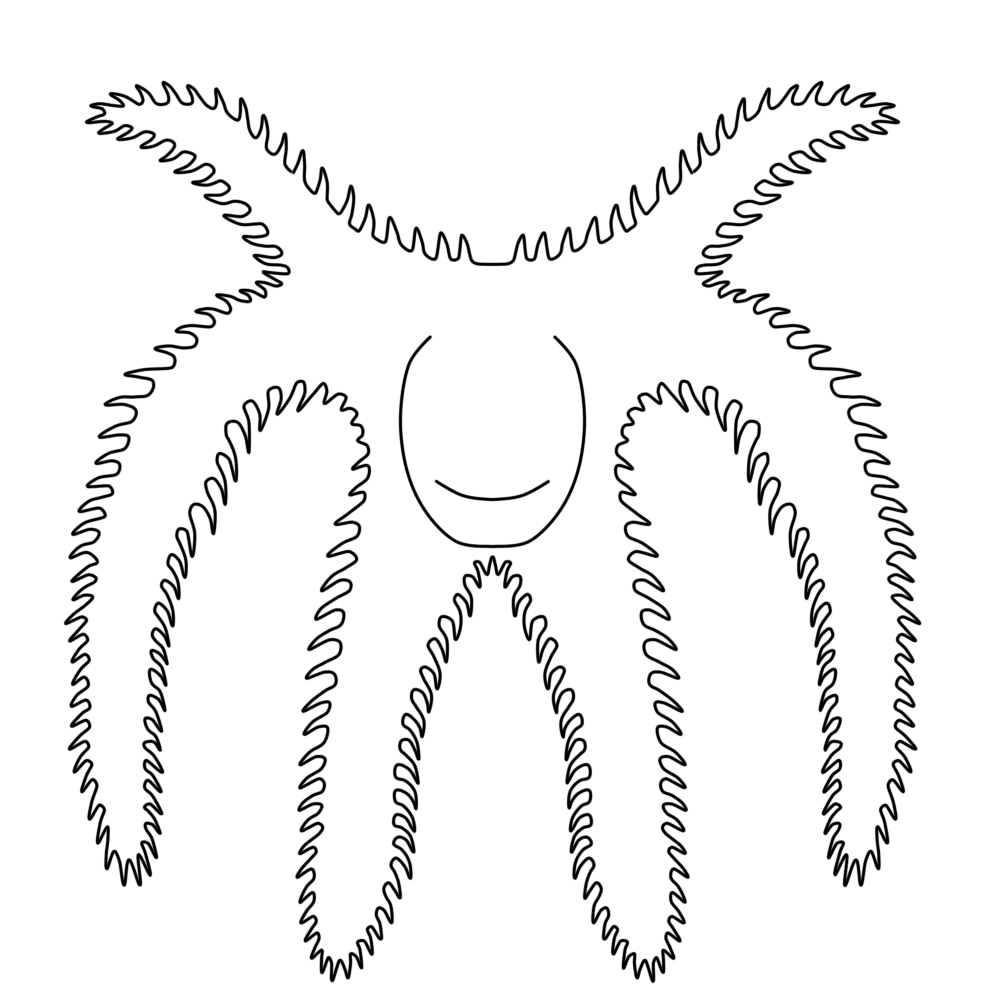
Marrella had a segmented body with a distinct head region bearing a pair of long, backward-pointing spines and a characteristic fringe of smaller projections. Behind the head, the trunk carried many pairs of biramous appendages with a leg-like inner branch and a flattened, gill-like outer branch. The combination of spines, numerous repeated limbs and delicate appendage structures is unlike that of modern, well-known arthropod groups.
Classification and relatives
Because its morphology does not fit neatly into living arthropod classes, Marrella is placed with a group of related fossils often called marrellomorphs. These forms are usually interpreted as stem-group or basal arthropods that illuminate early stages in arthropod evolution rather than direct ancestors of a single modern lineage. Comparable marrellomorphs occur in other Cambrian and later fossil Lagerstätten, helping to define the group.
Fossil record and history
Specimens of Marrella come from the Burgess Shale, a site famous for preserving soft anatomy in fine detail. Study of these specimens has relied on careful preparation and photography, and on broader comparisons with other Cambrian arthropods to interpret limbs and gill structures. The Burgess Shale context places Marrella in diverse Cambrian communities, and it appears in large numbers in some beds.
Ecology and scientific importance
Marrella likely lived on or near the sea floor and may have been a scavenger or suspension-feeder, using its many appendages to gather food and respire. Its unusual combination of features challenged early 20th-century views of arthropod classification and continues to inform debates about the early diversification of arthropods and animal body plans. For further reading, see general treatments of arthropods and Cambrian fossils: arthropod overview, Cambrian context, Burgess Shale deposits, and the region where many specimens were found: British Columbia.
Related articles
Author
AlegsaOnline.com Marrella (Marrella splendens): a Cambrian arthropod from the Burgess Shale Leandro Alegsa
URL: https://en.alegsaonline.com/art/62224
Sources
- books.google.com : Wonderful Life: Burgess Shale and the Nature of History
- worldcat.org : 45316756
- worldcat.org : 44058853
- doi.org : 10.1098/rspb.2007.0712
- ncbi.nlm.nih.gov : 2287322
- pubmed.ncbi.nlm.nih.gov : 17646139