
Marlin (Istiophoridae) — overview, biology, and human interaction
Large predatory billfish (family Istiophoridae) known for long bills, high speeds, and roles in sport fishing and ocean ecosystems. Biology, behavior, species, and conservation overview.
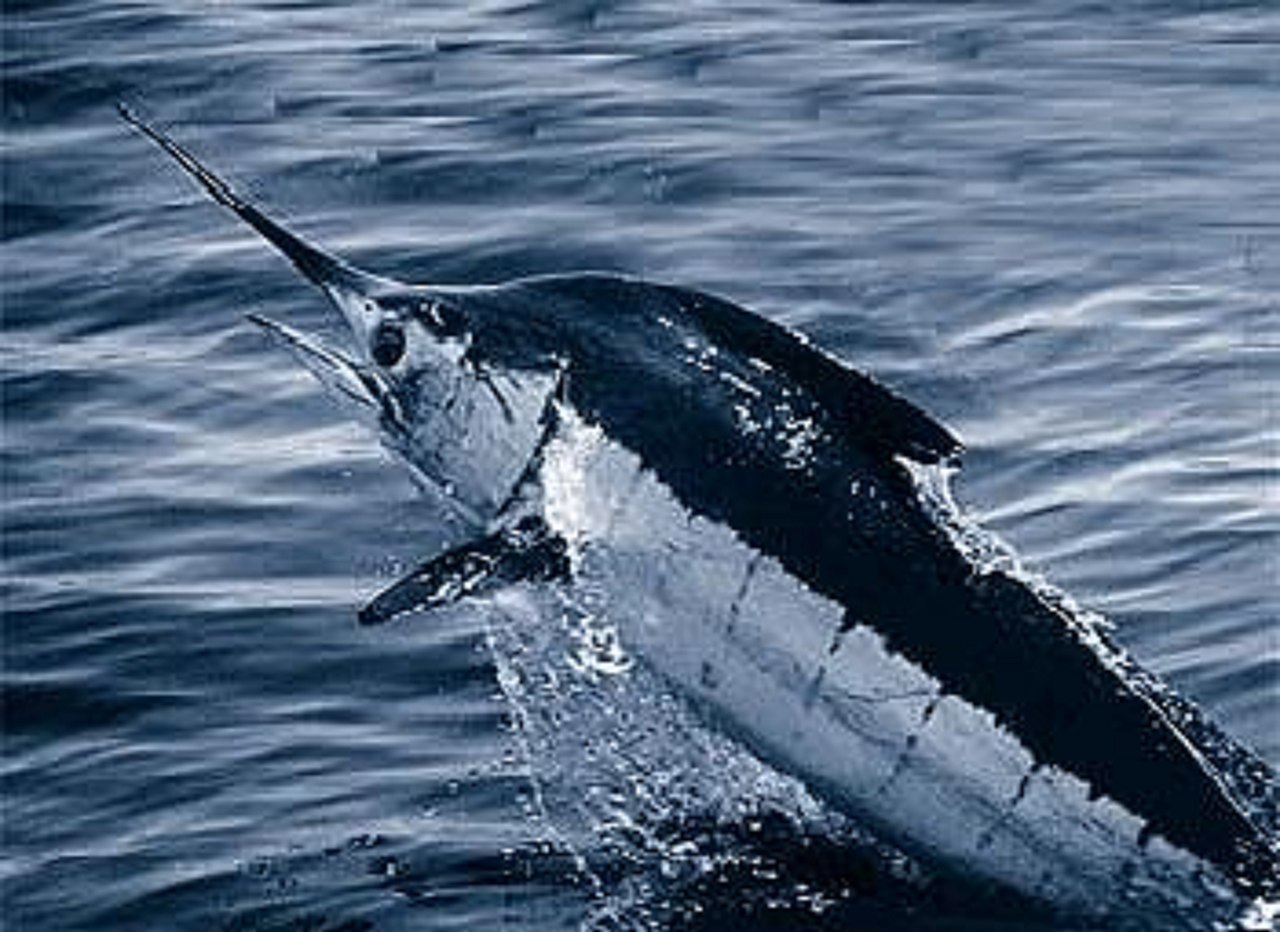
Marlin are large, predatory billfish in the family Istiophoridae notable for an elongated, spear-like upper jaw (commonly called a bill), a tall, often rigid dorsal fin, and a streamlined body built for powerful swimming. The common name is thought to come from a resemblance to a marlinspike, a sailor's tool. Several species of marlin inhabit tropical and temperate oceans worldwide and are often apex or near-apex predators in their local food webs.
Image gallery
10 Images




Physical characteristics
Key features that distinguish marlin include a long, pointed bill used in hunting; a high, crest-like dorsal fin that may extend along part of the back; pectoral fins that can be folded against the body; and a deeply forked tail that provides thrust. Marlin have muscular bodies adapted to burst swimming and long-distance movement. Coloration varies by species and can include blues, blacks, and silvery flanks. Young marlin resemble adults but are proportionally smaller and shorter-billed.
Species and distribution
Well-known species include the blue marlin, striped marlin, white (or Indo-Pacific) marlin, and black marlin. Each species has a characteristic range: some are broadly circumglobal in warm seas while others have more regional distributions. Marlin typically prefer open-ocean habitats, associating with temperature fronts, eddies, and areas where prey concentrate.
Behavior and diet
Marlin are active predators that feed on fast-moving schooling fish and cephalopods. They use their bill to slash or stun prey and then consume the immobilized animals. They are among the fastest fishes in the ocean, and reported burst speeds have led to frequent descriptions of marlin as exceptionally swift swimmers. Reproductive biology varies by species; many marlin spawn in warmer waters and release large numbers of eggs into the open ocean.
Human uses and interactions
Marlin are highly valued in recreational and sport fishing for their size, endurance, and spectacular fights when hooked. Many anglers practice catch-and-release, and fish are often handled carefully to improve post-release survival. Marlin are less commonly eaten than some other large fishes; where served, they appear in high-end restaurants or local cuisine in certain regions. For information on the structure of the bill, see marlin bill anatomy, and for recreational angling practices see sport fishing guidance.
Conservation and notable facts
Populations of some marlin species have been affected by overfishing, bycatch in longline and commercial fisheries, and changing ocean conditions. Because marlin move widely across national boundaries, their management often involves international cooperation. These fishes are also culturally significant in many coastal communities and remain emblematic of big-game fishing.
- Distinctive spear-like bill used in prey capture and identity.
- Speed and stamina make marlin prized by sport anglers.
- Conservation status varies by species and regional fishery pressure.
Overall, marlin combine striking physical adaptations with ecological importance and close ties to human recreation and fisheries, making them a focus of both scientific study and conservation interest.
Related articles
Author
AlegsaOnline.com Marlin (Istiophoridae) — overview, biology, and human interaction Leandro Alegsa
URL: https://en.alegsaonline.com/art/62169
Sources
- thetravelalmanac.com : "The world's fastest fish"