
Markhor (Capra falconeri): mountain goat of Central Asia
A comprehensive overview of the markhor — its appearance, habitat, behavior, cultural importance, and conservation status, including threats and recovery efforts across its range.
The markhor (Capra falconeri) is a large wild caprine native to mountainous regions of Central and South Asia. Recognized by its impressive spiraled horns and shaggy male coat, the markhor occupies steep slopes, cliffs and open woodlands where it feeds on grasses, shrubs and browse. It holds cultural and symbolic importance in parts of its range and is the national animal of Pakistan.
Image gallery
9 Images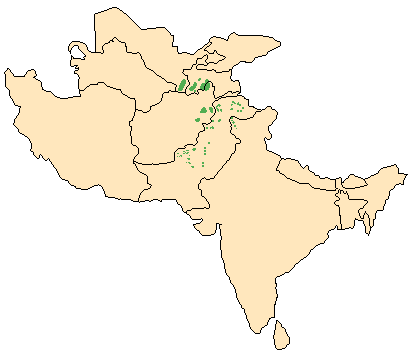



Physical characteristics
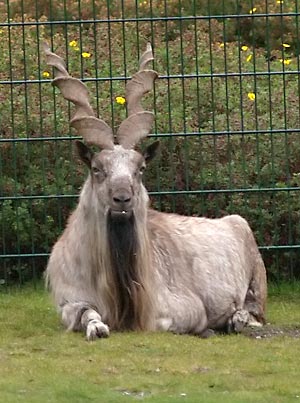
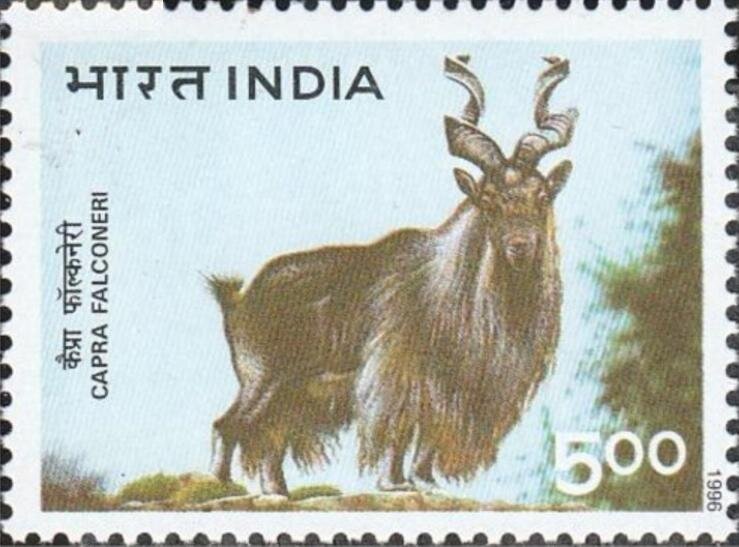
Markhor are robust animals with shoulder heights typically between 65 and 115 centimetres and weights that vary by sex and subspecies. Males (bucks) develop a long, pendulous beard and a thick mane of hair on the throat and chest; females (does) have a cleaner, more uniformly colored coat. Both sexes carry pronounced spiral or corkscrew-shaped horns, with male horns far larger and more twisted than those of females. Coat coloration ranges from tan to gray-brown with lighter undersides and contrasting markings on the legs.
Habitat and geographic range
Markhor inhabit rugged, often rocky terrain from roughly 500 to 3,500 metres above sea level where slopes, cliffs and broken ground provide escape routes from predators. They occupy woodland, scrub and alpine pastures across parts of Central Asia, the Karakoram and the Western Himalayas. Their range includes countries and regions such as Pakistan, Uzbekistan, Afghanistan, Tajikistan and parts of the Kashmir valley. In Pakistan, notable populations occur in mountain valleys such as Chitral, Ghizar and Hunza.
Behavior and diet
Markhor are primarily browsers and grazers, feeding on grasses, leaves and the shoots of shrubs and small trees. They are known to stand on their hind legs to reach higher foliage. Activity patterns tend to peak in the cooler hours of morning and late afternoon. Social organization changes with season and sex: females and young often form small herds or family groups while mature males may be solitary or form bachelor groups outside the mating season.
Reproduction and social structure
Breeding generally occurs in a defined rut during which males compete for access to females. Does give birth to one or two kids after a gestation of several months and raise them in sheltered terrain. Herd sizes vary by habitat quality; females may gather in groups that facilitate vigilance and defense against predators while males establish dominance hierarchies around mating opportunities.
Threats, conservation and cultural importance
The markhor faces threats typical of large mountain ungulates: habitat loss and degradation from livestock grazing and land use change, poaching for horns and meat, and local competition with domestic animals. In some languages the name markhor is translated as "snake-eater," reflecting traditional folklore about the animal. It is celebrated in national symbolism in Pakistan.
- Main threats: competition with livestock (livestock), illegal hunting, and disturbance of habitat.
- Conservation measures: protected areas, community-based hunting management, anti-poaching patrols, and habitat restoration.
- Population trends: estimates have fluctuated; conservation actions in parts of the range have produced local recoveries, while other populations remain vulnerable.
Subspecies and notable facts
Several subspecies or regional forms of markhor have been described, differing in horn form, coat and distribution. The species is a subject of transboundary conservation interest because it spans national frontiers and mountain ecosystems. For more detailed species accounts, range maps and conservation status updates see regional wildlife authorities and international conservation bodies linked below.
References and further reading: habitat descriptions, regional faunas, mountain ecosystems, Himalayan wildlife, horn morphology, horn measurements, social behavior, Pakistan conservation, central asian records, afghan populations, tajikistan surveys, kashmir notes, livestock interactions, habitat threats.
Questions and answers
Q: What is a markhor?
A: A markhor is a large goat found in woodland in Central Asia, Karakoram and the Western Himalayas, and it is the National Animal of Pakistan.
Q: How tall are markhor?
A: Markhor are 65 to 115 centimetres tall at the shoulder.
Q: What is the color of the females and males?
A: Females are a tan colour with a white underbelly and a pattern of black and white on the legs. Males are a lighter tan colour with the same white underbelly and pattern on the legs.
Q: What are the unique features of male markhor?
A: Male markhor have a black face and lots of long white fur on their neck and chest which can grow down to their knees. Both males and females have corkscrew-shaped horns which can grow up to 160 cm / 64 inches long in males, and up to 25 cm / 10 inches in females.
Q: Where do markhor live and what do they eat?
A: Markhor live in places 500 to 3500 metres (1,500 to 11,000 feet) high, where they eat grass, leaves. They often stand on their back legs to reach the top leaves of trees.
Q: Do male and female markhor live together?
A: No, females gather in herds (groups) of up to nine animals. Males usually live alone.
Q: Why are there fewer markhor left in the wild?
A: There are fewer markhor left because human beings take livestock to eat grass in the places where the markhor lives, and some people have killed the markhor for its horns. As of 2012, the IUCN said there were probably 2,500 markhor left in the wild.
Related articles
Author
AlegsaOnline.com Markhor (Capra falconeri): mountain goat of Central Asia Leandro Alegsa
URL: https://en.alegsaonline.com/art/62129