
Marine iguana (Amblyrhynchus cristatus)
Herbivorous lizard endemic to the Galápagos Islands. The marine iguana forages at sea on algae, sunbathes on rocky shores, and shows unique adaptations—salt glands, flattened tail and dark coloration—for cold coastal waters.
Overview
The marine iguana (Amblyrhynchus cristatus) is a reptile found only in the Galápagos Islands. It is the only modern lizard known to habitually forage in the sea, and it is unusual among iguanas for being mainly herbivorous. As an emblematic Galápagos species, the marine iguana links marine algae production to island ecosystems and has long attracted scientific interest.
Image gallery
10 Images




Physical characteristics and adaptations
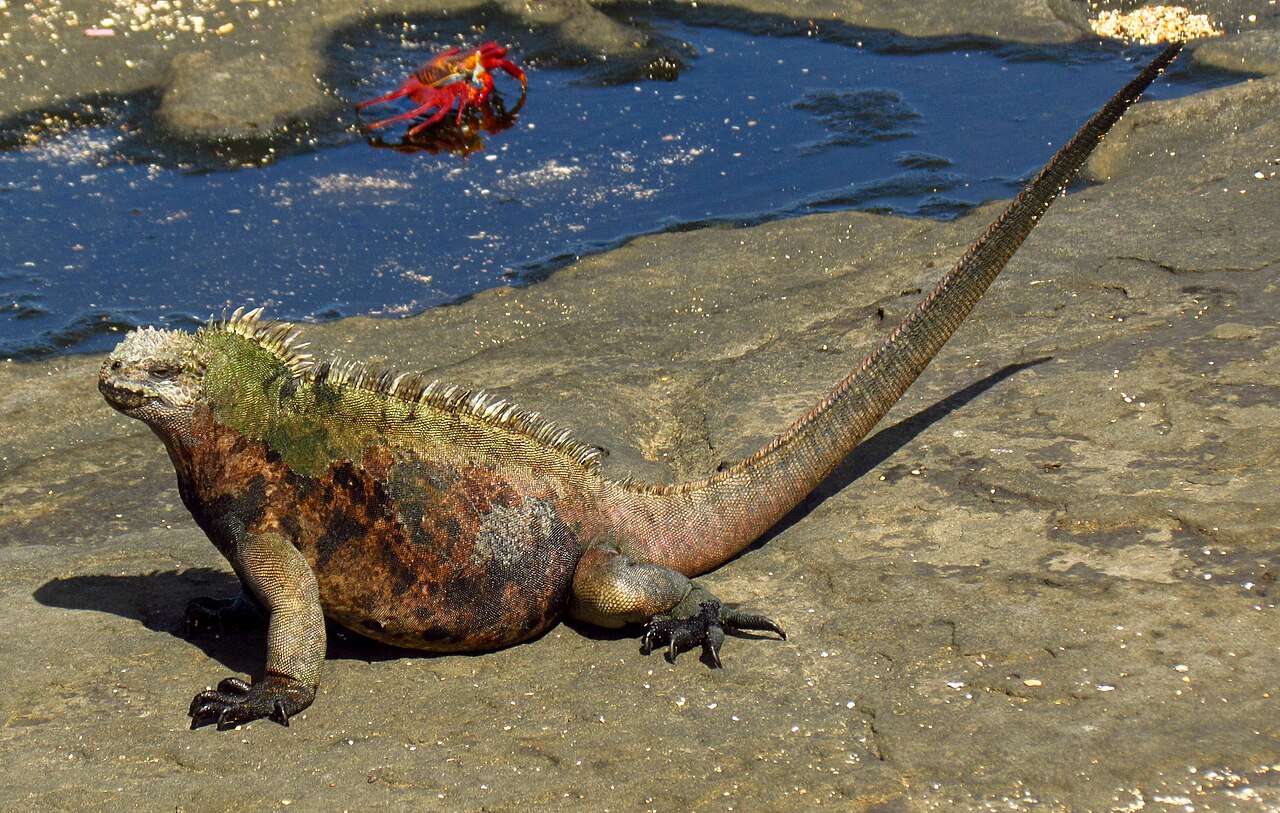
Sizes and coloration vary among island populations. General adaptations for a marine life include a laterally flattened tail that aids swimming, strong limbs and claws for clinging to rocks in surf, and a blunt snout suited to scraping algae. Marine iguanas possess specialised nasal glands that excrete excess salt taken in while feeding; observers often see them sneeze or expel a white salt spray. Dark, often blackish coloration helps them absorb heat quickly after cold foraging in coastal waters.
Behavior, diet and foraging
Marine iguanas feed primarily on marine algae, grazing on submerged rocks during low tides and shallow dives; many individuals dive several metres to reach abundant algal beds, and dives over 9 m have been recorded in some observations. Foraging patterns shift with sea temperature and algae availability: during warm-water events many iguanas reduce feeding and may suffer higher mortality. On land they thermoregulate by sunbathing, huddling together when cool, and moving between feeding sites and basking rocks.
Reproduction and lifecycle
Breeding occurs on land. Territorial displays and head-bobbing by males are common during the mating season, when males defend access to females. Females lay eggs in sandy or soft-soiled communal nests; hatchlings emerge after an incubation period and are vulnerable to predators. Juveniles and adults show different habitat use until young animals grow large enough to compete for feeding space.
Habitat, distribution and island variation
Marine iguanas occur across the Galápagos archipelago, inhabiting rocky shorelines where they haul out to warm up. They are also associated with coastal wetlands, including marshes, mangrove stands, and sandy beaches that provide access to algae and nesting sites. Populations on different islands display notable variation in size, color and behaviour, a pattern that has contributed to studies of island evolution.
Conservation and threats
Island populations face threats typical of insular species: introduced predators (such as dogs, cats and rodents), habitat disturbance from human activities, pollution and episodic climate events that reduce algal food. Mass mortality events linked to warm-water anomalies have been documented. The species has been subject to conservation assessments and monitoring; management actions focus on biosecurity, habitat protection and research to track population responses to environmental change.
Importance to science and culture
Charles Darwin and later naturalists noted the distinctive habits of Galápagos reptiles, and the marine iguana remains a flagship for studies of adaptation, physiology and the ecological effects of climate variability. Research into its cold-water foraging, salt excretion and island diversification continues to inform broader questions in evolutionary biology and conservation.
Notable distinctions
- Unique among modern lizards for habitual marine foraging.
- Specialised herbivorous diet focused on marine algae rather than terrestrial plants.
- Physiological adaptations for cold-water foraging, including salt-excreting glands and dark coloration for rapid heat absorption.
Further information and resources on this species and related taxa are available from field guides and conservation organisations. Related terms: iguanas, and the natural history of the Galápagos Islands.
Questions and answers
Q: What is a marine iguana?
A: A marine iguana is a type of iguana found only on the Galápagos Islands that is the only modern lizard to live and forage in the sea and is a vegetarian that only eats algae.
Q: How deep can a marine iguana dive?
A: A marine iguana can dive over 9 m (30 ft) into the water.
Q: Where does a marine iguana mainly live?
A: A marine iguana mainly lives on the rocky Galápagos shore to warm from the comparably cold water, but it can also be spotted in marshes and mangrove beaches.
Q: What is the Galápagos marine iguana?
A: The Galápagos marine iguana is a type of marine iguana that has spread to all the islands in the Galápagos archipelago.
Q: What is the diet of a marine iguana?
A: The diet of a marine iguana consists solely of algae.
Q: Who described the marine iguana?
A: Charles Darwin described the marine iguana.
Q: What is unique about the marine iguana?
A: The marine iguana is unique in that it is a vegetarian that only eats algae and is the only modern lizard to live and forage in the sea.
Related articles
Author
AlegsaOnline.com Marine iguana (Amblyrhynchus cristatus) Leandro Alegsa
URL: https://en.alegsaonline.com/art/61938