
Acanthodii: extinct spiny fishes and early jawed vertebrates
Acanthodii, or spiny sharks, were extinct early jawed fishes (Silurian–Permian) with fixed fin spines and mixed bony/cartilaginous traits. Their fossils illuminate early gnathostome evolution.
Overview
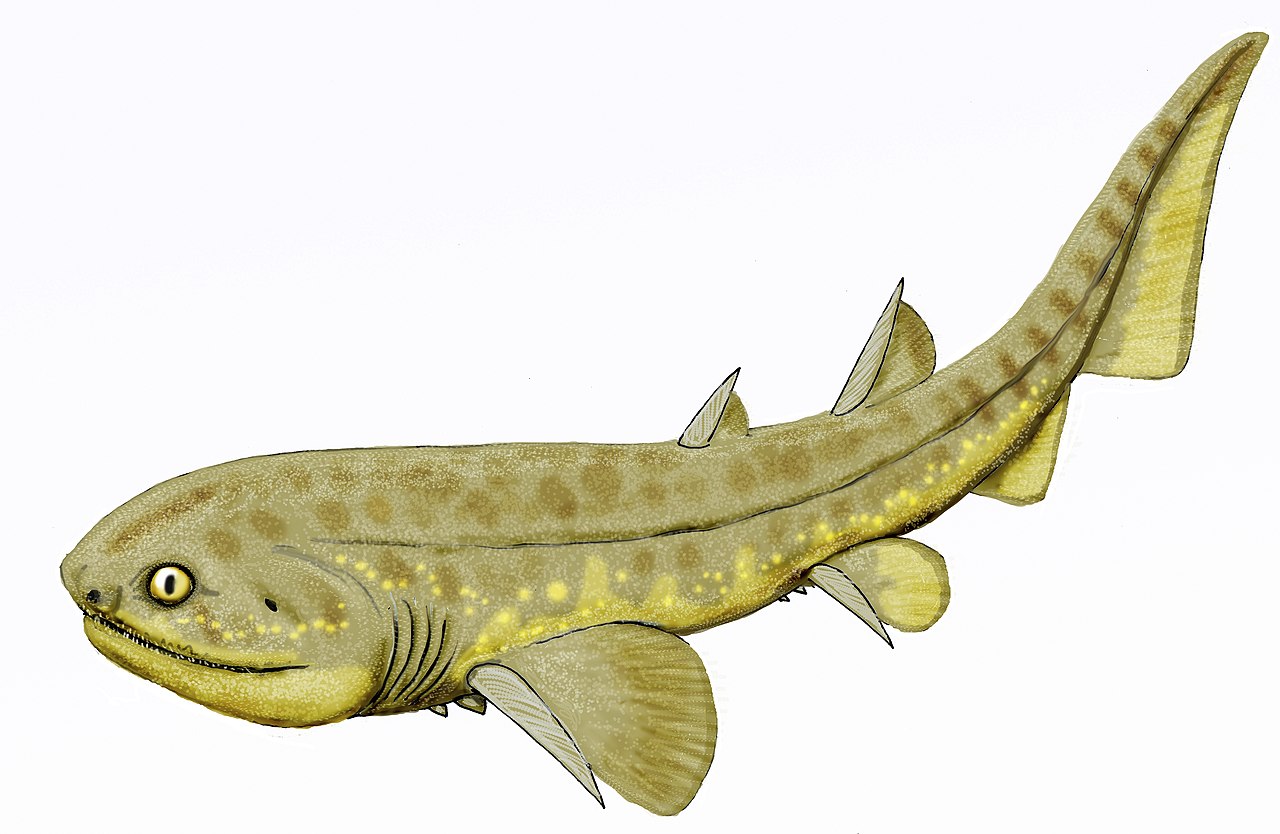
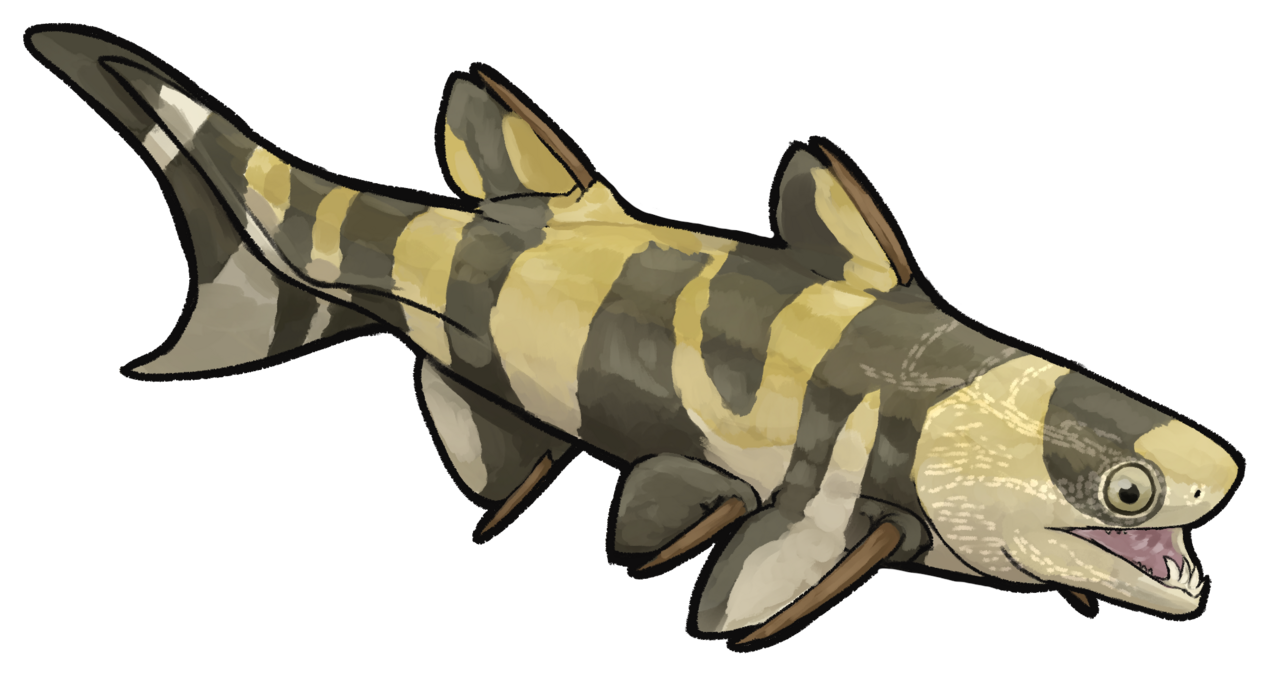
Acanthodii are an extinct assemblage of fishes often called "spiny sharks" because many species bore stout, fixed fin spines that give a superficial resemblance to modern sharks. They first appear in the fossil record in the early Silurian and persisted into the late Permian. Early acanthodians were typically marine, but a wide variety of freshwater forms became common in the Devonian, when vertebrate faunas diversified dramatically.
Image gallery
10 Images



Morphology and skeleton
Acanthodians show a mixture of characters that occur in both bony fishes (Osteichthyes) and cartilaginous fishes (Chondrichthyes). Their dermal skeleton commonly preserves small rhomboid or diamond-shaped scales and isolated plates. Internally, some skeletal elements were mineralized while many parts remained cartilaginous, producing a mosaic that has complicated efforts to place them precisely in vertebrate classification.
Fins, spines and scales
The most characteristic feature of acanthodians is the presence of one or more large, rigid spines at the leading edge of paired and median fins. These spines were non-articulating supports composed of dentine-like and bone-like tissues. Bodies were usually streamlined; many species had a heterocercal tail and ganoine- or enamel-like coatings on scales and fin spines, which fossilize well and are common in marine and freshwater deposits.
Feeding, ecology and life habits
Jaw structures place acanthodians among the earliest true jawed vertebrates. Diets varied: some species were small plankton feeders with reduced teeth and gill structures adapted for filtering, while others were likely micro-predators that captured small invertebrates. Their widespread occurrence in both marine and non-marine settings indicates they occupied diverse ecological roles during the Paleozoic.
Fossil record and distribution
Fossils range from isolated fin spines and scales to relatively complete skeletons preserved in fine-grained sediments. Well-known Lagerstätten and continental deposits have yielded articulated specimens that are critical for reconstructing anatomy. The group’s temporal range—from the Silurian through the Devonian and into the Permian—makes acanthodians useful biostratigraphic markers for Paleozoic rocks.
Systematics and evolutionary significance
Historically considered a coherent class, modern phylogenetic analyses often recover acanthodians as a paraphyletic assemblage close to the base of the gnathostome tree, with some lineages nearer to bony fishes and others nearer to cartilaginous fishes. This intermediate set of features provides important evidence on how jaws, paired fins and fin supports evolved among early jawed vertebrates and helps explain relationships to later groups including modern sharks and bony fishes.
Notable genera
- Acanthodes — one of the better-known genera, often interpreted as a filter-feeder with a long, slender body.
- Climatius — small, spiny, likely a predator of tiny animals; preserves multiple fin spines and scales.
- Other genera are known primarily from isolated spines and scales that nonetheless inform diversity and distribution patterns.
Summary and further reading
Acanthodii represent an important early experiment in jawed vertebrate form and function. Their combination of spiny fin supports, variable scale types and mixed skeletal tissues makes them central to studies of gnathostome origins. For introductory overviews and fossil records see resources on Acanthodii, comparative treatments of Osteichthyes and Chondrichthyes, geologic context for the Silurian, Devonian and Permian periods, and broader discussions of early jawed vertebrates and modern analogues such as the shark.
Related articles
Author
AlegsaOnline.com Acanthodii: extinct spiny fishes and early jawed vertebrates Leandro Alegsa
URL: https://en.alegsaonline.com/art/614